10 Ways to Say “Was Able To” Without Sounding Weak
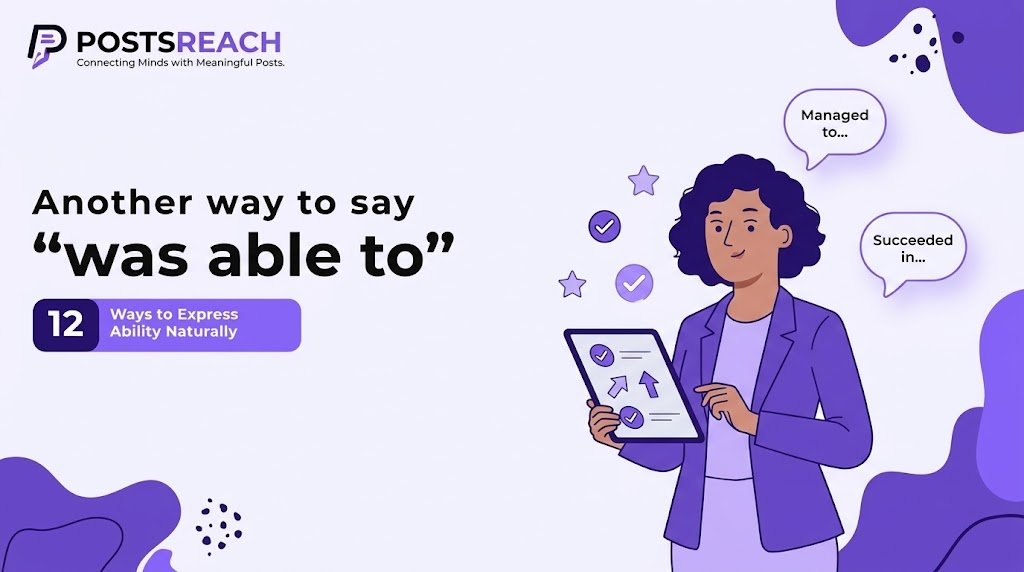
Another way to say “was able to” includes “managed to,” “succeeded in,” “could,” “was capable of,” and “accomplished.” The best choice depends on context. Use “managed to” when something was difficult, “succeeded in” for a clear achievement, and “accomplished” when emphasizing a completed goal.
Key Takeaways
- “Managed to” emphasizes overcoming difficulty or an obstacle.
- “Succeeded in” focuses on achieving a specific result.
- “Could” is a simple, natural alternative in many everyday sentences.
- “Was capable of” describes ability rather than a single successful event.
- “Accomplished” works well when highlighting a completed goal or achievement.
What Does “Another Way to Say Was Able to” Mean?
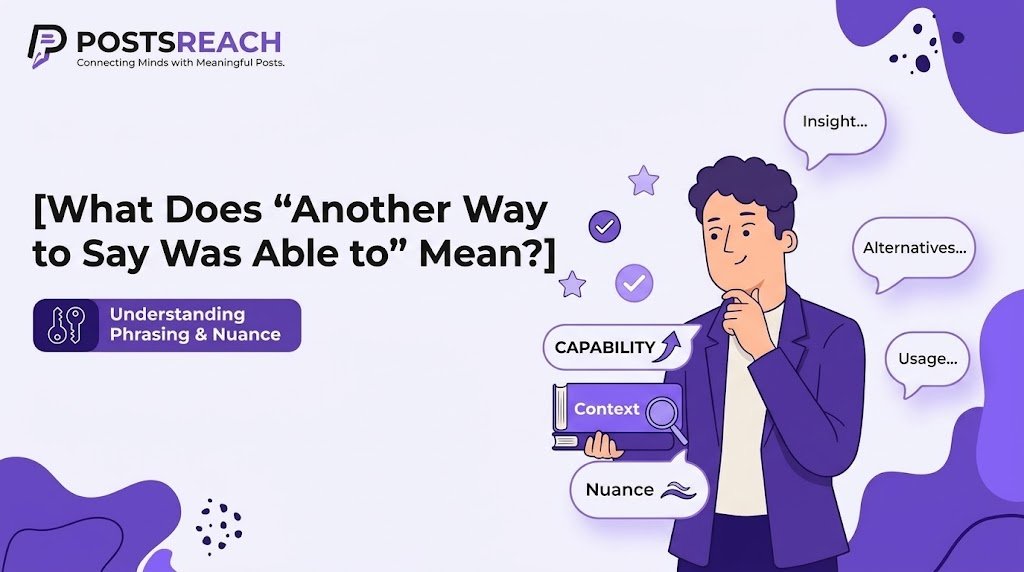
The phrase “was able to” means that someone had the ability, opportunity, or successful result needed to do something in the past. For example, “She was able to finish the project” means she successfully finished it.
People commonly use this phrase in professional writing, school assignments, resumes, emails, and everyday conversations. However, repeating “was able to” too often can make writing sound repetitive.
The best alternative depends on what you want to emphasize: ability, success, effort, opportunity, or achievement.
Why Use Other Ways to Say “Was Able to”?
Replacing “was able to” can make your writing more precise and natural. A carefully chosen alternative can also show whether the action was difficult, successful, planned, or simply possible.
Using alternatives can help you:
- Avoid repeating the same phrase.
- Make your writing more natural.
- Highlight a successful result.
- Describe ability more precisely.
- Improve professional and academic writing.
10 Best Other Ways to Say “Was Able to”
1. Managed to
Meaning
“Managed to” suggests that someone succeeded in doing something, especially when the task was difficult, unexpected, or required effort. It often carries the idea of overcoming a challenge.
Best For
- Professional
- Casual
- Friendly
Example 1
Despite the tight deadline, Maya managed to complete the presentation on time.
Example 2
I managed to find the document after checking several folders.
Quick Tip
Use “managed to” when you want to show that achieving the result required effort or persistence.
2. Succeeded in
Meaning
“Succeeded in” clearly emphasizes that someone achieved a particular result. It is especially useful when the outcome matters more than the process.
Best For
- Professional
- Formal
Example 1
The research team succeeded in identifying the main cause of the issue.
Example 2
He succeeded in reducing the company’s monthly expenses.
Quick Tip
Use “succeeded in” when discussing measurable accomplishments or successful outcomes.
3. Could
Meaning
“Could” is a simple and natural alternative to “was able to” when talking about general ability or possibility in the past. However, it does not always emphasize that a particular action was successfully completed.
Best For
- Casual
- Friendly
- Professional
Example 1
When I was younger, I could run several miles without stopping.
Example 2
The technician could access the system after resetting the account.
Quick Tip
Use “could” for general past ability. For one specific successful action, another alternative may communicate the meaning more clearly.
4. Was Capable of
Meaning
“Was capable of” focuses on a person’s ability or capacity to perform an action. It describes what someone had the ability to do rather than necessarily emphasizing a single successful result.
Best For
- Professional
- Formal
Example 1
The new software was capable of processing large amounts of data.
Example 2
She was capable of handling several responsibilities at once.
Quick Tip
Use this phrase when discussing capability, skills, systems, or potential rather than a single completed task.
5. Accomplished
Meaning
“Accomplished” means that someone successfully completed something or reached a goal. It is stronger than “was able to” because it places attention on the achievement itself.
Best For
- Professional
- Formal
Example 1
The team accomplished its main objective before the end of the quarter.
Example 2
She accomplished everything on her project checklist.
Quick Tip
Use “accomplished” when you want to make the achievement itself the focus of the sentence.
6. Successfully Completed
Meaning
“Successfully completed” directly states that a task was finished with the intended result. It is particularly useful when you need clear, objective language.
Best For
- Professional
- Formal
Example 1
The engineer successfully completed the equipment inspection.
Example 2
Our team successfully completed the website migration over the weekend.
Quick Tip
This phrase works especially well in reports, resumes, project updates, and other results-focused writing.
7. Was Successful in
Meaning
“Was successful in” means that someone achieved the desired result from an action or effort. It sounds professional and focuses on the outcome.
Best For
- Professional
- Formal
- Polite
Example 1
The company was successful in expanding its customer base.
Example 2
She was successful in negotiating a better contract.
Quick Tip
Follow “was successful in” with a gerund, such as “improving,” “reducing,” or “completing.”
8. Achieved
Meaning
“Achieved” emphasizes reaching a goal, target, standard, or desired outcome. It is concise and often sounds stronger than the more general “was able to.”
Best For
- Professional
- Formal
Example 1
The marketing team achieved its quarterly sales target.
Example 2
He achieved significant improvements in website performance.
Quick Tip
Choose “achieved” when the sentence involves a specific goal, target, result, or milestone.
9. Pulled Off
Meaning
“Pulled off” is an informal expression meaning someone successfully accomplished something that was difficult, surprising, or uncertain. It adds a conversational tone.
Best For
- Casual
- Friendly
Example 1
We pulled off the event even though we had only two weeks to prepare.
Example 2
She pulled off an impressive presentation with almost no preparation time.
Quick Tip
Avoid “pulled off” in formal reports or professional documents unless the setting has a relaxed tone.
10. Was Successful at
Meaning
“Was successful at” indicates that someone performed an activity effectively and achieved a positive result. It is useful when focusing on performance in a particular area.
Best For
- Professional
- Casual
- Friendly
Example 1
He was successful at building strong relationships with new clients.
Example 2
The teacher was successful at keeping students engaged during the lesson.
Quick Tip
Use “was successful at” when describing how effectively someone performed an ongoing activity or skill.
Comparison Table
| Alternative | Best Used In | Tone |
|---|---|---|
| Managed to | Difficult tasks and challenges | Natural, determined |
| Succeeded in | Specific achievements | Professional, formal |
| Could | General ability or possibility | Simple, conversational |
| Was Capable of | Skills and capabilities | Professional, formal |
| Accomplished | Completed goals | Strong, professional |
| Successfully Completed | Finished tasks or projects | Clear, formal |
| Was Successful in | Positive outcomes | Professional |
| Achieved | Goals, targets, and milestones | Professional, results-focused |
| Pulled Off | Difficult or surprising successes | Casual, conversational |
| Was Successful at | Performance and activities | Friendly, professional |
Common Mistakes
1. Using “Could” for Every Past Success
“Could” describes ability, but it does not always show that a specific action actually happened. For a completed one-time event, “managed to” or “succeeded in” may be more precise.
2. Using “Pulled Off” in Formal Writing
“Pulled off” sounds casual and conversational. It may work in a personal message but can sound too informal in an academic paper, business report, or formal email.
3. Confusing Ability With Achievement
“Was capable of” describes ability, while “achieved” describes a result. Saying someone “was capable of increasing sales” does not necessarily mean they actually increased sales.
4. Ignoring the Difficulty of the Action
If someone overcame a significant obstacle, simply replacing “was able to” with “could” may weaken the meaning. “Managed to” better communicates effort and difficulty.
5. Choosing a Stronger Word Than the Context Supports
Words such as “accomplished” and “achieved” imply a completed result. Do not use them when the original sentence only describes potential or ability.
Frequently Asked Questions
What is a professional way to say “was able to”?
“Succeeded in,” “accomplished,” “achieved,” and “was successful in” are professional alternatives. The right choice depends on the sentence. Use “succeeded in” for a specific successful action, “achieved” for a goal or result, and “was capable of” when discussing ability rather than a completed outcome.
What is a better way to say “was able to” on a resume?
On a resume, strong action verbs such as “achieved,” “completed,” “managed,” “delivered,” or “accomplished” can make statements more direct. Instead of saying “was able to increase sales,” you could say “increased sales by 20%” when the specific result is accurate and can be supported.
Is “managed to” the same as “was able to”?
“Managed to” and “was able to” can have similar meanings, but “managed to” usually suggests that the action required effort or overcoming a difficulty. For example, “I managed to finish the project” suggests the task was challenging, while “I was able to finish the project” is more neutral.
Can I use “could” instead of “was able to”?
Sometimes. “Could” works well for general past ability, such as “She could speak Spanish as a child.” However, for a specific completed action, “was able to” or “managed to” may be clearer because they can emphasize that the action actually happened.
What is the formal version of “was able to”?
There is no single formal replacement that works in every situation. “Succeeded in,” “was capable of,” “was successful in,” and “accomplished” can sound more formal depending on the context. The best option should match whether you are describing ability, effort, or an actual achievement.
How can I avoid repeating “was able to”?
First, identify what the sentence is really communicating. If it describes difficulty, use “managed to.” If it describes a goal, consider “achieved” or “accomplished.” For general ability, “could” may work. Changing the sentence structure entirely can also make your writing less repetitive.
Is “accomplished” stronger than “was able to”?
Usually, yes. “Was able to” mainly communicates that something was possible or successfully done, while “accomplished” emphasizes completion and achievement. For example, “She was able to finish the project” is neutral, while “She accomplished the project goals” places greater emphasis on the result.
What is the most natural alternative to “was able to”?
There is no single best replacement for every sentence. “Managed to” is natural when an action was difficult, while “could” works for general ability. In professional writing, “achieved,” “completed,” or “succeeded in” may be more precise when the sentence describes a clear result.
Conclusion
“Was able to” is useful, but repeating it can make writing feel predictable. The strongest alternative depends on the meaning you want to emphasize. Use “managed to” when someone overcame a challenge, “succeeded in” for a clear successful outcome, and “could” for general past ability. Choose “was capable of” when describing someone’s capacity rather than a completed action. For professional writing, “achieved,” “accomplished,” and “successfully completed” can make results more direct and specific. Casual expressions such as “pulled off” work better in relaxed conversations. The key is not simply replacing “was able to” with a synonym. Instead, choose a phrase that accurately communicates ability, effort, completion, or achievement.

Rowan Mercer is a senior content editor focused on producing clear, useful, and engaging digital content. Rowan specializes in researching complex topics, organizing information into reader-friendly formats, and maintaining high standards for accuracy, clarity, and editorial quality.