Another Way to Say Limited Seating: 10 Options
Another way to say limited seating includes phrases such as “limited capacity,” “few seats remain,” and “seating is restricted.” These alternatives help communicate that an event or venue has only a certain number of available seats. Depending on the context, you can use them to inform guests, encourage early reservations, or explain capacity restrictions.
5 Key Takeaways
- “Limited capacity” works well for events and venues.
- “Few seats remain” communicates that availability is running low.
- “First-come, first-served seating” explains how guests receive available seats.
- “Seating is limited” offers a simple and professional announcement.
- “Reserve your seat early” encourages people to make arrangements in advance.
What Does Limited Seating Mean?
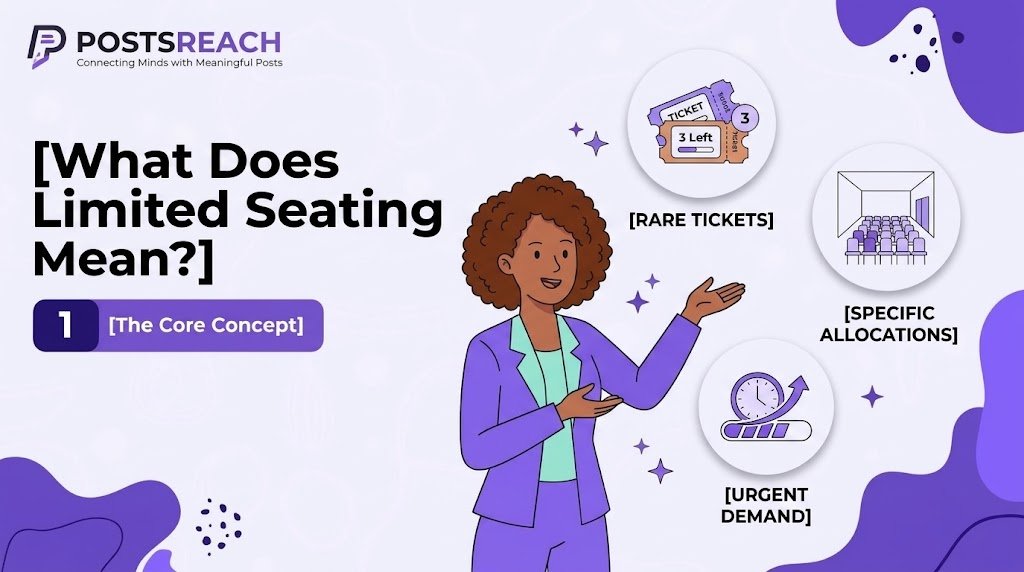
In simple terms, limited seating means that a location, event, or venue has a restricted number of available seats. For example, a conference room may accommodate only 50 attendees, while a small restaurant may have space for 20 guests.
Additionally, organizers use this phrase to help people understand capacity restrictions before making plans. Therefore, it often appears in event announcements, registration pages, invitations, and booking messages.
Why Use Another Way to Say Limited Seating?
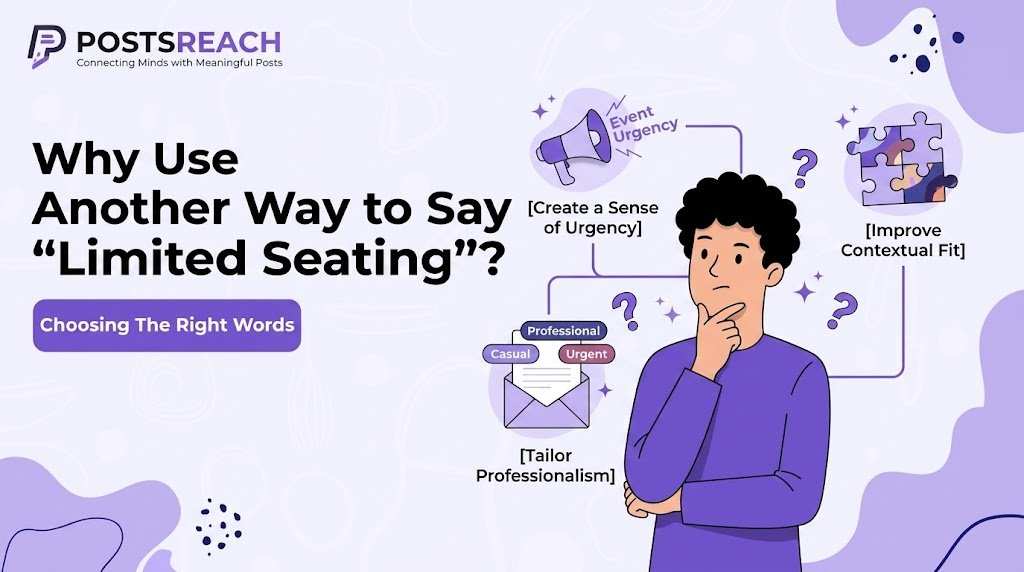
Although “limited seating” communicates the message clearly, repeating the same phrase can make your writing sound less varied. Instead, you can choose an alternative that better matches your audience and situation.
For example, “few seats remain” creates a sense of urgency, while “limited capacity” sounds more suitable for formal announcements. Similarly, “reserve your seat early” encourages readers to take action rather than simply informing them about availability.
10 Other Ways to Say Limited Seating
1. Limited Capacity
Meaning
In general, “limited capacity” means that a venue or event can accommodate only a specific number of people. Therefore, this phrase works well when you want to communicate an official attendance limit.
Best For: Professional, Formal
Example 1: Due to limited capacity, we can accept only 40 registrations for the workshop.
Example 2: Additionally, the conference has limited capacity, so attendees should register before the deadline.
Quick Tip: Use this expression when the restriction applies to the total number of people rather than the number of empty chairs.
2. Few Seats Remain
Meaning
When you say “few seats remain,” you tell people that only a small number of seats are still available. As a result, readers understand that availability is running low and may need to act soon.
Best For: Friendly, Casual, Promotional
Example 1: For example, only a few seats remain for Saturday’s design workshop.
Example 2: Additionally, a few seats remain for the live training session, so complete your registration soon.
Quick Tip: Choose this phrase when most seats have already been booked and you want to communicate the remaining availability.
3. Restricted Seating
Meaning
“Restricted seating” indicates that access to available seats comes with certain limitations. For instance, organizers may limit seating because of venue capacity, safety requirements, or specific event arrangements.
Best For: Professional, Formal
Example 1: Due to venue restrictions, restricted seating applies to all guests attending the ceremony.
Example 2: Furthermore, restricted seating may affect visitors who arrive after the scheduled start time.
Quick Tip: Use this expression when specific rules or conditions determine who can use the available seats.
4. Seating Is Limited
Meaning
This expression provides a straightforward way to tell people that an event or location does not have unlimited seating. Moreover, it sounds natural in announcements, invitations, and event descriptions.
Best For: Professional, Friendly, Polite
Example 1: Please register in advance because seating is limited at our annual conference.
Example 2: Additionally, seating is limited for the upcoming seminar, so early registration is recommended.
Quick Tip: Choose this option when you need a clear message that most readers can understand immediately.
5. Small Seating Capacity
Meaning
“Small seating capacity” describes a venue or location that can accommodate only a relatively small number of people. In particular, this phrase works well when discussing the physical size or capacity of a room.
Best For: Professional, Formal
Example 1: Because of its small seating capacity, the meeting room can accommodate only 15 participants.
Example 2: Similarly, the local theater has a small seating capacity compared with larger performance venues.
Quick Tip: Use this phrase to describe a venue’s overall capacity rather than announce that only a few seats remain.
6. Seats Are Filling Up
Meaning
When you say “seats are filling up,” you communicate that people are booking or occupying available seats. Consequently, the phrase suggests growing interest and encourages others to make their arrangements early.
Best For: Casual, Friendly, Promotional
Example 1: Meanwhile, seats are filling up quickly for our upcoming photography class.
Example 2: Additionally, seats are filling up for the weekend event, so book your place before registration closes.
Quick Tip: This expression works particularly well in promotional messages when registrations are increasing.
7. Space Is Limited
Meaning
“Space is limited” communicates that a location cannot accommodate an unlimited number of people. Although it does not mention seats directly, readers can understand that the venue has restricted room for guests.
Best For: Professional, Casual, Friendly
Example 1: Since space is limited, please confirm your attendance before Friday.
Example 2: Furthermore, space is limited at the training center, so we recommend registering early.
Quick Tip: Choose this alternative when the restriction involves the overall available space rather than seating arrangements alone.
8. A Small Number of Seats
Meaning
This phrase indicates that an event or venue has only a few seats available. In other words, it offers a direct and easy-to-understand way to describe restricted seating without sounding overly promotional.
Best For: Professional, Formal, Neutral
Example 1: For example, a small number of seats are available for the final presentation.
Example 2: Additionally, we have a small number of seats available for guests who register at the reception desk.
Quick Tip: Use this expression when you want a neutral description without creating unnecessary urgency.
9. First-Come, First-Served Seating
Meaning
“First-come, first-served seating” means that guests receive available seats according to their arrival order. Therefore, people who arrive earlier generally have a better chance of securing a seat.
Best For: Professional, Friendly, Formal
Example 1: Please arrive early because the event follows a first-come, first-served seating policy.
Example 2: Similarly, first-come, first-served seating applies to all attendees who do not have reserved places.
Quick Tip: Use this phrase when guests cannot select or reserve specific seats in advance.
10. Reserve Your Seat Early
Meaning
This expression encourages people to secure their seating arrangements before availability decreases. Unlike the other alternatives, it focuses on the action readers should take rather than directly describing the seating restriction.
Best For: Friendly, Polite, Promotional
Example 1: To avoid missing the presentation, reserve your seat early through our registration page.
Example 2: Additionally, please reserve your seat early because we expect strong attendance at the upcoming seminar.
Quick Tip: Use this phrase in invitations, promotional campaigns, and booking pages when you want readers to take action.
Comparison Table: 10 Alternatives to Limited Seating
| Alternative | Best Used In | Tone |
|---|---|---|
| Limited Capacity | Event announcements | Professional |
| Few Seats Remain | Booking promotions | Friendly |
| Restricted Seating | Venue policies | Formal |
| Seating Is Limited | General announcements | Neutral |
| Small Seating Capacity | Venue descriptions | Professional |
| Seats Are Filling Up | Promotional messages | Casual |
| Space Is Limited | Invitations and event pages | Friendly |
| A Small Number of Seats | General information | Neutral |
| First-Come, First-Served Seating | Event policies | Formal |
| Reserve Your Seat Early | Invitations and booking pages | Polite |
5 Common Mistakes to Avoid
- Using every alternative in the same context: Although these expressions share a similar meaning, each one communicates a slightly different message. Therefore, select the phrase that accurately describes the situation.
- Creating unnecessary urgency: While “few seats remain” can encourage early registration, it may confuse readers when plenty of seats are still available. Instead, use wording that reflects the actual availability.
- Confusing seating restrictions with venue capacity: For example, “restricted seating” may describe specific seating rules, whereas “limited capacity” refers to the maximum number of people a venue can accommodate.
- Choosing an overly formal expression: Although professional wording suits business announcements, simpler alternatives often work better for casual invitations. Consequently, consider your audience before selecting a phrase.
- Forgetting to explain how guests can book: Even when an announcement mentions limited availability, readers may not know what to do next. Therefore, include registration instructions or a booking link when necessary.
Frequently Asked Questions
1. What is the most professional way to say limited seating?
Generally, “limited capacity” and “seating is limited” are professional alternatives. However, the best option depends on your message. For example, use “limited capacity” when discussing a venue’s maximum attendance and “seating is limited” when informing guests about seat availability.
2. How do you politely say seats are limited?
For a polite announcement, you can write, “Please register early, as seating is limited.” Alternatively, you can say, “We encourage guests to reserve their seats in advance.” Both expressions communicate the restriction without sounding demanding.
3. What is another way to say only a few seats are available?
You can use “few seats remain,” “a small number of seats are available,” or “seats are filling up.” However, choose “few seats remain” when availability is genuinely low and use the other expressions when you prefer a more neutral tone.
4. Is limited seating the same as limited capacity?
Although these phrases are closely related, they do not always mean exactly the same thing. “Limited seating” focuses on the number of available seats, whereas “limited capacity” usually describes the maximum number of people a venue can accommodate.
5. How do you announce limited seating for an event?
First, state that seating is limited so readers understand the restriction. Next, explain how they can register or reserve a place. For example, you could write, “Seating is limited, so please complete your registration before Friday.”
6. What does first-come, first-served seating mean?
In general, first-come, first-served seating means that guests receive available seats according to their arrival order. Therefore, people who arrive earlier usually have more options than those who arrive later.
7. Can I use space is limited instead of limited seating?
Yes, you can use “space is limited” when the available room restricts the number of guests. However, the phrase is broader than “limited seating” because it can also describe restrictions on standing room or general venue space.
8. How can I encourage people to reserve seats early?
To encourage early reservations, use clear and polite phrases such as “Reserve your seat early” or “A few seats remain.” Additionally, provide a registration deadline or booking link so readers know exactly how to secure their places.
Conclusion
Choosing the right alternative depends on your audience, message, and event arrangements. For example, “limited capacity” works well in professional announcements, while “few seats remain” communicates low availability more directly. Similarly, “first-come, first-served seating” explains how guests receive available places, whereas “reserve your seat early” encourages readers to take action.
Ultimately, the goal is to communicate seating restrictions without confusing your audience. Therefore, consider the purpose of your message before selecting an expression. Whether you are writing an event invitation, registration page, business announcement, or promotional message, these ten alternatives can help make your wording clearer and more appropriate.

The PostsReach Editorial Team develops, reviews, and maintains the site’s published content. The team works across topics to ensure articles are clear, useful, well-structured, and consistent with PostsReach’s editorial standards. Content may be reviewed and updated as information changes.