
Another Way to Say “The Way”: 10 Useful Alternatives in 2026
If you’re looking for another way to say “the way,” useful alternatives include “the method,” “manner,” “approach,” “process,” and “the route.” The best choice depends on your meaning. Use “method” for how something is done, “approach” for handling a situation, and “route” for a physical or planned path.
Key Takeaways
- “The method” works when describing how to complete a task.
- “The approach” emphasizes how someone handles a situation.
- “The manner” describes how an action is performed.
- “The route” refers to a physical or planned path.
- Always choose a replacement that preserves the original sentence’s meaning.
“The way” is a common English expression with several meanings. It can describe a method, the manner in which someone acts, a route to a destination, or how something happens.
For example, “I like the way you explain things” refers to someone’s style. However, “the way to the airport” refers to a route. Understanding this difference helps you choose a more precise expression.
What Does “The Way” Mean?
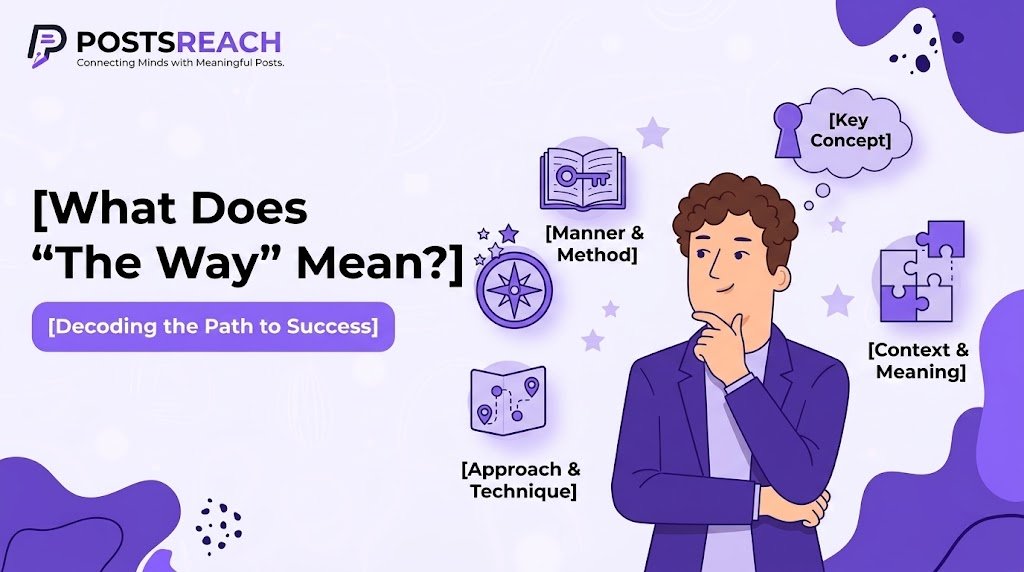
“The way” can refer to a method, approach, manner, direction, or process. People use it in everyday conversations, workplace communication, academic writing, instructions, and personal messages.
Consider these examples:
- “I like the way you solved the problem.”
- “Can you show me the way to the station?”
- “We need to change the way we work.”
- “She found a way to save time.”
Each sentence uses the expression differently. The first describes someone’s approach, the second refers to a route, and the third concerns a working method. In the fourth, “a way” means a possible solution.
Because the phrase has several meanings, replacing it requires looking at the complete sentence rather than choosing a synonym at random.
Why Use Other Ways to Say “The Way”?
Choosing a more precise expression can make your writing clearer and help readers understand exactly what you mean.
Consider using an alternative when you want to:
- Avoid repeating the same words.
- Explain a method more clearly.
- Make professional writing more precise.
- Describe someone’s behavior or style.
- Give directions or explain a route.
- Improve sentence flow without changing the meaning.
10 Best Other Ways to Say “The Way”
1. The Method
Meaning
“The method” refers to a particular procedure or set of steps used to achieve a result. It is especially useful when explaining how to complete a task or solve a problem.
Best For
- Professional
- Formal
Example 1
Our team developed a new method for organizing customer feedback.
Example 2
The teacher explained the method students should use to solve the equation.
Quick Tip
Use “the method” when you are talking about specific steps or a repeatable procedure.
2. The Approach
Meaning
“The approach” describes how someone handles a task, challenge, or situation. It can include a person’s strategy, attitude, or overall plan rather than only the steps involved.
Best For
- Professional
- Formal
- Polite
Example 1
Her approach to customer service helps clients feel heard.
Example 2
We need a different approach to managing our weekly workload.
Quick Tip
Choose “approach” when discussing a strategy or general way of handling something.
3. The Manner
Meaning
“The manner” describes how an action is performed or how someone behaves. It often focuses on style, attitude, or the way something is expressed.
Best For
- Formal
- Professional
Example 1
The manager appreciated the respectful manner in which the employee raised the concern.
Example 2
His calm manner helped the audience understand the difficult subject.
Quick Tip
Use “manner” when the focus is on behavior, presentation, or style rather than a practical procedure.
4. The Process
Meaning
“The process” refers to a series of actions or stages that lead to a result. It is useful when a task involves several steps instead of one simple action.
Best For
- Professional
- Formal
Example 1
The company improved the process for handling customer requests.
Example 2
Learning a new language is a process that takes regular practice.
Quick Tip
Choose “process” when you want to emphasize the stages involved in completing something.
5. The Route
Meaning
“The route” means a path or course from one place to another. It can also describe a planned course toward a goal, depending on the context.
Best For
- Casual
- Professional
Example 1
We chose a quieter route to avoid the traffic near downtown.
Example 2
An internship can provide a route into a career in graphic design.
Quick Tip
Use “route” for directions, travel, or a clearly defined path toward an objective.
6. The Technique
Meaning
“The technique” refers to a particular skill or way of performing an action. It often suggests that practice, knowledge, or specialized ability is involved.
Best For
- Professional
- Formal
Example 1
The photographer used a lighting technique to make the product stand out.
Example 2
This breathing technique can help performers prepare before going on stage.
Quick Tip
Choose “technique” when the sentence focuses on how a specific action or skill is performed.
7. The Style
Meaning
“The style” describes the distinctive way someone creates, presents, or performs something. It is common when discussing communication, design, writing, art, and personal expression.
Best For
- Casual
- Friendly
- Professional
Example 1
I admire the designer’s clean and simple style.
Example 2
Her writing style makes complicated ideas easy to understand.
Quick Tip
Use “style” when you mean someone’s recognizable manner of expression rather than a formal procedure.
8. The Practice
Meaning
“The practice” can describe an established way of doing something, especially when it is repeated over time. In professional settings, it often refers to a regular habit, standard, or accepted procedure.
Best For
- Professional
- Formal
Example 1
The clinic follows a practice of confirming appointments one day in advance.
Example 2
Regularly reviewing your goals is a useful practice for staying organized.
Quick Tip
Use this expression for established habits or repeated actions, not every one-time method.
9. The Means
Meaning
“The means” refers to the resources, actions, or methods used to achieve an objective. It often appears in formal writing or discussions about how a result can be reached.
Best For
- Formal
- Professional
Example 1
Online courses provide a means of learning new skills from home.
Example 2
The grant gave the organization the means to expand its services.
Quick Tip
Use “means” when emphasizing the resources or mechanism that makes a result possible.
10. The Procedure
Meaning
“The procedure” refers to an established series of steps for completing a task. It is especially appropriate when rules, consistency, or safety requirements matter.
Best For
- Formal
- Professional
Example 1
Please follow the procedure for submitting your expense report.
Example 2
The technician reviewed the procedure before testing the equipment.
Quick Tip
Choose “procedure” when the steps must be followed in a particular order or according to specific rules.
Comparison Table
| Alternative | Best Used In | Tone |
|---|---|---|
| The Method | Tasks and problem-solving | Neutral |
| The Approach | Strategies and challenges | Professional |
| The Manner | Behavior and presentation | Formal |
| The Process | Multistep activities | Professional |
| The Route | Directions and paths to goals | Neutral |
| The Technique | Skills and specialized actions | Technical |
| The Style | Writing, design, and expression | Conversational |
| The Practice | Habits and established standards | Professional |
| The Means | Resources and ways to achieve goals | Formal |
| The Procedure | Rules and ordered steps | Formal |
Common Mistakes
1. Treating Every Alternative as Interchangeable
“Method,” “route,” and “manner” have different meanings. A route may lead to a destination, while a method explains how to complete a task. Always check the meaning of the full sentence.
2. Using Formal Language in Casual Conversations
Words such as “procedure” and “means” may sound stiff in an everyday conversation. If you’re speaking casually about how to do something, “method” or “approach” may sound more natural.
3. Choosing “Method” for Someone’s Personal Style
If you like how someone communicates, “style” or “manner” may fit better than “method.” The latter usually suggests a process or a set of steps.
4. Ignoring the Difference Between a Route and a Process
A route usually describes a physical path or a course toward a goal. A process describes stages or actions that produce a result. Using the wrong term can confuse readers.
5. Replacing Words Without Checking Grammar
Not every alternative fits naturally into the same sentence. For example, “I like the way she teaches” may become “I like her teaching style,” but replacing “the way” with “the procedure” would change the meaning.
Frequently Asked Questions
What is another word for “the way”?
Possible alternatives include “the method,” “the approach,” “the manner,” “the process,” and “the route.” The best choice depends on the sentence. Use “method” for steps, “approach” for handling a situation, “manner” for behavior, and “route” for a path or course toward a destination.
What is a formal way to say “the way”?
“The manner,” “the procedure,” and “the means” can work in formal writing. However, the right choice depends on what you are describing. Use “the procedure” for established steps, “the manner” for how an action is performed, and “the means” for resources or actions that make a result possible.
What is another way to say “the way you do something”?
You could say “your method,” “your approach,” “your technique,” or “your style.” For example, “I like the way you organize projects” could become “I like your approach to organizing projects.” Choose “technique” when a specific skill or action is the focus.
What is a professional alternative to “the way”?
“The approach,” “the method,” and “the process” are useful in professional communication. For example, “We should change the way we handle requests” could become “We should revise our process for handling requests.” This wording sounds clear and specific in business emails, reports, and meetings.
Can “approach” replace “the way”?
Yes, when the expression refers to how someone handles a task, problem, or situation. For example, “I like the way you handled the complaint” could become “I like your approach to handling the complaint.” However, “approach” would not normally replace a phrase that refers to physical directions.
What is another way to say “the way to do something”?
Depending on the context, you can use “the method for,” “the process of,” “the procedure for,” or “how to.” For example, “the way to install the software” could become “how to install the software” or “the procedure for installing the software.”
Is “manner” the same as “method”?
No. “Manner” usually describes how someone behaves or how an action is performed, while “method” refers to the steps or procedure used to achieve a result. For example, a person may have a polite manner but use a particular method to complete a work assignment.
How do I choose the right alternative?
First, identify what the expression means in your sentence. If it describes steps, consider “method” or “procedure.” If it refers to someone’s strategy, choose “approach.” For behavior, use “manner” or “style.” If it describes directions or a path, “route” may be the best fit.
Conclusion
There are many alternatives to “the way,” but the best choice depends on the meaning you want to express. “The method” and “the technique” work well when describing how to perform a task. “The approach” fits strategies and challenges, while “the manner” and “the style” describe behavior or expression.
For a series of steps, consider “the process” or “the procedure.” When discussing directions or a path toward a goal, “the route” is often more precise. Meanwhile, “the means” emphasizes the resources that make an outcome possible.

The PostsReach Editorial Team develops, reviews, and maintains the site’s published content. The team works across topics to ensure articles are clear, useful, well-structured, and consistent with PostsReach’s editorial standards. Content may be reviewed and updated as information changes.