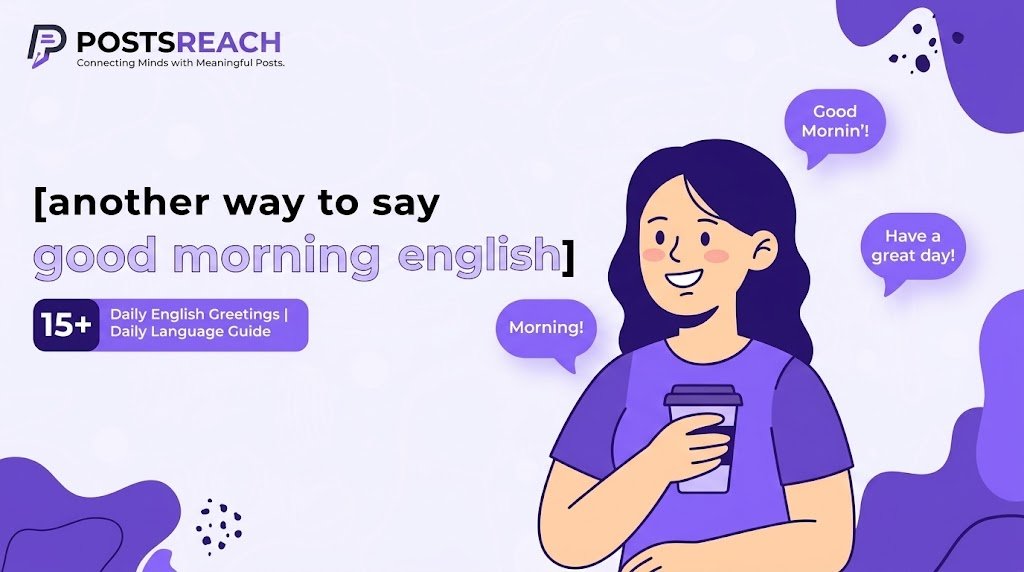
Another Way to Say Good Morning in English
“Good morning” is one of the most useful English greetings, but you do not have to use the same phrase every day. Native speakers naturally adjust their greetings depending on the person, setting, and relationship.
The best alternative is not always the most creative one. In many situations, a simple “Morning!” sounds more natural than an elaborate greeting.
Key Takeaways
- “Morning!” is one of the most natural casual alternatives to “Good morning.”
- “Good morning, everyone” works well for groups, meetings, and classrooms.
- “How’s your morning going?” turns a greeting into a friendly conversation starter.
- “Rise and shine” is playful and works best with friends or family.
- Professional settings usually call for simple, respectful greetings rather than overly playful phrases.
What Does “Another Way to Say Good Morning in English” Mean?
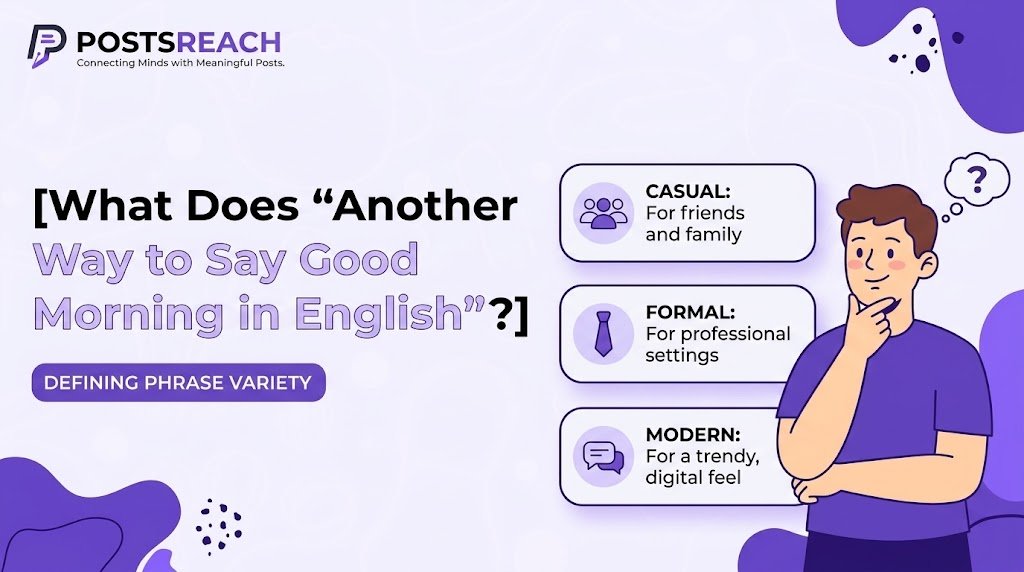
The phrase “another way to say good morning in English” refers to different expressions you can use to greet someone at the beginning of the day.
People search for these alternatives because they want to expand their English vocabulary, avoid repeating the same greeting, or choose words that better match a particular situation.
For example, “Morning!” sounds relaxed, while “Good morning, everyone” sounds appropriate when addressing a group. “Rise and shine!” has a playful feel and is usually better for people you know well.
“Good morning” itself is a standard greeting used from the morning through the earlier part of the day. It is widely accepted in both casual and professional situations.
Why Use Other Ways to Say “Good Morning”?
Changing your greeting can make everyday English sound more natural and expressive. However, the goal is not to replace “good morning” every time.
Use alternatives when you want to:
- Avoid repeating the same phrase.
- Sound more relaxed in casual conversations.
- Add warmth to a message.
- Start a conversation naturally.
- Address a group more clearly.
- Match a professional or formal setting.
- Show a cheerful or playful mood.
The key is context. A greeting that sounds friendly with a close friend may sound strange in a business email.
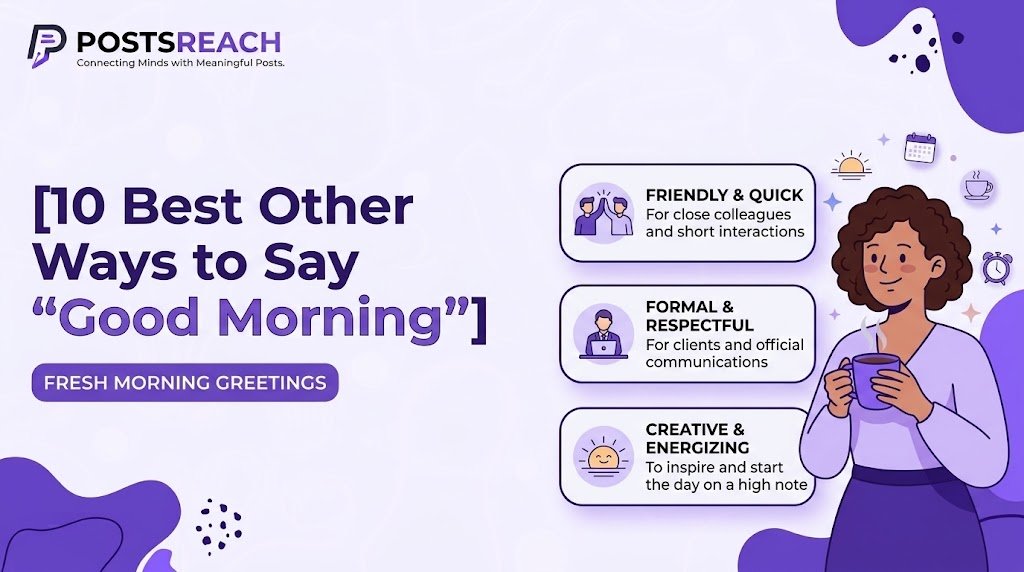
10 Best Other Ways to Say “Good Morning”
1. Morning!
Meaning
“Morning!” is a shortened, casual version of “Good morning.” It is extremely natural in everyday spoken English, especially among friends, classmates, family members, and coworkers who know each other.
Best For
- Casual
- Friendly
- Professional
Example 1
“Morning! Did you get enough sleep?”
Example 2
“Morning, Jake. Are you ready for the meeting?”
Quick Tip
Use “Morning!” when you want a quick, relaxed greeting. For formal emails or first-time professional communication, stick with “Good morning.”
2. Good morning, everyone!
Meaning
This is a group-focused version of the standard greeting. It acknowledges everyone at once and sounds clear, respectful, and natural.
Best For
- Professional
- Formal
- Friendly
- Polite
Example 1
“Good morning, everyone! Thanks for joining the meeting.”
Example 2
“Good morning, everyone. Let’s get started with today’s lesson.”
Quick Tip
Use this when addressing a class, team, audience, meeting, or group chat.
3. How’s your morning going?
Meaning
This greeting combines a morning acknowledgment with a question about the other person’s day. It feels more conversational than simply saying “Good morning.”
Best For
- Friendly
- Casual
- Polite
- Professional
Example 1
“Hey, Maya! How’s your morning going?”
Example 2
“Good to see you. How’s your morning going so far?”
Quick Tip
Choose this phrase when you want the greeting to naturally lead into a conversation.
4. Hope you’re having a great morning!
Meaning
This expression communicates a positive wish for the other person’s morning. It sounds warm without being overly personal.
Best For
- Warm
- Friendly
- Professional
- Polite
Example 1
“Hi Daniel, hope you’re having a great morning!”
Example 2
“Hope you’re having a great morning. I wanted to follow up on yesterday’s project.”
Quick Tip
This works particularly well in friendly professional messages, emails, and workplace chats.
5. Have a wonderful morning!
Meaning
“Have a wonderful morning!” is a good wish rather than a simple greeting. It tells someone that you hope they enjoy the rest of their morning.
Best For
- Warm
- Friendly
- Polite
- Formal
Example 1
“Thanks for stopping by. Have a wonderful morning!”
Example 2
“Your appointment is confirmed. Have a wonderful morning!”
Quick Tip
Use it when saying goodbye or ending a conversation, rather than treating it as a direct replacement for “hello.”
6. Rise and shine!
Meaning
“Rise and shine!” is a cheerful and playful expression traditionally associated with waking someone up. It has more personality than “Good morning.”
Best For
- Casual
- Friendly
- Warm
Example 1
“Rise and shine! Breakfast is ready.”
Example 2
“Come on, rise and shine—we’ve got a big day ahead.”
Quick Tip
Keep this phrase for friends, siblings, children, or other people you know well. It can sound too playful in a professional setting.
7. Hey, good to see you!
Meaning
This greeting focuses on seeing the person rather than directly mentioning the morning. It sounds natural when you meet someone early in the day.
Best For
- Friendly
- Casual
- Professional
- Warm
Example 1
“Hey, good to see you! How have you been?”
Example 2
“Good to see you this morning. How did the presentation go?”
Quick Tip
This is especially useful when you have not seen someone for a while.
8. Wishing you a great morning!
Meaning
“Wishing you a great morning!” expresses a positive wish in a slightly more polished way. It can sound thoughtful without becoming overly formal.
Best For
- Formal
- Professional
- Warm
- Polite
Example 1
“Wishing you a great morning and a productive day ahead.”
Example 2
“Wishing you a great morning as you prepare for today’s event.”
Quick Tip
Use this when you want a warmer tone in a written message without sounding overly casual.
9. Hello!
Meaning
“Hello!” does not specifically mention the morning, but it can easily replace “Good morning” when the time of day is already obvious. It is one of the most flexible greetings in English.
Best For
- Professional
- Casual
- Friendly
- Polite
Example 1
“Hello, Sarah. Thanks for getting back to me.”
Example 2
“Hello! It’s nice to meet you.”
Quick Tip
Choose “Hello!” when you want a neutral greeting that works beyond the morning.
10. What’s your day looking like?
Meaning
This casual question opens a conversation by asking about someone’s plans for the day. It is less formal than “Good morning” and feels especially natural between people who already know each other.
Best For
- Casual
- Friendly
- Warm
Example 1
“Morning! What’s your day looking like?”
Example 2
“Hey, what’s your day looking like? Want to grab lunch later?”
Quick Tip
Use this with friends or familiar coworkers when you want to move directly from a greeting into conversation.
Comparison Table
| Alternative | Best Used In | Tone |
|---|---|---|
| Morning! | Casual conversations, familiar workplaces | Casual |
| Good morning, everyone! | Meetings, classes, groups | Professional, polite |
| How’s your morning going? | Conversations, workplace chats | Friendly |
| Hope you’re having a great morning! | Emails, texts, workplace messages | Warm, polite |
| Have a wonderful morning! | Farewells, customer interactions | Warm, polite |
| Rise and shine! | Friends, family, playful situations | Cheerful |
| Hey, good to see you! | Friends, coworkers, acquaintances | Friendly |
| Wishing you a great morning! | Professional messages, formal notes | Warm, formal |
| Hello! | General conversations | Neutral |
| What’s your day looking like? | Friends, familiar coworkers | Casual |
Common Mistakes
1. Using casual phrases in professional emails
Expressions such as “Rise and shine!” or “What’s up?” may sound too relaxed when contacting a client, manager, professor, or new business contact.
2. Choosing overly formal language
Not every situation requires a phrase such as “Wishing you a most pleasant morning.” Simple language usually sounds more natural in everyday American English.
3. Repeating the same greeting mechanically
Using “Good morning” is completely correct, but repeating exactly the same phrase every day can make conversations feel routine. Small changes can make your communication more natural.
4. Forgetting the relationship and context
A greeting for your best friend does not need to sound like a business email. Consider who you are speaking to before choosing an alternative.
5. Using playful expressions with the wrong audience
“Good morning, sunshine!” or “Rise and shine!” can sound warm with someone close to you but may feel overly familiar with a coworker or customer.
Frequently Asked Questions
1. What is a casual way to say “good morning”?
“Morning!” is one of the most natural casual alternatives. It is simply a shortened form of “Good morning” and is common among friends, family members, classmates, and familiar coworkers. You can also say “Hey!” or ask, “How’s your morning going?” when you want to start a conversation.
2. What is a professional way to say “good morning”?
For professional communication, “Good morning” remains one of the safest choices. You can personalize it with a name, such as “Good morning, Sarah,” or address a group with “Good morning, everyone.” A phrase such as “Hope you’re having a great morning” can also work well in friendly workplace messages.
3. What is a cute way to say good morning?
For someone you know well, phrases such as “Rise and shine!” can sound cheerful and playful. “Morning, sunshine!” is another affectionate option, although it is more personal. These expressions should generally be reserved for close friends or family rather than formal or professional relationships.
4. Is “Morning” better than “Good morning”?
Neither phrase is universally better. “Good morning” is more neutral and works across many situations, while “Morning!” is shorter and more casual. In a professional email, “Good morning” is usually the safer choice. In a relaxed conversation with a familiar coworker, “Morning!” can sound perfectly natural.
5. Can I say “Have a good morning” instead of “Good morning”?
Yes, but the meaning is slightly different. “Good morning” is primarily a greeting, while “Have a good morning” is a wish for someone’s morning. For example, you might say “Good morning” when arriving at work and “Have a good morning” when leaving.
6. What can I say instead of “good morning” in a text?
For a casual text, try “Morning!”, “Hey!”, or “How’s your morning going?” If you want to sound warm, you could write, “Hope you’re having a great morning!” The best choice depends on your relationship with the person and how informal your conversation usually is.
7. Is “Rise and shine” professional?
Generally, no. “Rise and shine” is playful and is most natural with friends, family, children, or people you know well. It suggests waking up and getting ready for the day. In a workplace or formal email, a straightforward greeting such as “Good morning” is more appropriate.
8. How do Americans usually greet someone in the morning?
Americans commonly use “Good morning,” “Morning,” “Hi,” “Hello,” or “Hey,” depending on the situation. In professional settings, “Good morning” is a dependable choice. Among friends and familiar coworkers, shorter greetings such as “Morning!” or “Hey!” are often more relaxed.
Conclusion
There is no single best alternative to “good morning” because the right phrase depends on the situation. For everyday casual English, “Morning!” is short, natural, and easy to use. For a group, “Good morning, everyone!” is clear and professional. If you want to start a conversation, “How’s your morning going?” works well.
For a warmer message, try “Hope you’re having a great morning!” or “Wishing you a great morning!” Meanwhile, “Rise and shine!” is best saved for playful conversations with people you know well.
Most importantly, do not choose an alternative just to sound fancy. Good English is usually about matching your words to the person, setting, and tone. When in doubt, “Good morning” is still a perfectly natural and polite choice.