Another Way to Say Follow-Up in Email: 10 Smart Alternatives
Another way to say “follow-up” in an email is “checking in,” “following up on,” “touching base,” or “circling back.” For a polite reminder, try “I wanted to check on the status of…” For a professional update, use “I’m reaching out regarding…” Choose wording that fits your purpose and keeps the message clear and courteous.
Key Takeaways
- “Checking in” is a friendly, natural way to ask for an update.
- “Touching base” works well for professional conversations.
- “Circling back” refers to returning to a previous topic.
- “Following up on” is direct and useful when the subject is clear.
- A specific, polite request is usually more effective than a vague reminder.
What Does “Another Way to Say Follow-Up in Email” Mean?
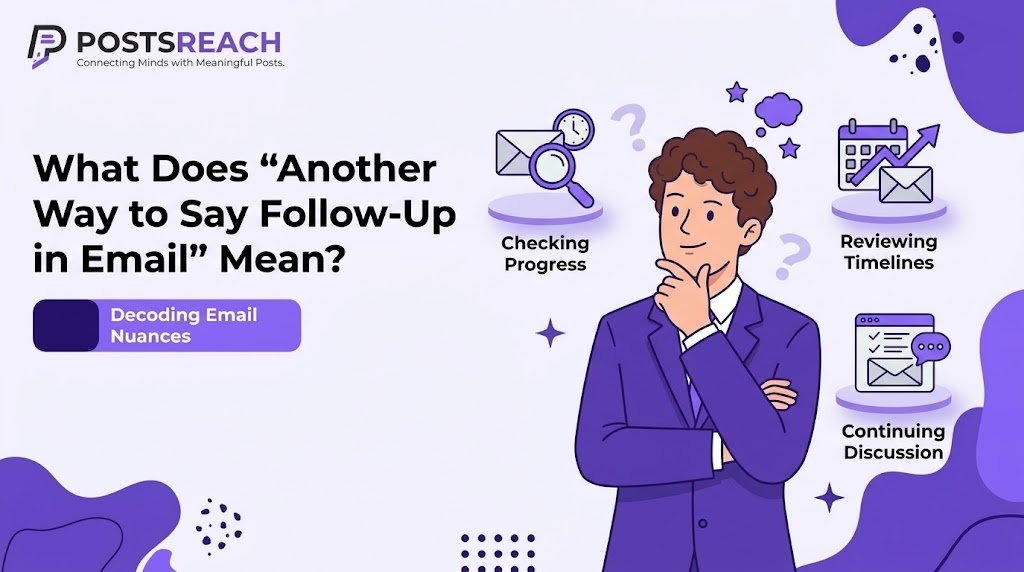
A follow-up email is a message sent after an earlier email, conversation, meeting, or request. It may ask for an update, remind someone about an open task, clarify a detail, or continue a discussion.
People often look for another way to say “follow-up” because the phrase can feel repetitive or too direct when used in every message. A thoughtful alternative can make an email sound more natural, polite, and professional.
For example, “I’m checking in about the proposal” sounds friendly, while “I’m reaching out regarding the proposal” is more formal. The best wording depends on the relationship, the reason for writing, and how much time has passed.
Why Use Other Ways to Say “Follow-Up” in an Email?
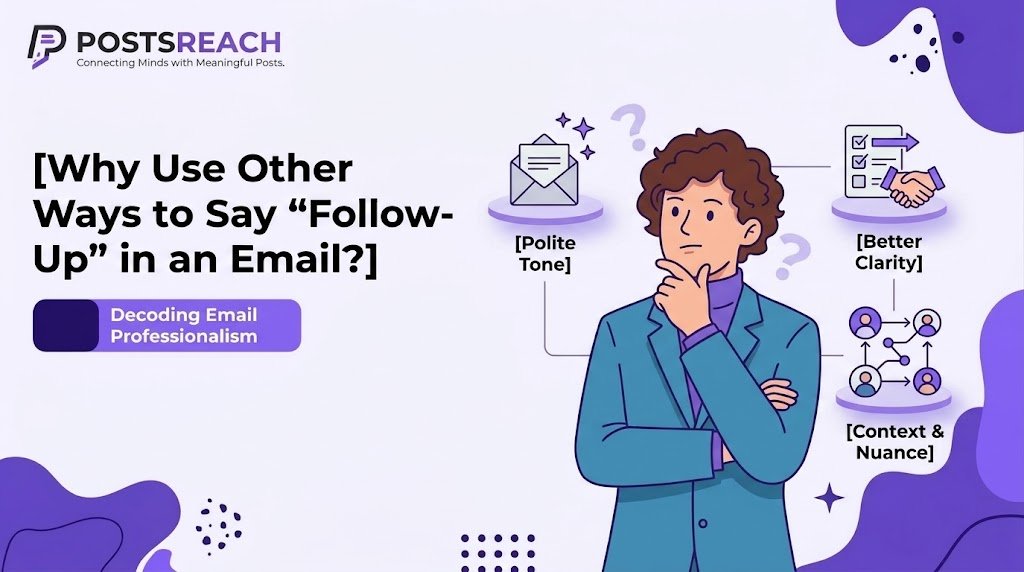
Choosing a different phrase can help your message sound courteous without making the purpose unclear. It also lets you adjust the tone for a client, coworker, manager, or business partner.
Using alternatives can help you:
- Avoid repeating the same phrase in every email.
- Sound polite without being overly apologetic.
- Make a reminder feel less demanding.
- Match the tone to the recipient and situation.
- Explain whether you need an update, response, or next step.
- Keep business communication clear and professional.
The most effective follow-up is not just polite; it also tells the recipient what you need and why you are writing.
10 Best Other Ways to Say “Follow-Up” in an Email
1. Checking In
Meaning
“Checking in” is a friendly and natural way to ask how something is going. It works well when you want an update without making the recipient feel pressured.
The phrase is common in workplace communication and client emails.
Best For
- Professional
- Friendly
- Polite
Example 1
I’m checking in to see whether you’ve had a chance to review the proposal.
Example 2
Just checking in on the project timeline and whether anything has changed.
Quick Tip
Use “checking in” when you want a light, courteous reminder. Add the subject so the recipient knows what you mean.
2. Touching Base
Meaning
“Touching base” means briefly reconnecting with someone to discuss a topic or share an update. It sounds collaborative and is often used in business communication.
It can work well when you want to restart a conversation without sounding formal.
Best For
- Professional
- Friendly
- Casual
Example 1
I’m touching base about the documents we discussed during Tuesday’s meeting.
Example 2
I wanted to touch base and see if you’re available to review the next steps.
Quick Tip
This phrase is useful for reconnecting, but avoid using it alone. Mention the topic or action you want to discuss.
3. Circling Back
Meaning
“Circling back” means returning to a topic, request, or conversation that you discussed earlier. It is common in workplace emails and project communication.
The phrase can sound businesslike, so it may be less natural in very casual messages.
Best For
- Professional
- Formal
Example 1
I’m circling back on the budget approval we discussed last week.
Example 2
I wanted to circle back regarding your feedback on the draft.
Quick Tip
Use this when returning to an earlier topic. For a more conversational tone, “checking in” may sound warmer.
4. Reaching Out Regarding
Meaning
“Reaching out regarding” introduces the reason for your email. It is a professional way to contact someone about a specific subject, request, or issue.
It does not always imply that you have already contacted the person, so it is especially useful when starting or continuing a business conversation.
Best For
- Professional
- Formal
- Polite
Example 1
I’m reaching out regarding the invoice submitted on October 12.
Example 2
I wanted to reach out regarding the interview schedule for next week.
Quick Tip
Use this phrase when the email’s purpose needs to sound clear and professional. Keep the subject specific.
5. Following Up on
Meaning
“Following up on” directly refers to a previous message, request, or action. It is clear and professional, especially when the recipient already knows the topic.
Although it keeps the original phrase, adding a specific subject makes it more useful and less repetitive.
Best For
- Professional
- Formal
- Polite
Example 1
I’m following up on my request for access to the shared folder.
Example 2
I wanted to follow up on the estimate you sent earlier this week.
Quick Tip
This is a strong choice when clarity matters. State exactly what you are following up on instead of leaving the phrase vague.
6. A Quick Reminder About
Meaning
“A quick reminder about” introduces a brief reminder of a deadline, meeting, request, or pending task. It is direct while still sounding courteous.
This expression works best when the recipient already knows about the item being mentioned.
Best For
- Professional
- Polite
- Friendly
Example 1
A quick reminder about our call scheduled for 10 a.m. tomorrow.
Example 2
Just a quick reminder about the feedback we need before Friday.
Quick Tip
Use this when you are reminding someone of a known commitment. Include the deadline or relevant detail to make the message actionable.
7. Requesting an Update
Meaning
“Requesting an update” makes it clear that you need current information about a task, decision, or process. It is more direct than “checking in” and can sound formal.
The phrase is useful when an update is the main purpose of the email.
Best For
- Professional
- Formal
Example 1
I’m requesting an update on the status of the application.
Example 2
Could you please provide an update on the shipment’s expected arrival date?
Quick Tip
Use this when you need a clear status report. A specific question can make it easier for the recipient to respond.
8. Revisiting
Meaning
“Revisiting” means returning to a topic or decision to discuss it again. It can suggest that you want to review information, reconsider an option, or continue a discussion.
It is often useful when the conversation requires more thought than a simple reminder.
Best For
- Professional
- Formal
Example 1
I’d like to revisit the proposed timeline before we finalize the plan.
Example 2
We’re revisiting the design options based on the feedback received.
Quick Tip
Use “revisiting” when you want to review or reconsider something, not just ask whether someone has read your earlier email.
9. Returning to
Meaning
“Returning to” signals that you are bringing an earlier subject back into the conversation. It is clear and slightly formal, making it suitable for detailed business emails.
The phrase works especially well when the email covers several topics.
Best For
- Professional
- Formal
- Polite
Example 1
Returning to the question of pricing, could you confirm whether the revised rate is approved?
Example 2
I’m returning to the scheduling issue we discussed during our last call.
Quick Tip
Use this when you want to reintroduce a specific topic. It is especially useful in longer email threads.
10. Any Updates on
Meaning
“Any updates on” is a concise way to ask whether something has changed or progressed. It is natural in everyday workplace communication and works well when the subject is already familiar.
The phrase is less formal than “requesting an update,” but it remains professional when used politely.
Best For
- Professional
- Casual
- Friendly
Example 1
Do you have any updates on the revised contract?
Example 2
I wanted to see if there are any updates on the hiring decision.
Quick Tip
Use this for a short status question. Add “when you have a chance” if you want to soften the request.
Comparison Table
| Alternative | Best Used In | Tone |
|---|---|---|
| Checking In | General updates and reminders | Friendly, polite |
| Touching Base | Reconnecting about a topic | Collaborative |
| Circling Back | Returning to an earlier discussion | Businesslike |
| Reaching Out Regarding | Introducing an email topic | Professional |
| Following Up on | Referring to a previous request | Direct, clear |
| A Quick Reminder About | Deadlines and known commitments | Courteous |
| Requesting an Update | Asking for a status report | Formal, direct |
| Revisiting | Reviewing or reconsidering a topic | Thoughtful, formal |
| Returning to | Reintroducing an earlier subject | Professional |
| Any Updates on | Short status questions | Conversational |
Common Mistakes
1. Using a Vague Opening
“I’m following up” does not tell the recipient what you need. Mention the proposal, invoice, meeting, or request so the email has a clear purpose.
2. Sounding Too Demanding
A message such as “I need an answer now” can feel abrupt. When appropriate, use a courteous request and provide a reasonable deadline.
3. Overusing “Just”
Phrases such as “just checking in” can soften a message, but repeating “just” may make your writing sound hesitant. Use it only when it adds a natural, friendly tone.
4. Choosing an Alternative That Does Not Match the Purpose
“Revisiting” suggests reviewing a topic, while “requesting an update” asks for current information. Choose a phrase that matches the action you want from the recipient.
5. Sending a Follow-Up Without a Clear Next Step
A polite email may still be difficult to answer if it does not include a question or request. State whether you need feedback, approval, a date, or a status update.
Frequently Asked Questions
What is a professional way to say “follow-up” in an email?
“Following up on,” “circling back,” and “requesting an update” are professional choices. Use “following up on” when referring to a previous request, “circling back” when returning to a discussion, and “requesting an update” when you need current information about a task or decision.
What is a polite way to follow up on an email?
“ I wanted to check in on…” or “When you have a chance, could you share an update on…” are polite options. They make the purpose clear while giving the recipient room to respond. Add a specific subject so the message does not feel vague or demanding.
What can I write instead of “Just following up”?
You can write “I’m checking in about…,” “I wanted to touch base regarding…,” or “I’m circling back on….” These alternatives help vary your wording while keeping the message professional. The best choice depends on whether you want an update, a reminder, or a return to an earlier topic.
How do you follow up without sounding pushy?
Keep the message brief, mention the earlier request, and make a clear but courteous ask. Phrases such as “When you have a chance” or “I’d appreciate an update when convenient” can soften the tone. If there is a real deadline, state it clearly rather than relying on vague urgency.
Is “circling back” professional?
Yes, “circling back” is common in professional emails, especially when returning to a topic from a meeting or earlier message. However, it can sound like business jargon if overused. “Checking in” or “following up on” may feel simpler and more natural in some situations.
What is a good subject line for a follow-up email?
A useful subject line names the topic and, when helpful, the action needed. Examples include “Checking In: Project Proposal,” “Update on Invoice 104,” or “Following Up on Meeting Notes.” Specific subject lines help recipients understand the message before opening it.
How soon should I send a follow-up email?
Timing depends on the request, urgency, and relationship. For a routine business email, waiting a few business days is often reasonable. If you agreed on a deadline or the matter is time-sensitive, follow up according to that schedule. Avoid sending repeated reminders too close together.
Should I say “follow-up” or “follow up”?
Use “follow up” as a verb, as in “I’ll follow up tomorrow.” Use “follow-up” as a noun or adjective, as in “I sent a follow-up email” or “This is a follow-up message.” The hyphen helps distinguish the forms in written English.
Conclusion
Choosing another way to say “follow-up” in an email can make your message sound clearer, more natural, and better suited to the recipient. “Checking in” is a friendly option for a general update, while “touching base” works well when reconnecting. “Circling back” is useful for returning to an earlier discussion, and “requesting an update” is direct when you need a status report.
The most important step is to match your wording to your purpose. If you need feedback, ask for it. If you are reminding someone about a deadline, mention the date. If you are continuing a conversation, refer to the earlier topic. A concise, courteous email with a clear next step is usually more effective than a vague reminder.

The PostsReach Editorial Team develops, reviews, and maintains the site’s published content. The team works across topics to ensure articles are clear, useful, well-structured, and consistent with PostsReach’s editorial standards. Content may be reviewed and updated as information changes.