
Another Way to Say Mother: All Family Feud Answers
If you need another way to say mother for Family Feud, common answers include Mom, Mommy, Mama, Ma, Momma, Mother, Mum, Mummy, Madre, and Mam. The safest guesses are short, familiar terms that people commonly use for their mothers. Because Family Feud survey boards can vary, no list can guarantee the exact order or score.
Key Takeaways
- Mom, Mommy, Mama, and Ma are among the most natural answers.
- Mom is one of the safest guesses in an American survey.
- Family Feud answers can vary depending on the survey used.
- Some answers are regional, cultural, or less common.
- Avoid repeating an answer that another contestant has already given.
What Does “Another Way to Say Mother” Mean?
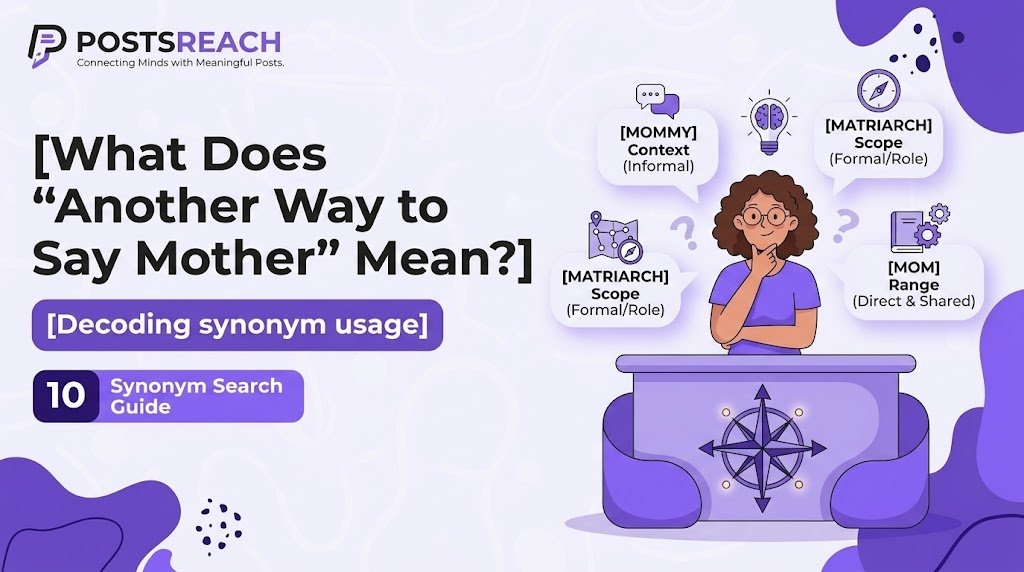
The phrase asks you to name a different word or expression people use for “mother.” In everyday American English, terms such as Mom, Mama, Mommy, and Ma are common alternatives.
For a Family Feud-style question, the strongest answers are usually short and familiar. Contestants are generally better off thinking about what people actually say in daily conversation rather than searching for formal synonyms.
This is why “Mom” is a much more useful guess than a highly technical expression. Reports about a Family Feud clip featuring this question show contestants giving answers such as Mom, Mommy, Mama, Nana, and Nanny, with some guesses rejected or repeated.
Why Use Other Ways to Say Mother?
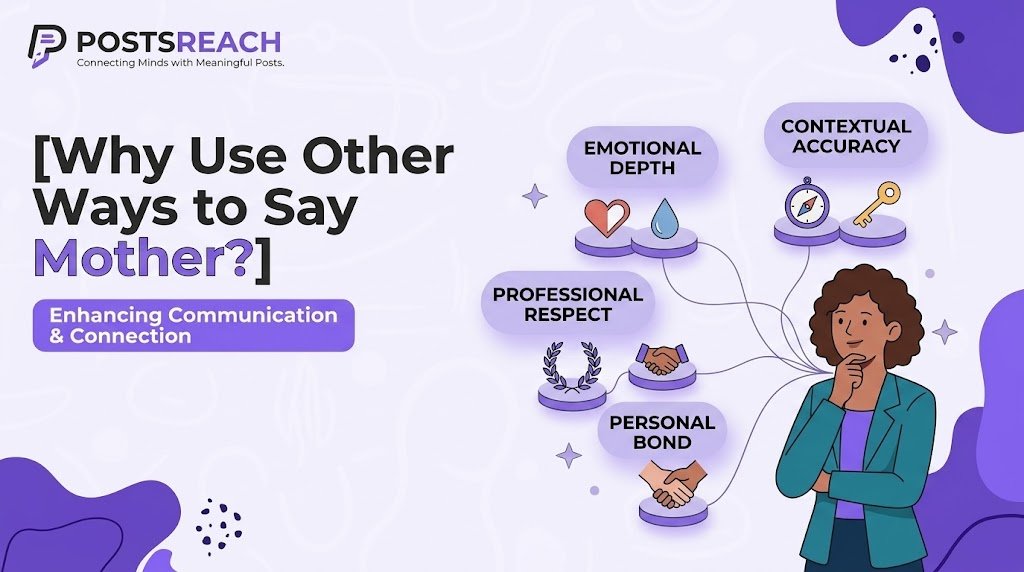
Knowing several alternatives can help you answer a word game, write naturally, or understand different family expressions.
Different terms can also suggest different tones. For example, “Mom” sounds everyday and familiar, while “Mother” sounds more formal.
- Helps with Family Feud-style questions
- Gives you more natural vocabulary
- Shows differences in tone and usage
- Helps with casual and family conversations
- Makes it easier to recognize regional variations
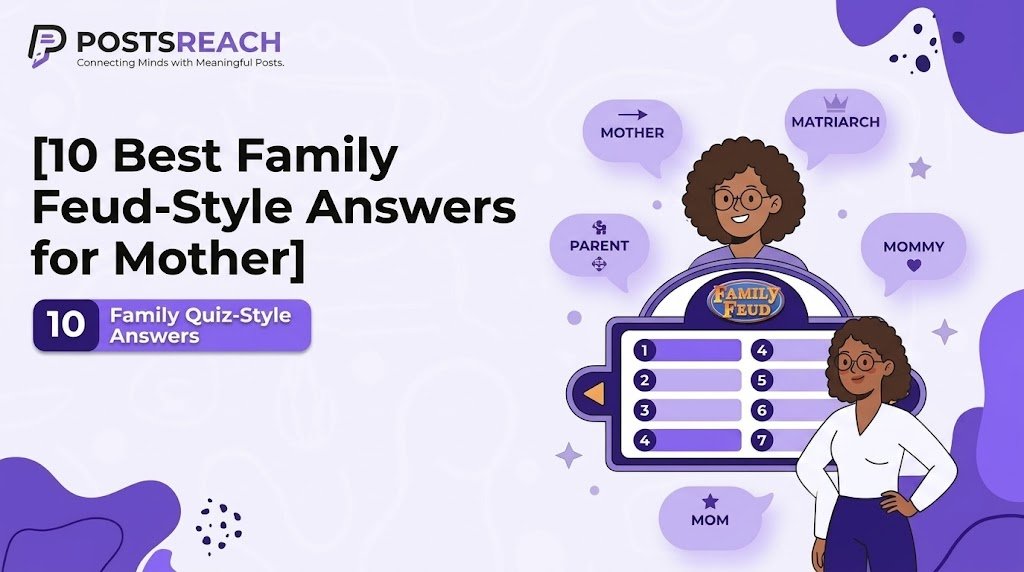
10 Best Family Feud-Style Answers for Mother
1. Mom
Meaning
“Mom” is one of the most common everyday American English terms for a mother. It is familiar, natural, and widely understood across the United States.
Best For
Casual, Friendly, Warm
Example 1
My mom is coming to pick me up after school.
Example 2
I called my mom to tell her the good news.
Quick Tip
If you get only one guess and want a highly familiar American answer, “Mom” is a strong choice.
2. Mommy
Meaning
“Mommy” is an affectionate term commonly used by young children. Adults may also use it when speaking affectionately or jokingly about their mother.
Best For
Casual, Friendly, Warm
Example 1
The little girl ran to her mommy after falling down.
Example 2
He still calls his mother “Mommy” as a family nickname.
Quick Tip
This is especially useful as a Family Feud-style guess because it is a familiar variation rather than a formal synonym.
3. Mama
Meaning
“Mama” is a warm and familiar term for a mother. It is used across many American families and can have a traditional or regional feel.
Best For
Casual, Friendly, Warm
Example 1
Mama always makes the best Sunday breakfast.
Example 2
He called out for Mama when he needed help.
Quick Tip
“Mama” is a particularly natural choice when the question asks how people affectionately refer to their mother.
4. Ma
Meaning
“Ma” is a short, informal way to refer to or address a mother. It has a long history in American English and can sound especially casual.
Best For
Casual, Friendly
Example 1
Ma, can you help me find my keys?
Example 2
He asked his ma if dinner was ready.
Quick Tip
Because it is short and familiar, “Ma” can be a useful guess when the more obvious answers have already been used.
5. Momma
Meaning
“Momma” is an affectionate spelling and pronunciation of “Mom.” It can sound warm, traditional, or regional depending on the speaker and family.
Best For
Casual, Friendly, Warm
Example 1
Momma always told us to treat people with respect.
Example 2
He brought flowers home for his momma.
Quick Tip
Think of “Momma” as a variation of “Mom,” not as a completely different relationship term.
6. Mother
Meaning
“Mother” is the standard and formal word for a female parent. Unlike many affectionate alternatives, it can sound more serious or formal in everyday conversation.
Best For
Professional, Formal, Polite
Example 1
My mother taught me how to cook.
Example 2
She spoke proudly about her mother during the interview.
Quick Tip
It is an obvious dictionary answer, but in a Family Feud setting, more conversational choices may be stronger.
7. Mum
Meaning
“Mum” is a common term for mother in British English and some other varieties of English. Some American families may also use it because of family background or personal preference.
Best For
Casual, Friendly
Example 1
She called her mum after arriving at the airport.
Example 2
His mum sent him a birthday card from overseas.
Quick Tip
“Mum” can be a useful backup answer, especially when the question accepts international English variations.
8. Mummy
Meaning
“Mummy” is an affectionate form of “mother,” especially associated with British English. It is also commonly used by young children.
Best For
Casual, Friendly, Warm
Example 1
The child asked her mummy to read another story.
Example 2
He smiled when his daughter called him and asked for her mummy.
Quick Tip
“Mummy” is less typical in everyday American English than “Mommy,” so consider it a later guess.
9. Madre
Meaning
“Madre” is the Spanish word for mother. It may appear as a playful or bilingual response when people are asked for another term for “mother.”
Best For
Casual, Friendly
Example 1
She jokingly called her mother “madre” during the conversation.
Example 2
His friends laughed when he switched between English and Spanish.
Quick Tip
This can work as a creative guess, but common English terms are generally safer when playing an American survey-based game.
10. Mam
Meaning
“Mam” is a form of address for a mother in some English-speaking regions and family settings. It is more regional than “Mom” or “Mama,” so familiarity depends on where the speaker is from.
Best For
Casual, Friendly
Example 1
He called his mam before leaving for work.
Example 2
Her mam always packed lunch for the family.
Quick Tip
Use this as a backup rather than your first guess because it is not equally common across the United States.
Comparison Table
| Alternative | Best Used In | Tone |
|---|---|---|
| Mom | Everyday American English | Warm, casual |
| Mommy | Family conversations | Affectionate |
| Mama | Family and regional use | Warm |
| Ma | Casual speech | Informal |
| Momma | Family and regional use | Warm |
| Mother | Formal communication | Formal |
| Mum | British/international English | Casual |
| Mummy | British or child speech | Affectionate |
| Madre | Bilingual or playful use | Casual |
| Mam | Regional family speech | Informal |
Common Mistakes
1. Repeating an answer
One of the biggest mistakes in a Family Feud-style question is giving an answer that another contestant already said. A reported clip became memorable because a contestant repeatedly offered answers that had already appeared.
2. Assuming every synonym will be on the board
A word can be linguistically correct without being a survey answer. Family Feud-style questions reward common responses, not every possible dictionary synonym.
3. Choosing an overly formal word first
“Mother” is correct, but everyday speakers often say “Mom” instead. When the question asks how people usually say something, think about natural speech first.
4. Ignoring regional differences
“Mum,” “Mummy,” “Mam,” and similar terms may be common in particular regions or families. Their usefulness depends on the audience and the survey.
5. Overthinking the question
You do not need an unusual phrase to sound clever. Start with the simplest words that ordinary people are likely to say.
Frequently Asked Questions
What is the most common answer for another way to say mother?
“Mom” is one of the safest and most recognizable answers in American English. “Mommy,” “Mama,” and “Ma” are also natural alternatives. However, Family Feud answers come from surveys, so the exact ranking can vary. Reports about the televised question show several of these terms appearing during the game.
What are the top Family Feud answers for mother?
Common answers reported for this question include Mom, Mommy, Mama, Ma, and Momma. A publicly available report cannot reliably establish one official ranking for every version of the survey, so it is better to treat these as strong possible answers rather than guaranteed scores.
Is “Mom” a good Family Feud answer?
Yes. “Mom” is a highly familiar American term and is one of the strongest natural guesses for a question asking how people refer to their mother. If another contestant has already said it, however, repeating it will not help you.
Is “Mommy” different from “Mom”?
Yes. Both refer to a mother, but “Mommy” usually sounds more affectionate or childlike. “Mom” is more common in everyday adult American conversation. In a survey-based game, they may be treated as separate responses if the survey grouped them separately.
Can “Mama” be an answer?
Yes. “Mama” is a widely recognized affectionate term for mother. It is especially common in family and regional speech. It is also one of the kinds of answers that has appeared in reports about the Family Feud question involving different ways to say mother.
Is “Mother” a good answer?
“Mother” is certainly a correct word, but it may not be the strongest first guess for a survey question because the prompt already contains the word “mother.” More casual alternatives such as Mom, Mama, or Mommy may feel more natural to many speakers.
Could “Mum” be a Family Feud answer?
It could be, particularly if the survey included respondents who use British English or families influenced by British terminology. However, “Mum” is less typical in mainstream American English than “Mom,” so it is better viewed as a backup answer.
What should I guess if Mom and Mommy are already taken?
Try another familiar term such as Mama, Ma, or Momma. If those have already been used, you can move toward less common options such as Mother, Mum, or regional variants. The key is to give a genuinely different answer rather than repeating the same word with a different pronunciation.
Conclusion
Finding another way to say mother for a Family Feud question is less about finding obscure synonyms and more about predicting what ordinary people would say. In American English, Mom, Mommy, Mama, Ma, and Momma are natural choices, while Mother, Mum, Mummy, Madre, and Mam provide additional possibilities.
The safest strategy is to start with familiar everyday terms and pay close attention to answers that other players have already given. A dictionary synonym may be correct but still have little value in a survey-based game. Since Family Feud boards are based on specific surveys, no unofficial list can guarantee the exact order or score. When in doubt, think like a typical respondent rather than a dictionary.

Adrian Vale is a digital content specialist focused on practical online content, emerging topics, and reader-focused publishing. He works on structuring articles for clarity and discoverability while keeping the writing natural, useful, and accessible to a broad audience.