Stop Saying “Feel Free to Contact Me”: 10 Better Phrases for 2026
Another way to say “feel free to contact me” includes “please don’t hesitate to reach out,” “you’re welcome to contact me,” “please get in touch,” and “I’m happy to hear from you.” For professional emails, “please don’t hesitate to reach out” sounds polite and natural, while “get in touch” works well in casual communication.
Key Takeaways
- “Feel free to contact me” is a friendly and polite invitation to communicate.
- “Please don’t hesitate to reach out” works well in professional emails.
- “You’re welcome to contact me” sounds warm and open.
- “Please get in touch” is concise and versatile.
- Choose your wording based on the relationship, setting, and level of formality.
What Does “Feel Free to Contact Me” Mean?
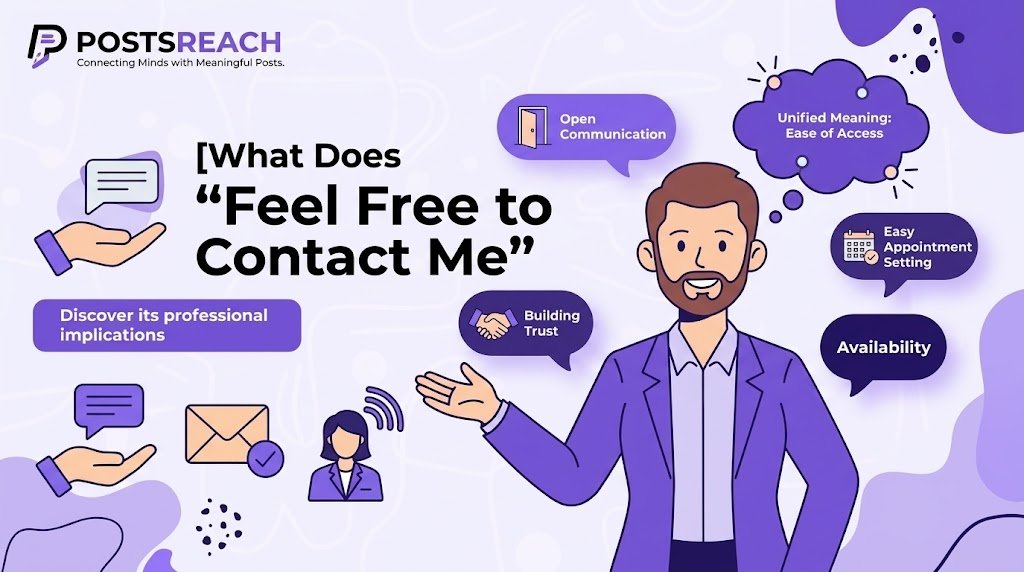
“Feel free to contact me” is a polite way to tell someone that they can communicate with you whenever they need help, information, clarification, or further discussion.
The phrase is common in emails, business messages, customer service, networking, and everyday communication. It creates an open and welcoming tone without making the other person feel pressured to respond.
For example, a professional might write, “Feel free to contact me if you have any questions about the proposal.” The message tells the reader that asking questions is completely acceptable.
Although the phrase is natural, it can become repetitive when used in many emails. Using alternatives can help your writing sound more varied and specific.
Why Use Other Ways to Say “Feel Free to Contact Me”?
Different situations call for different levels of warmth, formality, and directness. A job application, client email, networking message, and casual conversation may all need slightly different wording.
Using alternatives can help you:
- Avoid repeating the same closing phrase.
- Sound more natural and confident.
- Match your message to the relationship.
- Make professional communication more polished.
- Create a warmer or more direct invitation to communicate.
10 Best Other Ways to Say “Feel Free to Contact Me”
1. Please Don’t Hesitate to Reach Out
Meaning
“Please don’t hesitate to reach out” encourages someone to contact you whenever they need assistance or have questions. It is one of the most common professional alternatives to “feel free to contact me.”
Best For
Professional, Formal, Polite
Example 1
Please don’t hesitate to reach out if you need any additional information about the project.
Example 2
If you have questions about the application process, please don’t hesitate to reach out.
Quick Tip
This phrase works especially well at the end of professional emails, but avoid using it repeatedly in every message.
2. Please Get in Touch
Meaning
“Please get in touch” is a simple and direct invitation to contact you. It sounds professional without being overly formal.
Best For
Professional, Friendly, Polite
Example 1
Please get in touch if you would like to discuss the proposal further.
Example 2
If you’re interested in working together, please get in touch.
Quick Tip
Use this option when you want a short, natural closing that fits both business and everyday communication.
3. You’re Welcome to Contact Me
Meaning
“You’re welcome to contact me” clearly tells the reader that contacting you is acceptable. It has a warm and approachable tone.
Best For
Friendly, Warm, Polite
Example 1
You’re welcome to contact me if you need help choosing the right service.
Example 2
You’re welcome to contact me anytime if you have questions about the schedule.
Quick Tip
This phrase is useful when you want to sound approachable without becoming too casual.
4. I’m Happy to Help
Meaning
“I’m happy to help” focuses on your willingness to provide assistance rather than simply inviting someone to contact you. It sounds warm and supportive.
Best For
Friendly, Warm, Polite
Example 1
If you need help setting up the account, I’m happy to help.
Example 2
Let me know if you have any questions. I’m happy to help.
Quick Tip
Use this phrase when the main reason for future contact is assistance or problem-solving.
5. I’m Available If You Have Any Questions
Meaning
This phrase tells the reader that you are available to answer questions or provide clarification. It is direct, professional, and reassuring.
Best For
Professional, Formal, Polite
Example 1
I’m available if you have any questions about the contract.
Example 2
I’m available if you’d like to review any part of the proposal together.
Quick Tip
This is a strong choice when you want to emphasize your availability rather than simply invite general contact.
6. Let Me Know If You Need Anything
Meaning
“Let me know if you need anything” is a friendly and flexible way to offer help. It can refer to questions, additional information, assistance, or another request.
Best For
Casual, Friendly, Warm
Example 1
Thanks for reviewing the files. Let me know if you need anything else.
Example 2
I’ve attached the updated design, so let me know if you need anything.
Quick Tip
This sounds natural in everyday workplace communication, especially when you already have an ongoing conversation.
7. I’d Be Glad to Hear From You
Meaning
“I’d be glad to hear from you” expresses genuine openness to receiving a response. It can sound warmer and more personal than a standard business closing.
Best For
Formal, Friendly, Warm, Polite
Example 1
If you have any thoughts about the proposal, I’d be glad to hear from you.
Example 2
If you’re interested in discussing the opportunity, I’d be glad to hear from you.
Quick Tip
Use this when you want the invitation to feel personal rather than purely transactional.
8. Please Reach Out Anytime
Meaning
“Please reach out anytime” is an inviting way to encourage future communication. The word “anytime” adds a relaxed and accessible tone.
Best For
Friendly, Warm, Polite
Example 1
Please reach out anytime if you need assistance with your order.
Example 2
If you have more questions after reviewing the guide, please reach out anytime.
Quick Tip
This works well for customer service, client communication, and friendly professional relationships.
9. I’m Here If You Need Anything
Meaning
“I’m here if you need anything” communicates availability and support. It is warmer and more personal than a strictly formal invitation to contact someone.
Best For
Friendly, Warm
Example 1
Take your time reviewing the options. I’m here if you need anything.
Example 2
If you run into any issues with the setup, I’m here if you need anything.
Quick Tip
Use this when you want to reassure someone that support is available without sounding overly formal.
10. I Look Forward to Hearing From You
Meaning
“I look forward to hearing from you” expresses that you expect or welcome a future response. It is particularly common in professional correspondence.
Best For
Professional, Formal, Polite
Example 1
Thank you for considering my proposal. I look forward to hearing from you.
Example 2
Please review the attached information, and I look forward to hearing from you.
Quick Tip
Use this when you are expecting a reply or decision rather than simply offering general availability.
Comparison Table
| Alternative | Best Used In | Tone |
|---|---|---|
| Please Don’t Hesitate to Reach Out | Professional emails | Professional, Polite |
| Please Get in Touch | Business and general communication | Professional, Friendly |
| You’re Welcome to Contact Me | Customer and personal communication | Warm, Polite |
| I’m Happy to Help | Support and service messages | Warm, Friendly |
| I’m Available If You Have Any Questions | Professional communication | Formal, Polite |
| Let Me Know If You Need Anything | Workplace and casual messages | Friendly, Warm |
| I’d Be Glad to Hear From You | Networking and professional messages | Warm, Polite |
| Please Reach Out Anytime | Client and customer communication | Friendly, Warm |
| I’m Here If You Need Anything | Supportive communication | Warm, Friendly |
| I Look Forward to Hearing From You | Formal emails and applications | Professional, Formal |
Common Mistakes
1. Using the Same Closing in Every Email
Repeating “feel free to contact me” in every message can make your writing sound formulaic. Choose an alternative that matches the purpose of each message.
2. Making a Simple Message Too Formal
Phrases such as “I remain at your disposal” may sound stiff in modern American English. For most professional communication, “please get in touch” or “please reach out” is more natural.
3. Confusing an Invitation With an Expected Reply
“Feel free to contact me” gives someone permission to reach out, while “I look forward to hearing from you” can suggest that you expect a response. Choose based on your actual intention.
4. Using “Anytime” When You Need a Specific Response
“Please reach out anytime” is open-ended. If you need someone to respond by a certain date, clearly state the deadline instead of relying on a general invitation.
5. Sounding Too Casual With the Wrong Audience
“I’m here if you need anything” can sound warm and helpful, but it may not fit every formal business situation. Consider your relationship with the reader before choosing a more personal phrase.
Frequently Asked Questions
What is another way to say “feel free to contact me”?
Common alternatives include “please don’t hesitate to reach out,” “please get in touch,” “you’re welcome to contact me,” and “please reach out anytime.” The best option depends on your tone. For professional emails, “please don’t hesitate to reach out” is a natural choice, while “let me know if you need anything” sounds more conversational.
What is a professional way to say “feel free to contact me”?
“Please don’t hesitate to reach out” is one of the most natural professional alternatives. You can also say “I’m available if you have any questions” or “please get in touch.” These phrases work well in business emails because they are polite, clear, and welcoming without sounding overly casual.
What is a more friendly way to say “feel free to contact me”?
For a warmer tone, try “you’re welcome to contact me,” “please reach out anytime,” or “I’m here if you need anything.” These expressions make your availability sound approachable and supportive. They work particularly well with clients, coworkers, customers, classmates, or people you already know.
Is “please reach out” better than “feel free to contact me”?
Neither phrase is automatically better. “Please reach out” is shorter and often sounds more modern, while “feel free to contact me” clearly communicates that the person is welcome to initiate contact. Your choice should depend on the audience, context, and level of formality.
How do you say “feel free to contact me” in an email?
You can end an email with “Please don’t hesitate to reach out if you have any questions,” “Please get in touch if you need additional information,” or “I’m available if you’d like to discuss this further.” Choose the version that matches whether you want general contact, questions, or a specific follow-up.
What is a polite way to invite someone to contact you?
“You’re welcome to contact me” and “please don’t hesitate to reach out” are both polite options. If you want to sound especially helpful, “I’m happy to help if you have any questions” makes your willingness to assist more explicit.
Is “I look forward to hearing from you” the same as “feel free to contact me”?
The phrases have different meanings. “Feel free to contact me” gives someone an open invitation to reach out, while “I look forward to hearing from you” usually suggests that you expect or welcome a response. The second phrase is therefore more appropriate when a reply is part of the next step.
What is a short alternative to “feel free to contact me”?
“Please reach out,” “get in touch,” and “let me know” are short alternatives. For example, “Please reach out if you have questions” is concise and professional. “Let me know if you need anything” is more conversational and works well when you already have an active conversation with the reader.
Conclusion
“Feel free to contact me” is useful, but you don’t need to use it in every email or message. “Please don’t hesitate to reach out” is a strong professional choice, while “please get in touch” keeps the message concise and natural. For a warmer tone, try “you’re welcome to contact me,” “please reach out anytime,” or “I’m here if you need anything.”
If you expect a response, “I look forward to hearing from you” may be more appropriate. Match the wording to your purpose: invite contact, offer help, or request a reply. A small change in phrasing can make your communication feel more natural, specific, and appropriate for the reader.

Adrian Vale is a digital content specialist focused on practical online content, emerging topics, and reader-focused publishing. He works on structuring articles for clarity and discoverability while keeping the writing natural, useful, and accessible to a broad audience.