Another Way to Say Caught My Attention
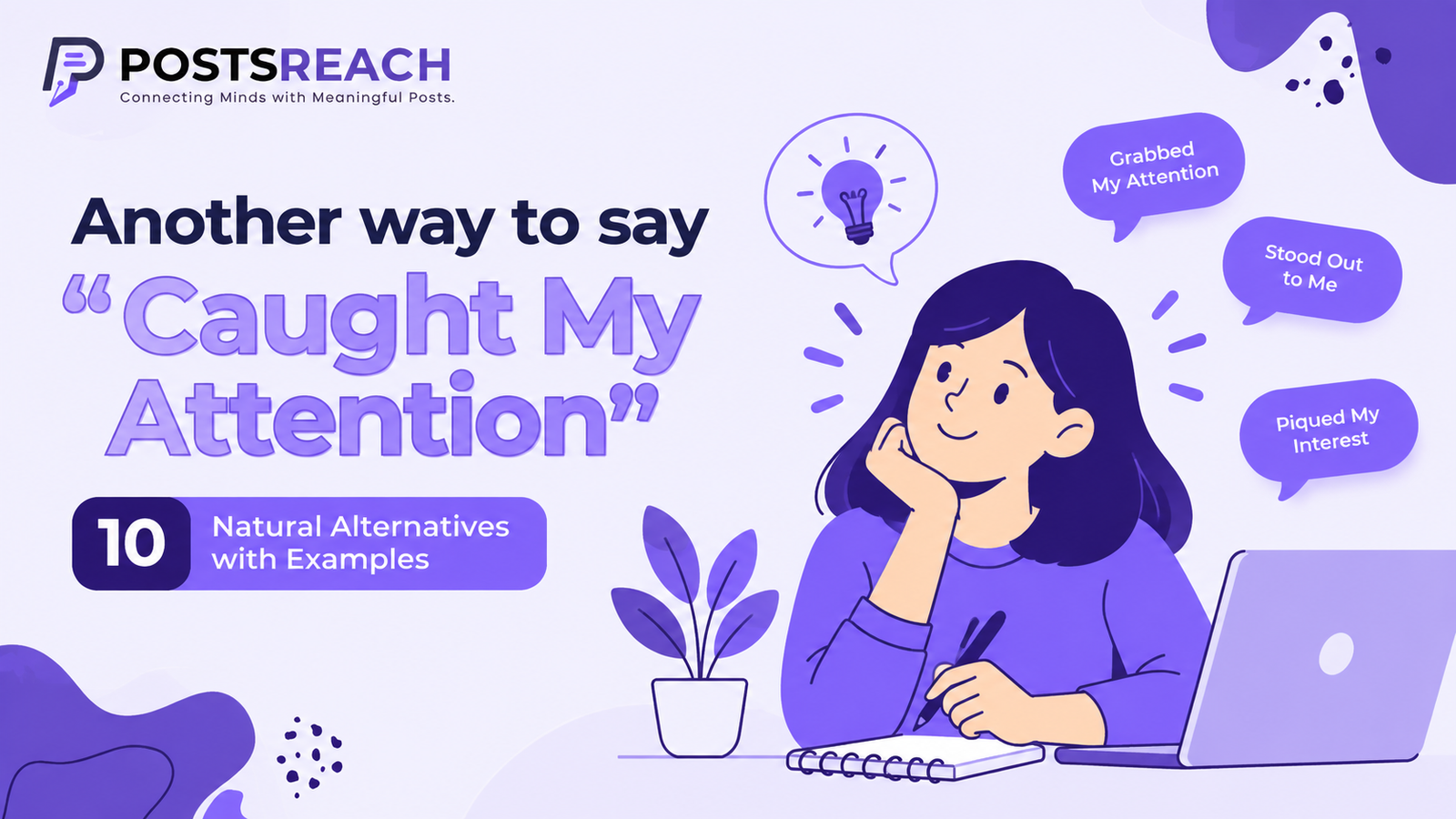
Another way to say “caught my attention” includes grabbed my attention, sparked my interest, stood out to me, piqued my interest, and drew my attention. The best alternative depends on your tone and context. Some phrases work well in professional writing, while others sound more natural in casual conversations.
Key Takeaways
- “Caught my attention” means something made you notice it or become interested in it.
- “Grabbed my attention” is stronger and more direct.
- “Piqued my interest” suggests curiosity without strong excitement.
- “Stood out to me” works naturally in both personal and professional writing.
- Choosing the right alternative depends on tone, audience, and context.
What Does “Another Way to Say Caught My Attention” Mean?
The phrase “another way to say caught my attention” refers to finding alternative words or expressions for something that made you notice, observe, or become interested in it.
People use “caught my attention” in everyday conversations, emails, essays, job applications, reviews, and professional communication. It can describe something visually noticeable, emotionally interesting, or intellectually engaging.
For example, an article may catch your attention because of its headline, while a business opportunity may catch your attention because of its potential value.
Why Use Other Ways to Say “Caught My Attention”?
Using alternatives can make your writing sound more natural and precise. The phrase “caught my attention” is useful, but repeating it too often can make your writing feel limited.
Different alternatives can help you:
- Avoid repeating the same phrase.
- Match casual or professional situations.
- Express different levels of interest.
- Sound more natural in American English.
- Make your writing more specific and engaging.
The key is choosing a phrase that reflects what actually happened. Something may simply stand out, spark curiosity, or strongly capture your interest.
10 Best Other Ways to Say “Caught My Attention”
1. Grabbed My Attention
Meaning
“Grabbed my attention” is a strong and direct alternative. It suggests that something immediately made you stop and notice it.
This phrase often implies a stronger reaction than “caught my attention.”
Best For
- Casual
- Professional
- Friendly
Example 1
The bold headline grabbed my attention as soon as I opened the website.
Example 2
Her presentation grabbed my attention because she started with an unexpected question.
Quick Tip
Use this phrase when something had an immediate or powerful impact on you.
2. Piqued My Interest
Meaning
“Piqued my interest” means something made you curious and interested enough to learn more. It does not necessarily mean you were fully convinced or excited.
It is a polished phrase that works especially well when discussing curiosity.
Best For
- Professional
- Formal
- Polite
Example 1
The company’s approach to remote work piqued my interest.
Example 2
That documentary piqued my interest in the history of the city.
Quick Tip
Use “piqued my interest” when something creates curiosity rather than immediate excitement.
3. Stood Out to Me
Meaning
“Stood out to me” means something was more noticeable or memorable than other things around it. It is one of the most natural alternatives in everyday American English.
The phrase works well for positive observations, although context can also make it neutral.
Best For
- Casual
- Professional
- Friendly
Example 1
One detail that stood out to me was the company’s focus on customer service.
Example 2
Her answer stood out to me because it was honest and well explained.
Quick Tip
Use this phrase when comparing something with other options, ideas, or details.
4. Sparked My Interest
Meaning
“Sparked my interest” means something created a new sense of curiosity or enthusiasm. It often suggests that the interest may grow over time.
The phrase feels natural and positive without sounding overly dramatic.
Best For
- Professional
- Friendly
- Warm
Example 1
The workshop sparked my interest in graphic design.
Example 2
Reading his story sparked my interest in starting my own business.
Quick Tip
Choose this phrase when something begins or creates a new interest.
5. Drew My Attention
Meaning
“Drew my attention” is a slightly more formal alternative to “caught my attention.” It means something caused you to notice or focus on it.
This phrase works particularly well in professional, academic, and written communication.
Best For
- Professional
- Formal
- Polite
Example 1
The unusual trend in the data drew my attention.
Example 2
The opening statement drew my attention to an important issue.
Quick Tip
Use “drew my attention” when you want a polished and professional tone.
6. Caught My Eye
Meaning
“Caught my eye” usually refers to something visually noticeable. It is common when talking about clothing, products, advertisements, designs, or people.
The phrase is more visual than “caught my attention.”
Best For
- Casual
- Friendly
- Warm
Example 1
That blue jacket caught my eye while I was shopping downtown.
Example 2
The colorful design caught my eye before I even read the article.
Quick Tip
Use “caught my eye” when appearance or visual appeal is the main reason something stood out.
7. Made Me Take Notice
Meaning
“Made me take notice” means something was important, unusual, or impressive enough to make you pay closer attention.
It can suggest that you initially overlooked something but then realized it deserved attention.
Best For
- Professional
- Formal
- Friendly
Example 1
The company’s rapid growth made me take notice.
Example 2
His consistent improvement over the season made everyone take notice.
Quick Tip
Use this phrase when something becomes increasingly difficult to ignore.
8. Intrigued Me
Meaning
“Intrigued me” means something made you curious because it seemed unusual, interesting, or mysterious. It often suggests a deeper level of curiosity.
This word can sound more thoughtful than “caught my attention.”
Best For
- Professional
- Formal
- Warm
Example 1
The idea intrigued me, so I decided to research it further.
Example 2
Her unusual career path intrigued me from the beginning.
Quick Tip
Use “intrigued me” when something makes you genuinely curious and eager to know more.
9. Made an Impression on Me
Meaning
“Made an impression on me” means something affected you in a memorable way. Unlike “caught my attention,” this phrase often suggests a stronger or longer-lasting reaction.
It can describe a person, experience, idea, or event.
Best For
- Professional
- Warm
- Polite
Example 1
The manager’s honesty made a strong impression on me.
Example 2
My first visit to the museum made a lasting impression on me.
Quick Tip
Use this phrase when something remains memorable after the first encounter.
10. Resonated With Me
Meaning
“Resonated with me” means something connected with you personally, emotionally, or intellectually. It goes beyond simply noticing something.
This phrase is best when an idea, message, or experience feels personally meaningful.
Best For
- Professional
- Warm
- Formal
Example 1
Her message about perseverance really resonated with me.
Example 2
The article resonated with me because I had experienced something similar.
Quick Tip
Use this phrase when something creates a meaningful personal connection.
Comparison Table
| Alternative | Best Used In | Tone |
|---|---|---|
| Grabbed My Attention | Strong reactions, conversations | Direct |
| Piqued My Interest | Professional writing, curiosity | Polished |
| Stood Out to Me | Reviews, feedback, conversations | Natural |
| Sparked My Interest | Personal and professional writing | Positive |
| Drew My Attention | Formal writing, reports | Professional |
| Caught My Eye | Visual descriptions | Casual |
| Made Me Take Notice | Important developments | Strong |
| Intrigued Me | Curiosity and discovery | Thoughtful |
| Made an Impression on Me | Personal experiences, feedback | Warm |
| Resonated With Me | Emotional or personal connections | Meaningful |
Common Mistakes
1. Using “Caught My Eye” for Nonvisual Ideas
“Caught my eye” usually relates to something you see. It may sound unnatural when discussing an abstract idea, opinion, or concept.
Instead, use phrases like “piqued my interest” or “intrigued me.”
2. Using “Piqued My Interest” Incorrectly
The correct spelling is piqued, not “peaked” or “peeked.” “Piqued my interest” means something created curiosity.
This is a common mistake in both casual and professional writing.
3. Choosing a Phrase That Is Too Strong
“Grabbed my attention” suggests a strong reaction, while “stood out to me” can be more subtle. Choose wording that matches your actual level of interest.
Overstating your reaction can make your writing sound unnatural.
4. Ignoring the Context
Some alternatives sound better in formal writing than casual conversation. For example, “drew my attention” works well in a report but may sound overly formal when texting a friend.
Always consider your audience.
5. Repeating the Same Expression
Using “caught my attention” several times in the same article or email can weaken your writing. Use natural variations where they improve clarity.
However, do not replace every phrase simply for variety if the original wording is already the best choice.
Frequently Asked Questions
What is another way to say “caught my attention”?
Common alternatives include “grabbed my attention,” “piqued my interest,” “stood out to me,” “sparked my interest,” and “drew my attention.” The best choice depends on context. “Grabbed my attention” is stronger, while “piqued my interest” is better for curiosity.
What is a professional way to say “caught my attention”?
For professional communication, use “drew my attention,” “piqued my interest,” or “stood out to me.” These phrases sound natural in emails, reports, interviews, and business discussions without being overly formal or dramatic.
Is “caught my eye” the same as “caught my attention”?
Not exactly. “Caught my eye” usually refers to something visually noticeable, while “caught my attention” can describe anything that makes you notice or become interested. An image may catch your eye, while an idea may catch your attention.
What does “piqued my interest” mean?
“Piqued my interest” means something made you curious and interested in learning more. It does not always suggest strong excitement. For example, a job description might pique your interest enough to encourage you to research the company.
Can I say “grabbed my attention” in a professional email?
Yes. “Grabbed my attention” can work in professional writing, especially when discussing an article, idea, presentation, or opportunity. However, “drew my attention” or “stood out to me” may sound slightly more polished in highly formal communication.
What is a stronger phrase than “caught my attention”?
“Grabbed my attention” is generally stronger because it suggests an immediate and powerful reaction. “Made me take notice” can also work when something becomes too important or impressive to ignore.
What does “stood out to me” mean?
“Stood out to me” means something was more noticeable, interesting, or memorable than other things. It is commonly used when giving feedback, sharing an opinion, or explaining why something was particularly noticeable.
Is “resonated with me” a synonym for “caught my attention”?
They are related but not identical. “Caught my attention” means something made you notice it, while “resonated with me” means it created a deeper personal, emotional, or intellectual connection. “Resonated with me” usually describes a stronger response.
Conclusion
Finding another way to say “caught my attention” can make your writing clearer, more natural, and better suited to the situation. The right phrase depends on what you want to express and how strongly something affected you.
For a strong reaction, use “grabbed my attention.” If something made you curious, “piqued my interest” or “intrigued me” may work better. For everyday writing, “stood out to me” sounds natural and versatile. When discussing a visual detail, “caught my eye” is often the best choice.
In professional communication, phrases such as “drew my attention” and “sparked my interest” can sound polished without feeling stiff. The best alternative is the one that accurately reflects your reaction and fits your audience.