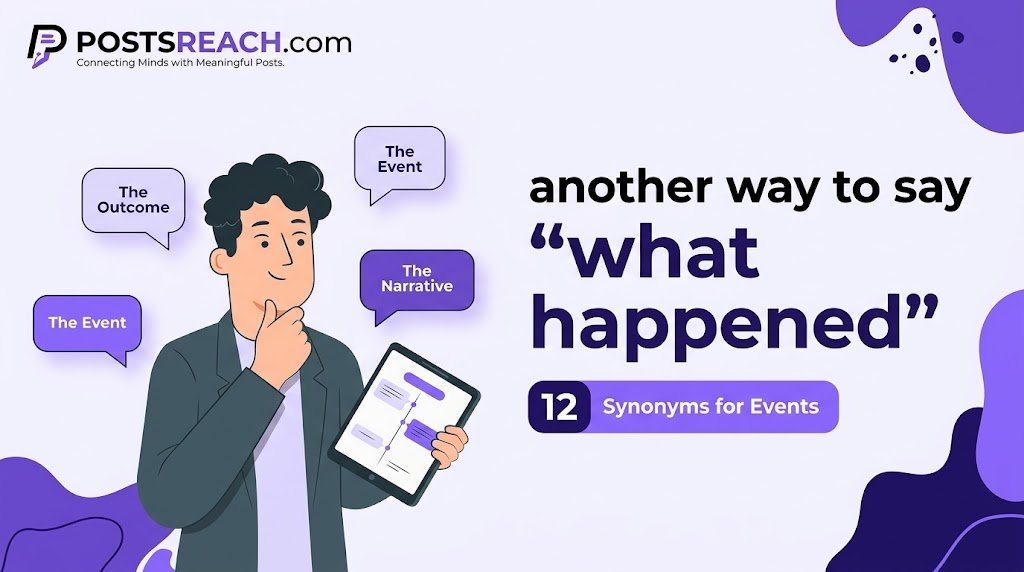
“What Happened” Synonyms: 10 Formal & Casual Options
If you need another way to say what happened, you can use phrases such as “what took place,” “what occurred,” “what went on,” “what happened next,” or “what transpired.” The best choice depends on tone and context. “What went on” sounds conversational, while “what occurred” and “what transpired” are more formal.
Key Takeaways
- “What took place” is a natural alternative for neutral or formal writing.
- “What occurred” works well in professional and factual contexts.
- “What went on” is more casual and conversational.
- “What transpired” has a formal tone and suits reports or serious discussions.
- Choose an alternative based on whether you want to ask about an event, explain a situation, or request details.
What Does “Another Way to Say What Happened” Mean?
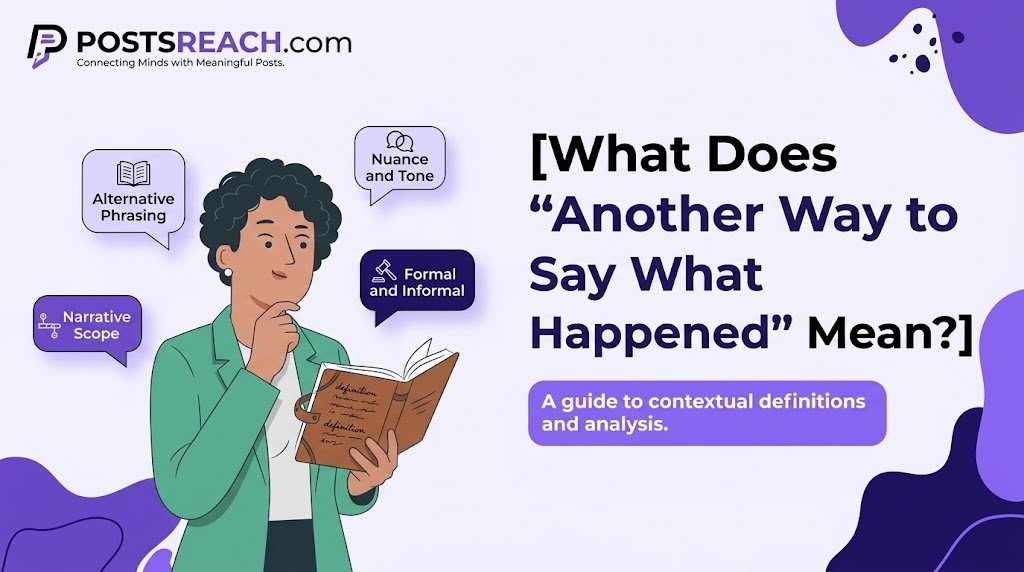
“What happened” is a common phrase used to ask about an event, situation, or change that has already taken place. It can be used when someone wants an explanation, more details, or a clear account of an event.
People often search for another way to say what happened because the phrase can become repetitive or may not fit a particular tone. For example, “what went on” sounds casual, while “what occurred” is more formal.
The phrase appears frequently in conversations, emails, workplace communication, news writing, reports, stories, and everyday questions. The best alternative depends on whether you are asking a question, describing an event, or discussing something unexpected.
Why Use Other Ways to Say “What Happened”?
Choosing a different expression can make your writing more precise and natural. It can also help you match the tone of a conversation, email, report, or story.
- Avoid repeating “what happened.”
- Make questions sound more natural.
- Adjust your language for formal or casual settings.
- Describe events with greater precision.
- Improve professional and academic writing.
- Add variety to storytelling and explanations.
10 Best Other Ways to Say “What Happened”
1. What Took Place
Meaning
“What took place” refers to an event or series of events that occurred. It is a neutral phrase that sounds slightly more formal than “what happened.”
Best For
Professional, Formal, Polite
Example 1
The manager asked the employees to explain what took place during the meeting.
Example 2
The report provides a detailed account of what took place that afternoon.
Quick Tip
Use “what took place” when discussing a specific event in professional, academic, or formal writing.
2. What Occurred
Meaning
“What occurred” is a formal alternative to “what happened.” It is often used when discussing an event in a factual, professional, or objective way.
Best For
Professional, Formal
Example 1
The technician inspected the equipment to determine what occurred.
Example 2
We need to understand what occurred before making a final decision.
Quick Tip
Choose “what occurred” when you want your writing to sound factual and objective.
3. What Went On
Meaning
“What went on” is a casual expression used to ask about events or activities that happened. It often sounds more conversational and relaxed than “what happened.”
Best For
Casual, Friendly
Example 1
I was out of the office all morning, so what went on while I was gone?
Example 2
She called her friend to find out what went on at the party.
Quick Tip
Use “what went on” with friends, family, or in informal conversations rather than formal reports.
4. What Transpired
Meaning
“What transpired” means what happened or developed during a particular situation. It has a distinctly formal tone and is often used in reports, official statements, and serious discussions.
Best For
Professional, Formal
Example 1
The committee reviewed the documents to determine what transpired during the negotiation.
Example 2
Several witnesses provided different accounts of what transpired that evening.
Quick Tip
Use this phrase sparingly because it can sound overly formal in everyday conversation.
5. What Happened Next
Meaning
“What happened next” specifically asks about the event or action that followed something else. It is useful when events occur in a sequence.
Best For
Casual, Friendly, Professional
Example 1
After the alarm went off, what happened next?
Example 2
The first part of the story was surprising, but what happened next was even more unexpected.
Quick Tip
Use this phrase when you are interested in the next stage of an event rather than the entire situation.
6. What Came About
Meaning
“What came about” refers to how a particular situation, result, or event developed. It focuses more on the process that led to something than simply asking what happened.
Best For
Formal, Professional
Example 1
The director explained how the partnership came about.
Example 2
No one fully understood how the sudden change came about.
Quick Tip
Use “came about” when asking about the development or origin of a situation rather than a simple event.
7. What Occurred During the Event
Meaning
“What occurred during the event” is a more specific version of “what happened.” It directs attention to particular actions or incidents within a defined event.
Best For
Professional, Formal
Example 1
The supervisor asked the staff to document what occurred during the event.
Example 2
The security team reviewed the footage to determine what occurred during the event.
Quick Tip
This phrase works best when the event itself has already been identified and you need details about what happened within it.
8. What Happened in the Situation
Meaning
“What happened in the situation” asks for an explanation of events within a particular circumstance. It is useful when the surrounding context matters.
Best For
Casual, Friendly, Professional
Example 1
Can you explain what happened in the situation with the new customer?
Example 2
I understand the decision, but I still want to know what happened in the situation.
Quick Tip
Use this phrase when you need to connect the events to a specific circumstance or problem.
9. What Unfolded
Meaning
“What unfolded” describes events as they developed over time. It often suggests that a situation changed gradually or that several events happened in sequence.
Best For
Professional, Formal, Friendly
Example 1
The article describes what unfolded after the company announced the changes.
Example 2
We watched carefully as the situation unfolded throughout the afternoon.
Quick Tip
Use “what unfolded” when the events developed over a period of time rather than occurring as one isolated action.
10. What Actually Happened
Meaning
“What actually happened” emphasizes the facts or truth behind a situation. It can suggest that there are conflicting accounts, confusion, or uncertainty about an event.
Best For
Casual, Friendly, Polite
Example 1
I heard several different stories, so I want to know what actually happened.
Example 2
Before we make assumptions, let’s find out what actually happened.
Quick Tip
Use this phrase when you want to distinguish verified events from rumors, assumptions, or incomplete information.
Comparison Table
| Alternative | Best Used In | Tone |
|---|---|---|
| What Took Place | Reports, workplace communication | Neutral/Formal |
| What Occurred | Professional and factual writing | Formal |
| What Went On | Everyday conversations | Casual |
| What Transpired | Reports and serious discussions | Formal |
| What Happened Next | Stories and sequential events | Neutral |
| What Came About | Explaining how something developed | Formal |
| What Occurred During the Event | Incident reports and documentation | Formal |
| What Happened in the Situation | Specific circumstances | Neutral |
| What Unfolded | Developing events and narratives | Neutral/Formal |
| What Actually Happened | Clarifying facts or conflicting accounts | Direct |
Common Mistakes
1. Using “What Transpired” in Every Conversation
Although grammatically correct, “what transpired” can sound unnecessarily formal in casual conversation. “What happened” or “what went on” is usually more natural with friends.
2. Choosing an Alternative Without Considering Context
Different phrases emphasize different ideas. “What happened next” focuses on sequence, while “what actually happened” emphasizes the facts behind a situation.
3. Using “What Unfolded” for a Single Simple Event
“Unfolded” often suggests that events developed over time. For a simple action, “what occurred” or “what took place” may communicate the idea more clearly.
4. Making a Simple Question Too Complicated
Not every sentence needs a sophisticated replacement. If “What happened?” sounds natural and clear, there is no reason to replace it simply to sound more formal.
5. Confusing “What Came About” With “What Happened”
“What came about” usually focuses on how something developed or came into existence. It is not always a direct substitute for asking about an event that has already occurred.
Frequently Asked Questions
What is a professional way to say “what happened”?
“What occurred” and “what took place” are strong professional alternatives. Both sound neutral and factual without being overly conversational. The phrase “What occurred” is especially useful in reports, workplace communication, and formal explanations, while “what took place” works naturally when discussing a specific meeting, event, incident, or situation.
What is a formal way to say “what happened”?
“What transpired,” “what occurred,” and “what took place” are formal alternatives. The word “What transpired” has the most formal tone and can sound somewhat literary or official. For most professional writing, “what occurred” or “what took place” provides a clearer and more natural choice.
What is a casual way to say “what happened”?
“What went on?” is a common casual alternative. You can also say “what was going on?” when asking about an ongoing situation. These expressions sound relaxed and conversational, making them suitable for talking with friends, family members, classmates, or coworkers in informal situations.
What is another way to ask “What happened?”
Depending on your meaning, you can ask “What took place?”, “What occurred?”, “What went on?”, “What happened next?”, or “What actually happened?” Each option has a slightly different purpose. For example, “What happened next?” asks about the next event, while “What actually happened?” emphasizes finding the facts.
Is “what transpired” the same as “what happened”?
“What transpired” generally means “what happened,” but it has a more formal tone. It is often used when discussing serious events, official matters, reports, or detailed accounts. In everyday conversation, it may sound more formal than necessary, so “what happened” or “what went on” is often more natural.
What is a better way to say “what happened next”?
“What followed?” is a concise alternative to “what happened next.” You can also use “what came next” or simply “what happened afterward.” “What followed?” works particularly well in formal writing and storytelling when you want to describe the next event in a sequence.
How do you say “what happened” without sounding rude?
The wording depends on your tone. “Could you explain what happened?” sounds polite and neutral, while “Can you tell me what took place?” is slightly more formal. If you are discussing a sensitive situation, adding “when you have a moment” can make the request sound less demanding.
What is the best alternative to “what happened”?
There is no single best alternative for every situation. “What took place” is versatile and neutral, “what occurred” is professional, “what went on” is casual, and “what transpired” is formal. If you simply want a natural everyday expression, “what happened” itself is often the clearest choice.
Conclusion
There are several natural alternatives to “what happened,” and each one works best in a slightly different context. “What took place” is a versatile choice for formal and professional writing, while “what occurred” sounds factual and objective. For casual conversations, “what went on” feels more relaxed. If you are describing a sequence, “what happened next” is more precise, while “what unfolded” works well when events develop over time. “What actually happened” is useful when you want to separate facts from assumptions or conflicting accounts. The key is not to replace a familiar phrase simply for the sake of variety. Choose wording that accurately communicates your meaning and fits your audience, tone, and situation.

The PostsReach Editorial Team develops, reviews, and maintains the site’s published content. The team works across topics to ensure articles are clear, useful, well-structured, and consistent with PostsReach’s editorial standards. Content may be reviewed and updated as information changes.