“Thank You” Synonyms: 10 Heartfelt Alternatives in 2026
Another way to say “thank” includes appreciate, acknowledge, express gratitude, be grateful to, show appreciation, recognize, praise, commend, credit, and express thanks. The best alternative depends on context. Use “appreciate” for everyday or professional situations, “express gratitude” for formal writing, and “commend” when praising someone for a specific action.
Key Takeaways
- “Appreciate” is one of the most natural alternatives to “thank.”
- “Express gratitude” works especially well in formal and professional writing.
- “Acknowledge” focuses on recognizing someone’s help, effort, or contribution.
- “Commend” and “praise” add an element of approval or admiration.
- The right alternative depends on whether you want to show gratitude, recognition, or praise.
What Does “Another Way to Say Thank” Mean?
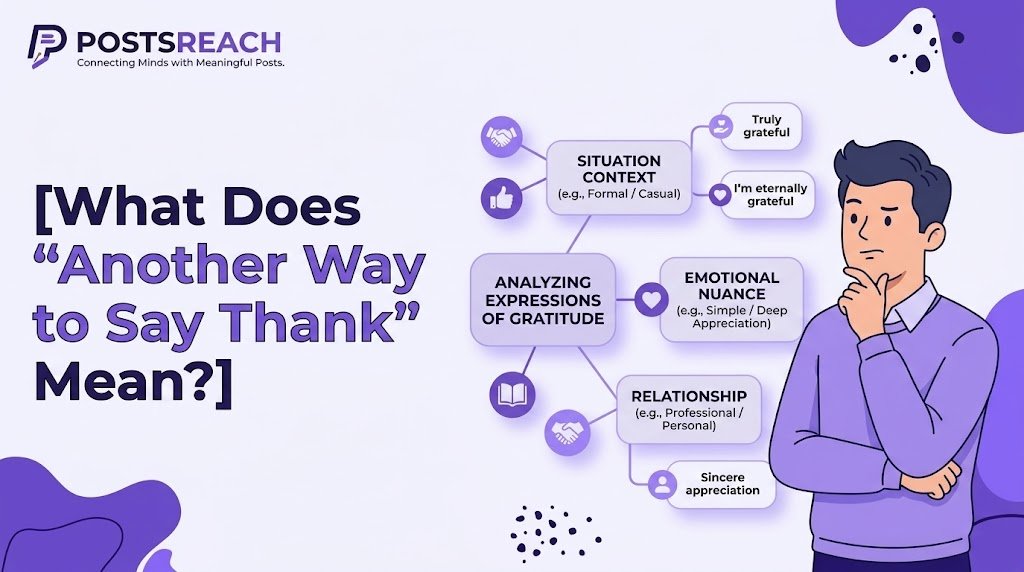
“Another way to say thank” means finding a different word or phrase to express gratitude or appreciation. The verb “thank” is commonly used when someone wants to show appreciation for help, kindness, support, advice, a gift, or an action.
For example, instead of saying, “I want to thank you for your help,” you could say, “I really appreciate your help” or “I’m grateful for your support.”
People often search for alternatives to “thank” when writing emails, messages, speeches, cards, essays, or professional correspondence. The best alternative depends on how warm, formal, or specific you want the expression of gratitude to sound.
Why Use Other Ways to Say “Thank”?

“Thank” is simple and natural, but repeating it can make your writing feel predictable. Using a more specific expression can also help you communicate the exact kind of appreciation you want to show.
Other alternatives can help you:
- Avoid repeating “thank” in the same message.
- Sound more natural and conversational.
- Express stronger or more heartfelt gratitude.
- Choose language appropriate for professional situations.
- Recognize someone’s effort or contribution.
- Add warmth and sincerity to a message.
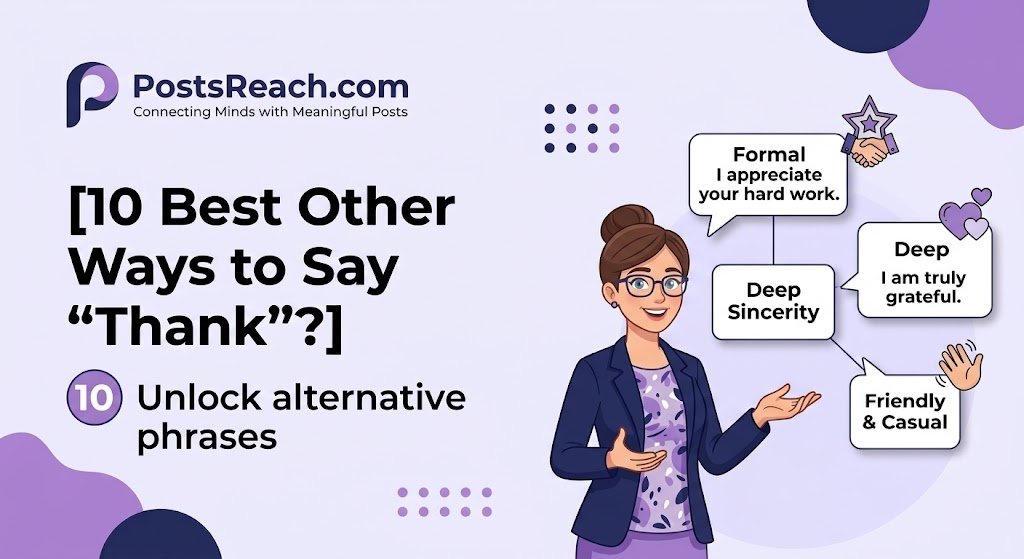
10 Best Other Ways to Say “Thank”
1. Appreciate
Meaning
“Appreciate” means to recognize the value or importance of something someone has done. It is one of the most natural replacements for “thank” and works in both casual and professional communication.
Best For
Professional, Casual, Friendly, Polite
Example 1
I really appreciate you taking the time to review my proposal.
Example 2
We appreciate your patience while we worked through the issue.
Quick Tip
Use “I appreciate…” when you want a simple, natural alternative to “thank you for…”
2. Express Gratitude
Meaning
“Express gratitude” means to openly communicate that you are thankful for someone’s help, kindness, or contribution. It has a more formal tone than simply saying “thank.”
Best For
Formal, Professional, Warm
Example 1
I would like to express my gratitude for your continued support.
Example 2
The director expressed her gratitude to everyone who helped organize the event.
Quick Tip
Use this phrase in formal letters, speeches, reports, and professional messages.
3. Be Grateful To
Meaning
“To be grateful to” means to feel and communicate genuine appreciation toward someone. It often sounds more personal and heartfelt than a simple “thank you.”
Best For
Warm, Friendly, Polite
Example 1
I’m grateful to you for helping me through a difficult project.
Example 2
We’re grateful to our neighbors for looking after our home while we were away.
Quick Tip
Use “grateful” when you want your appreciation to sound sincere and personal.
4. Acknowledge
Meaning
“Acknowledge” means to recognize someone’s contribution, assistance, effort, or role in something. It does not always express strong gratitude, but it can communicate respectful recognition.
Best For
Professional, Formal
Example 1
We would like to acknowledge the team for its hard work on the project.
Example 2
The report acknowledges the volunteers who contributed their time to the program.
Quick Tip
Use “acknowledge” when recognition is more important than emotional warmth.
5. Show Appreciation
Meaning
“Show appreciation” means to communicate gratitude through words, actions, or gestures. It can describe both a direct expression of thanks and a broader effort to recognize someone’s value.
Best For
Professional, Friendly, Warm
Example 1
The company created an award to show appreciation for its employees.
Example 2
I wanted to show my appreciation for everything you did during the event.
Quick Tip
This phrase works well when appreciation is expressed through actions as well as words.
6. Recognize
Meaning
“Recognize” means to give attention or credit to someone’s effort, achievement, or contribution. It can express appreciation, but its main focus is often on giving someone deserved credit.
Best For
Professional, Formal
Example 1
We want to recognize Maria for her outstanding work on the project.
Example 2
The organization recognized several volunteers for their dedication.
Quick Tip
Use “recognize” when you want to highlight someone’s contribution or achievement publicly.
7. Commend
Meaning
“Commend” means to formally praise someone for something they have done well. It is stronger and more formal than simply thanking someone.
Best For
Formal, Professional
Example 1
The manager commended the team for completing the project ahead of schedule.
Example 2
The officer was commended for her quick response during the emergency.
Quick Tip
Use “commend” when the person deserves praise for a notable action or achievement.
8. Praise
Meaning
“Praise” means to express approval or admiration for someone’s actions, qualities, or achievements. It can include gratitude, but its main purpose is to highlight what someone did well.
Best For
Professional, Friendly, Warm
Example 1
The teacher praised the students for their thoughtful presentations.
Example 2
Her supervisor praised her for handling the client meeting so professionally.
Quick Tip
Choose “praise” when you want to emphasize someone’s performance rather than simply express gratitude.
9. Give Credit To
Meaning
“Give credit to” means to recognize someone as responsible for a success, achievement, or useful contribution. It is especially helpful when several people are involved in a project or result.
Best For
Professional, Casual, Friendly
Example 1
We should give credit to the design team for the successful campaign.
Example 2
I have to give credit to James for finding the problem so quickly.
Quick Tip
Use this phrase when you want to make sure someone receives recognition for their contribution.
10. Express Thanks
Meaning
“Express thanks” means to communicate gratitude directly. It is closely related to “thank,” but it sounds slightly more formal and works well when describing an intentional expression of appreciation.
Best For
Formal, Professional, Polite
Example 1
I’d like to express my thanks to everyone who supported the project.
Example 2
She expressed her thanks to the volunteers at the end of the event.
Quick Tip
Use “express thanks” when writing formal acknowledgments, speeches, or professional messages.
Comparison Table
| Alternative | Best Used In | Tone |
|---|---|---|
| Appreciate | Everyday and professional communication | Warm/Neutral |
| Express Gratitude | Formal messages and speeches | Formal/Warm |
| Be Grateful To | Personal messages | Warm |
| Acknowledge | Professional recognition | Formal/Neutral |
| Show Appreciation | Personal and workplace situations | Warm |
| Recognize | Achievements and contributions | Professional |
| Commend | Notable performance or actions | Formal |
| Praise | Achievements and good performance | Positive |
| Give Credit To | Contributions and shared success | Friendly/Professional |
| Express Thanks | Formal acknowledgments | Polite/Formal |
Common Mistakes
1. Using “Praise” When You Only Mean “Thank”
“Praise” usually communicates approval or admiration, while “thank” expresses gratitude. If someone simply helped you, “appreciate” may be more accurate than “praise.”
2. Making Every Thank-You Sound Formal
Phrases such as “express gratitude” and “express thanks” can sound formal in everyday conversation. For a casual message, “I appreciate it” or “I’m grateful” may feel more natural.
3. Using “Acknowledge” as a Perfect Synonym
“Acknowledge” means recognizing something or someone, but it does not always communicate personal gratitude. Use it when recognition is the main idea.
4. Overusing “I Appreciate”
“Appreciate” is versatile, but repeating it several times in the same email can sound formulaic. Mix it with other appropriate expressions when the message contains multiple points of appreciation.
5. Choosing an Alternative That Changes the Meaning
Not every synonym has exactly the same meaning. “Commend” adds praise, “give credit to” emphasizes contribution, and “be grateful” expresses a personal feeling. Choose the phrase that matches your intended message.
Frequently Asked Questions
What is another word for thank?
Common alternatives for “thank” include appreciate, acknowledge, recognize, praise, commend, and credit. The best choice depends on what you want to communicate. “Appreciate” is closest in everyday use, while “commend” and “praise” add an element of approval or admiration that is not always present in the word “thank.”
What is a professional way to say thank you?
“I appreciate your help,” “I’m grateful for your support,” and “I’d like to express my gratitude” are professional alternatives to “thank you.” “I appreciate your assistance” is particularly useful in workplace emails because it sounds polite, natural, and professional without being overly formal.
What is a formal word for thank?
“Appreciate” and “acknowledge” can work in formal contexts, while “express gratitude” is a particularly clear formal phrase. “Commend” is also formal, but it means to praise someone for an action or achievement rather than simply express thanks.
How can I say thank you without saying thank you?
You can say “I really appreciate it,” “I’m grateful for your help,” “I appreciate your support,” or “Your help means a lot to me.” In professional writing, “I appreciate your assistance” is a natural alternative. The best choice depends on how personal or formal you want the message to sound.
What is a heartfelt way to say thank you?
“I’m truly grateful,” “Your support means a lot to me,” and “I deeply appreciate everything you’ve done” can sound more heartfelt than a basic “thank you.” These expressions work well when someone has provided meaningful support or kindness and you want your appreciation to feel personal.
Is “appreciate” the same as “thank”?
“Appreciate” and “thank” are closely related, but they are not identical in every context. “Thank” directly expresses gratitude, while “appreciate” can also mean recognizing the value or importance of something. For example, “I appreciate your honesty” can communicate both gratitude and recognition.
What is another way to thank someone professionally?
You can say, “I appreciate your assistance,” “We appreciate your support,” “I’m grateful for your contribution,” or “I’d like to acknowledge your efforts.” These expressions work well in professional emails, reports, letters, and workplace conversations because they recognize the person’s help without sounding overly casual.
How do I choose the right alternative to “thank”?
Consider the feeling and purpose behind your message. Use “appreciate” for general gratitude, “be grateful” for warmer personal messages, “acknowledge” for recognition, “give credit to” for contributions, and “commend” or “praise” when you want to emphasize someone’s excellent performance.
Conclusion
There are many ways to replace “thank,” but each alternative carries a slightly different meaning or tone. “Appreciate” is one of the most flexible choices and works in both personal and professional communication. “Express gratitude” sounds more formal, while “be grateful” adds warmth and personal feeling. If you want to recognize someone’s contribution, “acknowledge,” “recognize,” or “give credit to” may be more precise. For notable achievements, “commend” and “praise” communicate approval as well as appreciation. The key is to consider what you want your reader to feel and understand. Instead of choosing a synonym simply to avoid repetition, select the expression that best matches your relationship with the person, the situation, and the level of gratitude you want to communicate.

Tessa Langford is a research and features editor who focuses on turning detailed information into practical, easy-to-follow articles. Her editorial work emphasizes thorough research, useful context, readability, and content that answers the questions readers are actually asking.