10 Ways to Say “Time-Consuming” Without Sounding Negative
Another way to say time consuming includes lengthy, demanding, labor-intensive, time-intensive, and drawn-out. For professional writing, “time-intensive” or “labor-intensive” works well, while “lengthy” is useful when something simply takes a long time. The best alternative depends on whether you want to emphasize duration, effort, or complexity.
Key Takeaways
- “Time-consuming” describes something that takes a lot of time to complete.
- “Time-intensive” is a strong choice for professional and workplace communication.
- “Lengthy” focuses mainly on duration rather than effort.
- “Labor-intensive” suggests that a task requires significant work or human effort.
- Choose an alternative based on whether you want to emphasize time, effort, complexity, or duration.
What Does “Another Way to Say Time Consuming” Mean?
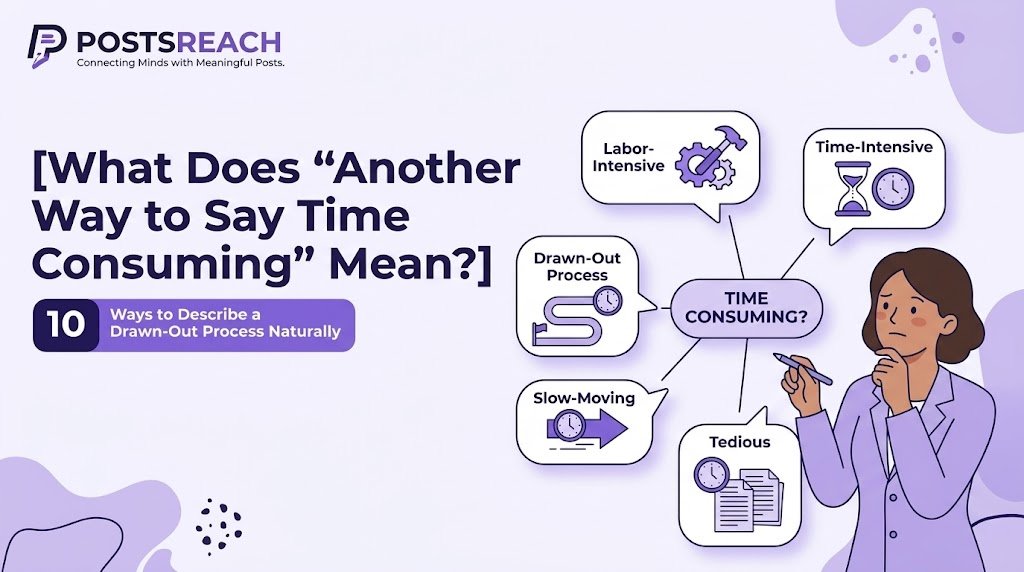
“Another way to say time consuming” means finding a different phrase that describes something requiring a lot of time to complete. The standard spelling is “time-consuming” when it appears before a noun, such as “a time-consuming process.”
People often look for alternatives to avoid repetition or make their writing more precise. The phrase commonly appears in workplace emails, academic writing, project descriptions, business communication, and everyday conversations.
For example, instead of saying, “This process is time-consuming,” you could say, “This process is lengthy,” “This process is labor-intensive,” or “This process requires a significant amount of time.”
The right choice depends on what you want to emphasize.
Why Use Other Ways to Say “Time Consuming”?
Using different expressions can make your writing more natural and precise. Not every synonym carries exactly the same meaning, so choosing the right one helps readers understand whether a task takes a long time, requires hard work, or involves several complicated steps.
Other alternatives can help you:
- Avoid repeating “time-consuming” throughout an article or email.
- Sound more professional in workplace communication.
- Describe the amount of effort involved in a task.
- Emphasize duration without suggesting the task is difficult.
- Choose language that fits formal, casual, or technical situations.
10 Best Other Ways to Say “Time Consuming”
1. Time-Intensive
Meaning
“Time-intensive” describes something that requires a large amount of time, attention, or effort. It is especially useful when discussing projects, processes, research, or work that demands sustained involvement.
Best For
Professional, Formal
Example 1
Preparing the annual financial report is a time-intensive process.
Example 2
The research phase was time-intensive because the team had to review hundreds of documents.
Quick Tip
Use “time-intensive” when you want a polished professional alternative to “time-consuming.”
2. Lengthy
Meaning
“Lengthy” means lasting for a long time or taking a considerable amount of time. Unlike “labor-intensive,” it focuses mainly on duration rather than the amount of work required.
Best For
Professional, Formal, Casual
Example 1
The application process was lengthy but straightforward.
Example 2
We had to go through a lengthy approval process before launching the project.
Quick Tip
Choose “lengthy” when the main issue is how long something takes, not how difficult it is.
3. Labor-Intensive
Meaning
“Labor-intensive” describes work that requires substantial human effort or many hours of physical or manual labor. It is common in business, manufacturing, agriculture, construction, and operations.
Best For
Professional, Formal
Example 1
Harvesting the crops by hand is a labor-intensive process.
Example 2
The factory replaced several labor-intensive steps with automated equipment.
Quick Tip
Use this phrase when human effort is an important part of what makes the task take so long.
4. Demanding
Meaning
“Demanding” describes something that requires a lot of time, energy, concentration, or effort. It does not always mean that the task takes a long time, so context matters.
Best For
Professional, Formal, Casual
Example 1
Managing the event was a demanding responsibility.
Example 2
The certification program is demanding, especially for people working full time.
Quick Tip
Use “demanding” when you want to emphasize the effort or energy required rather than time alone.
5. Lengthy Process
Meaning
“Lengthy process” is a natural phrase for something that involves many steps or takes a long time to finish. It works particularly well when describing applications, approvals, procedures, or administrative work.
Best For
Professional, Formal
Example 1
Getting the necessary permits can be a lengthy process.
Example 2
Hiring the right candidate can become a lengthy process when several interviews are required.
Quick Tip
This phrase is especially useful in professional writing when you want to describe a procedure without sounding overly negative.
6. Drawn-Out
Meaning
“Drawn-out” describes something that continues longer than expected or longer than seems necessary. It often carries a mildly negative tone and can suggest that the situation could have been completed sooner.
Best For
Casual, Friendly
Example 1
The contract negotiations became a drawn-out process.
Example 2
We finally finished the drawn-out discussion after agreeing on the main issues.
Quick Tip
Use “drawn-out” when the long duration feels frustrating, unnecessary, or excessive.
7. Prolonged
Meaning
“Prolonged” means something continues for an unusually long period. It is more formal than “long” and works well when discussing delays, procedures, discussions, or situations that last longer than expected.
Best For
Formal, Professional
Example 1
The project faced a prolonged delay because of supply problems.
Example 2
A prolonged review process pushed the launch date back by several weeks.
Quick Tip
“Prolonged” is a strong option when you want to emphasize that something lasted longer than normal or expected.
8. Laborious
Meaning
“Laborious” describes something that requires considerable effort and patience, often because it involves many repetitive or difficult steps. It can imply that the work is tiring as well as time-consuming.
Best For
Formal, Professional
Example 1
Manually checking every record was a laborious task.
Example 2
Creating the database from old paper files proved to be laborious.
Quick Tip
Choose “laborious” when the task is not only lengthy but also tedious or demanding.
9. Time-Intensive Task
Meaning
“Time-intensive task” refers to a specific activity that requires a substantial investment of time. It is useful when you want to explain why a particular responsibility takes up a large part of a schedule.
Best For
Professional, Formal
Example 1
Editing the entire video library is a time-intensive task.
Example 2
Entering the old customer records is a time-intensive task for our staff.
Quick Tip
This phrase works especially well in reports, project plans, and workplace discussions about workload.
10. Requires a Significant Amount of Time
Meaning
“Requires a significant amount of time” is a clear and neutral way to explain that something takes a lot of time. It avoids the slightly negative feeling that “time-consuming” can sometimes carry.
Best For
Professional, Formal, Polite
Example 1
Training new employees requires a significant amount of time and preparation.
Example 2
Reviewing each proposal carefully requires a significant amount of time.
Quick Tip
Use this expression when you want to sound neutral and factual, especially in professional communication.
Comparison Table
| Alternative | Best Used In | Tone |
|---|---|---|
| Time-Intensive | Work, projects, reports | Professional |
| Lengthy | General and professional writing | Neutral |
| Labor-Intensive | Manual work, operations | Professional |
| Demanding | Work, responsibilities, tasks | Neutral |
| Lengthy Process | Procedures and administration | Professional |
| Drawn-Out | Delays and frustrating situations | Casual/Negative |
| Prolonged | Formal descriptions and delays | Formal |
| Laborious | Difficult or repetitive work | Formal |
| Time-Intensive Task | Workload and project planning | Professional |
| Requires a Significant Amount of Time | Business and neutral communication | Polite/Neutral |
Common Mistakes
1. Treating Every Alternative as an Exact Synonym
Words such as “lengthy,” “labor-intensive,” and “demanding” emphasize different things. “Lengthy” focuses on duration, while “labor-intensive” focuses on human effort.
2. Using “Drawn-Out” in Formal Situations
“Drawn-out” can suggest frustration or criticism. In a formal report, “prolonged” or “lengthy” may communicate the same idea more neutrally.
3. Using “Laborious” for Every Long Task
A task can take a long time without being difficult or tiring. Use “laborious” when substantial effort or repetitive work is part of the meaning.
4. Choosing a Phrase Without Considering Context
A workplace email may need a neutral phrase such as “time-intensive,” while a casual conversation might sound more natural with “drawn-out.” Match the expression to your audience and purpose.
5. Assuming “Demanding” Always Means Time-Consuming
“Demanding” can describe something that requires energy or concentration even if it does not take very long. Use it when effort is more important than duration.
Frequently Asked Questions
What is another word for time-consuming?
Common alternatives for “time-consuming” include time-intensive, lengthy, labor-intensive, laborious, prolonged, and demanding. The best option depends on the intended meaning. For example, “lengthy” focuses on duration, while “labor-intensive” emphasizes the amount of human effort involved. In professional writing, “time-intensive” is often a natural and clear replacement.
What is a professional way to say time-consuming?
“Time-intensive” is one of the most useful professional alternatives to “time-consuming.” You can also say “requires a significant amount of time” when you want a neutral and factual tone. Both expressions work well in workplace emails, reports, project plans, and business discussions without sounding overly casual or critical.
Is “time-intensive” the same as “time-consuming”?
“Time-intensive” and “time-consuming” have very similar meanings, but their tone can differ slightly. “Time-consuming” may suggest that something takes more time than desirable, while “time-intensive” sounds more neutral and professional. The latter is particularly common when describing projects, research, training, or processes that naturally require substantial time.
What is another way to say a task takes a long time?
You can say that a task is lengthy, time-intensive, prolonged, or requires a significant amount of time. The best phrase depends on the context. For a neutral statement, “requires a significant amount of time” works well. For professional communication, “time-intensive” is concise and natural.
What is a formal word for time-consuming?
“Prolonged” and “laborious” can work as formal alternatives, but they do not mean exactly the same thing. “Prolonged” emphasizes duration, while “laborious” suggests that something requires considerable effort. “Time-intensive” is also a strong professional option when you simply want to emphasize the amount of time involved.
Can I use “lengthy” instead of “time-consuming”?
Yes, but the two words are not always interchangeable. “Lengthy” mainly describes something that lasts for a long time, while “time-consuming” often suggests that completing something requires a substantial investment of time. For example, a lengthy meeting lasts a long time, while a time-consuming task may require many hours of work.
What is a negative way to say time-consuming?
“Drawn-out” can express a more negative view of something that takes too long. It often suggests that a process has continued longer than necessary or expected. “Laborious” can also sound negative when a task is difficult and tiring, but it focuses more on effort than excessive duration.
How do I choose the right synonym for time-consuming?
First, decide what you want to emphasize. Use “lengthy” for duration, “time-intensive” for professional contexts, “labor-intensive” for human effort, “laborious” for difficult or repetitive work, and “drawn-out” when something feels unnecessarily long. Choosing based on meaning makes your writing more precise than simply replacing one word with another.
Conclusion
There are many useful ways to say “time-consuming,” but the best choice depends on the exact meaning and context. “Time-intensive” is a strong professional option, while “lengthy” works well when you only need to emphasize duration. If a task requires substantial human effort, “labor-intensive” is more precise. For difficult or repetitive work, “laborious” may fit better. When something continues longer than expected, “prolonged” or “drawn-out” can communicate that idea more clearly. In neutral business communication, “requires a significant amount of time” avoids adding unnecessary criticism. Instead of treating these expressions as interchangeable, consider what you want readers to understand about the task. The most effective synonym is the one that accurately communicates whether the issue is time, effort, complexity, or an unexpectedly long duration.

The PostsReach Editorial Team develops, reviews, and maintains the site’s published content. The team works across topics to ensure articles are clear, useful, well-structured, and consistent with PostsReach’s editorial standards. Content may be reviewed and updated as information changes.