10 Ways to Say “Letting Me Know” Naturally
The phrase “letting me know” is common in everyday American English. It usually means telling someone something, giving them information, or making them aware of a situation.
For example, if a coworker tells you that a meeting has moved to Friday, they are “letting you know” about the schedule change.
The phrase is natural and correct, but using the same wording repeatedly can make your emails and conversations feel predictable. Fortunately, English offers several alternatives that can express the same basic idea with a different tone.
Key Takeaways
- “Informing me” is a polished alternative that works well in formal and professional writing.
- “Updating me” is ideal when someone provides new information about an ongoing situation.
- “Keeping me informed” suggests that someone regularly shares relevant information.
- “Notifying me” works best for official announcements, changes, and formal notices.
- Choose the alternative based on whether you need a casual, professional, formal, or appreciative tone.
What Does “Another Way to Say Letting Me Know” Mean?
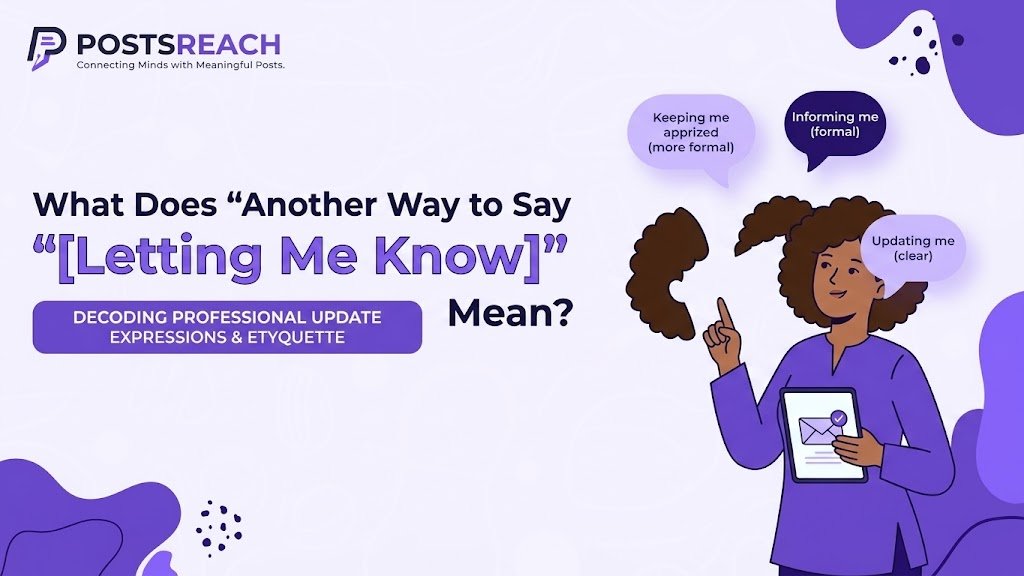
“Another way to say letting me know” means looking for a different expression that communicates the idea of informing, telling, updating, notifying, or making someone aware of something.
The best replacement depends on what you mean.
For example:
- Informing me = giving me information.
- Updating me = giving me new information about an ongoing matter.
- Notifying me = formally telling me about an event, change, or decision.
- Keeping me informed = continuing to provide relevant information.
- Bringing it to my attention = making me aware of something that may require notice or action.
The phrase is especially common in emails, workplace communication, customer service, academic communication, and everyday conversations. Professional English resources also commonly recommend alternatives such as “I appreciate the update,” “thanks for the information,” and “thank you for informing me.”
Why Use Other Ways to Say “Letting Me Know”?
There is nothing wrong with saying “letting me know.” The goal of using alternatives is to make your language more precise and appropriate for the situation.
Different expressions can help you:
- Avoid unnecessary repetition.
- Sound more natural and fluent.
- Match the level of formality.
- Make professional emails more polished.
- Show appreciation for useful information.
- Distinguish between a one-time message and ongoing updates.
- Communicate more precisely.
For example, “Thanks for the update” is more specific when someone has shared new information about a project, while “Thank you for notifying me” fits better when someone has formally informed you about a change.
10 Best Other Ways to Say “Letting Me Know”
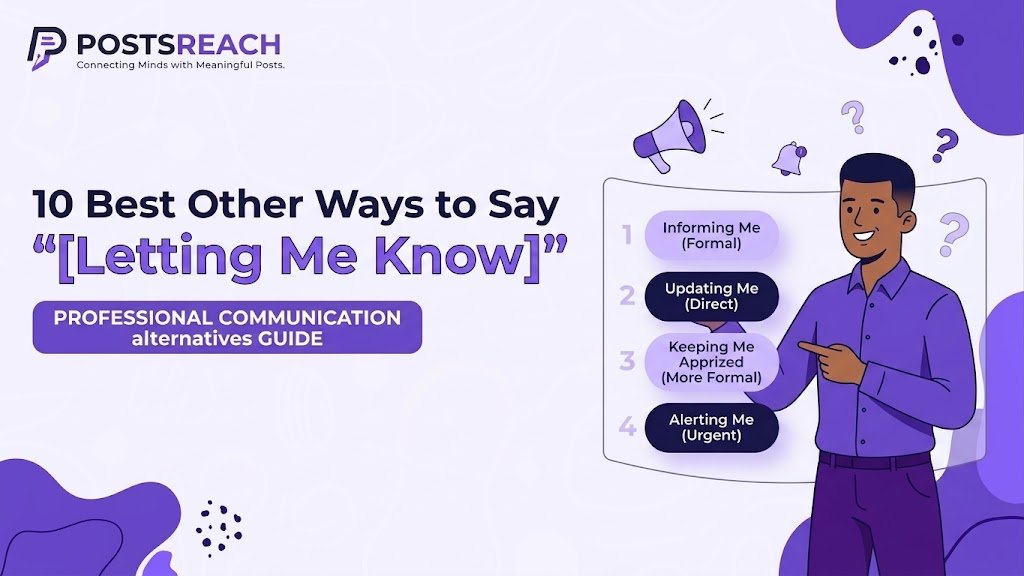
1. Informing Me
Meaning
“Informing me” means giving someone information or making them aware of something. It is a direct and polished alternative to “letting me know,” especially when you want a professional or formal tone.
Best For
- Professional
- Formal
- Polite
Example 1
“Thank you for informing me about the revised deadline.”
Example 2
“I appreciate you informing me of the changes before the meeting.”
Quick Tip
Use “informing me” when writing formal emails, business messages, or academic communication.
2. Telling Me
Meaning
“Telling me” is the simplest and most conversational alternative. It works naturally when someone gives you information directly.
Best For
- Casual
- Friendly
- Polite
Example 1
“Thanks for telling me about the schedule change.”
Example 2
“I’m glad you told me before I made other plans.”
Quick Tip
Choose “telling me” when the conversation is informal and you want your English to sound straightforward.
3. Updating Me
Meaning
“Updating me” means providing new or changed information about something already being discussed. It is especially useful when information develops over time.
Best For
- Professional
- Friendly
- Polite
Example 1
“Thanks for updating me on the project’s progress.”
Example 2
“I appreciate you updating me about the client’s decision.”
Quick Tip
Use “updating me” when the person has given you new information, rather than information for the first time.
4. Keeping Me Informed
Meaning
“Keeping me informed” suggests that someone continues to provide information as a situation develops. It emphasizes ongoing communication rather than a single message.
Best For
- Professional
- Formal
- Polite
Example 1
“Thanks for keeping me informed throughout the hiring process.”
Example 2
“I appreciate you keeping me informed about the latest developments.”
Quick Tip
This is particularly useful for projects, long-term work, and situations that require regular updates.
5. Notifying Me
Meaning
“Notifying me” means formally informing someone about an event, decision, change, or requirement. It sounds more official than “letting me know.”
Best For
- Professional
- Formal
- Polite
Example 1
“Thank you for notifying me of the policy change.”
Example 2
“Please make sure to notify me if the schedule changes again.”
Quick Tip
Use “notifying” when the information is official, administrative, or important enough to require formal notice.
6. Bringing It to My Attention
Meaning
This expression means making someone aware of something they may not have noticed themselves. It often suggests that the information deserves attention or action.
Best For
- Professional
- Formal
- Polite
Example 1
“Thank you for bringing this issue to my attention.”
Example 2
“I appreciate you bringing the discrepancy to my attention.”
Quick Tip
Use this phrase when someone points out a problem, mistake, concern, or important detail.
7. Sharing the Information
Meaning
“Sharing the information” focuses on the act of giving information to another person. It sounds neutral and works across many everyday and professional situations.
Best For
- Professional
- Friendly
- Polite
Example 1
“Thank you for sharing the information with the team.”
Example 2
“I appreciate you sharing those details with me.”
Quick Tip
This is a useful choice when you want to emphasize that someone provided helpful details rather than simply notified you.
8. Giving Me the Update
Meaning
“Giving me the update” means providing new information about a situation, task, project, or event. It is common in workplace communication.
Best For
- Professional
- Casual
- Friendly
Example 1
“Thanks for giving me the update on the design revisions.”
Example 2
“I appreciate you giving me an update before the presentation.”
Quick Tip
Use this when the subject has already been discussed and you are receiving new developments.
9. Making Me Aware
Meaning
“Making me aware” means causing someone to notice or understand something they did not previously know. It can sound professional without being overly formal.
Best For
- Professional
- Formal
- Polite
Example 1
“Thank you for making me aware of the issue.”
Example 2
“Your message made me aware of a problem we need to address.”
Quick Tip
This phrase works especially well when someone has pointed out something important or previously overlooked.
10. Bringing Me Up to Speed
Meaning
“Bringing me up to speed” is an idiomatic expression meaning to give someone the information they need to understand the current situation. It is especially common in American workplace English.
Best For
- Professional
- Casual
- Friendly
Example 1
“Thanks for bringing me up to speed on the new project.”
Example 2
“Could you bring me up to speed on what happened while I was away?”
Quick Tip
Use this when someone needs a broader explanation or summary, not just one small piece of information.
Comparison Table
| Alternative | Best Used In | Tone |
|---|---|---|
| Informing me | Formal emails, business communication | Formal, professional |
| Telling me | Everyday conversations | Casual, friendly |
| Updating me | Projects, workplace communication | Professional, neutral |
| Keeping me informed | Ongoing communication | Professional, polite |
| Notifying me | Official notices and changes | Formal, professional |
| Bringing it to my attention | Problems, concerns, important details | Professional, formal |
| Sharing the information | General communication | Neutral, polite |
| Giving me the update | Workplace conversations and projects | Friendly, professional |
| Making me aware | Important information or issues | Professional, formal |
| Bringing me up to speed | Meetings, projects, workplace discussions | Professional, conversational |
Common Mistakes
1. Using “notifying” in casual conversations
“Notifying me” can sound overly formal when talking to a friend. “Telling me” or “giving me the update” usually sounds more natural.
2. Using “updating me” for brand-new information
“Updating” usually suggests that something was already known or being followed. If someone is introducing information for the first time, “informing me” or “telling me” may be more accurate.
3. Using “bringing it to my attention” for every situation
This phrase usually implies that something deserves attention. It can sound excessive if someone simply tells you a routine detail.
4. Confusing “keeping me informed” with a single notification
“Keeping me informed” normally suggests an ongoing flow of information. For one isolated message, “informing me” or “letting me know” may fit better.
5. Choosing formality without considering the audience
A phrase can be grammatically correct but still sound unnatural for the situation. Professional communication often benefits from precise wording, while casual conversations usually favor shorter and simpler expressions.
Frequently Asked Questions
1. What is another way to say “letting me know”?
Common alternatives include informing me, telling me, updating me, notifying me, keeping me informed, making me aware, and sharing the information. The best option depends on context. For professional communication, “informing me” and “keeping me informed” work well, while “telling me” sounds more natural in casual conversations.
2. What is a professional way to say “letting me know”?
For professional communication, try “informing me,” “updating me,” “keeping me informed,” “notifying me,” or “bringing it to my attention.” The right phrase depends on the message. For example, “Thank you for informing me” sounds formal, while “I appreciate the update” is polished but more conversational.
3. What can I say instead of “thank you for letting me know”?
You can say “I appreciate the update,” “Thanks for the information,” “Thank you for informing me,” “Thanks for keeping me informed,” or “I appreciate you letting me know.” For casual conversations, “Good to know” or “Got it, thanks” can sound more natural.
4. Is “letting me know” professional?
Yes. “Letting me know” is both natural and professional, particularly in emails, workplace conversations, and everyday business communication. It is not incorrect or too casual by default. However, alternatives such as “informing me” or “notifying me” can create a more formal tone when the situation calls for it.
5. What is a casual way to say “letting me know”?
Casual alternatives include “telling me,” “giving me the update,” “keeping me posted,” and “giving me a heads-up.” The best choice depends on the situation. “Telling me” is very straightforward, while “giving me a heads-up” suggests that someone warned or alerted you about something in advance.
6. What is the difference between “informing” and “updating”?
Informing generally means giving someone information, whether they knew about the subject before or not. Updating usually means giving someone new information about something they are already aware of or following. For example, a manager can inform you about a new policy but update you on an existing project.
7. Is “keeping me informed” formal?
“Keeping me informed” is professional and somewhat formal, but it is also natural in everyday workplace English. It is particularly useful when you expect someone to continue providing information. For example, “Please keep me informed of any changes” sounds professional without being unnecessarily complicated.
8. What is the best alternative to “letting me know” in an email?
The best alternative depends on what the email is about. “I appreciate the update” works well for new developments, while “Thank you for informing me” is more formal. For ongoing communication, “Thanks for keeping me informed” is a strong choice. Always match the wording to the relationship and purpose of the email.
Conclusion
“Letting me know” is a natural and widely useful English expression, but you have many alternatives when you want more variety or precision. “Informing me” works well in formal communication, while “telling me” sounds simple and conversational. If someone provides new information about an existing situation, “updating me” is often the most accurate choice.
For ongoing communication, use “keeping me informed.” For official information, “notifying me” is more appropriate. When someone points out an important problem or detail, “bringing it to my attention” communicates that idea clearly.
The best replacement is not necessarily the most formal phrase. Choose the expression that matches the relationship, purpose, and type of information being shared. That small adjustment can make your English sound clearer, more natural, and more confident.