“Take a Look” Synonyms: 10 Polite Ways for Emails in 2026
Another way to say “take a look” includes “have a look,” “check out,” “look over,” “review,” and “examine.” The best phrase depends on context. “Review” works well in professional settings, while “check out” sounds casual and friendly. Choosing the right alternative can make your request clearer and more natural.
Key Takeaways
- “Take a look” is a polite way to ask someone to view or examine something.
- “Have a look” is a natural and versatile alternative for everyday communication.
- “Review” and “look over” work well when someone needs to examine information carefully.
- “Check out” is more casual and fits friendly conversations or informal messages.
- The best alternative depends on your audience, purpose, and level of formality.
“Take a look” is a common English phrase used when you want someone to view, inspect, or consider something. It can refer to a document, website, photo, product, idea, or physical object.
Because the phrase is so common, you may sometimes want another way to say “take a look.” The right alternative can make your writing sound less repetitive while also matching the tone of the situation.
What Does “Another Way to Say Take a Look” Mean?
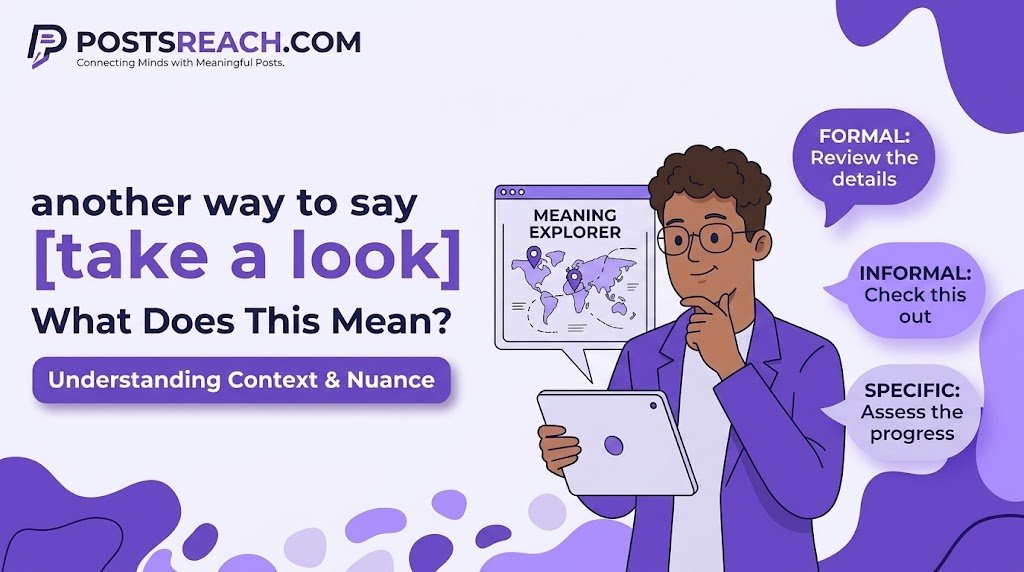
“Another way to say take a look” means a different phrase that communicates the idea of asking someone to look at, examine, or consider something.
For example, instead of saying, “Please take a look at the report,” you could say, “Please review the report.” Both sentences ask someone to examine the report, but “review” sounds more professional and specific.
“Take a look” is common in conversations, emails, workplace messages, customer communication, and casual writing. The phrase is usually polite and neutral, which makes it useful in many situations.
Why Use Other Ways to Say “Take a Look”?
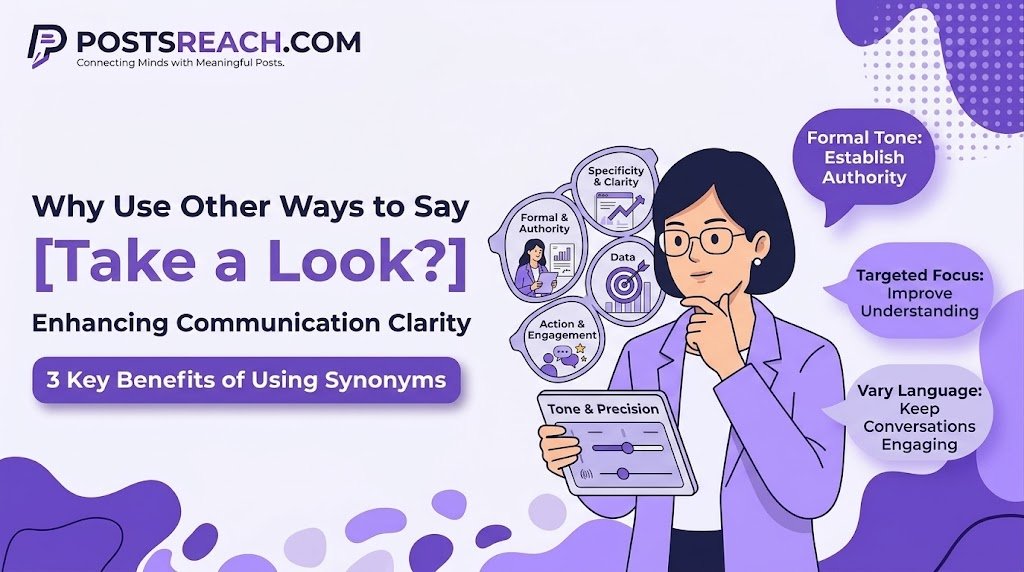
Using different expressions can make your communication more precise and natural. Not every situation requires the same level of formality or attention.
You might choose another phrase to:
- Avoid repeating “take a look.”
- Make a professional request sound more polished.
- Tell someone exactly how carefully to examine something.
- Match a casual, friendly, or formal tone.
- Make instructions clearer for the reader.
- Sound more natural in different conversations.
The key is to choose a phrase based on what you actually want the other person to do.
10 Best Other Ways to Say “Take a Look”
1. Have a Look
Meaning
“Have a look” is one of the closest alternatives to “take a look.” It simply asks someone to look at or inspect something and works in many everyday situations.
Best For
- Casual
- Friendly
- Polite
- Professional
Example 1
“Have a look at these photos and let me know which one you prefer.”
Example 2
“Could you have a look at the updated schedule before the meeting?”
Quick Tip
Use “have a look” when you want a natural replacement without significantly changing the meaning or tone.
2. Check Out
Meaning
“Check out” means to look at or explore something, often because it may be interesting or useful. It is more casual than “take a look.”
Best For
- Casual
- Friendly
Example 1
“Check out the new coffee shop that opened downtown.”
Example 2
“You should check out this website if you’re interested in photography.”
Quick Tip
Use “check out” with friends, coworkers you know well, or informal online communication. Avoid it when a formal tone is expected.
3. Look Over
Meaning
“Look over” means to examine something, usually fairly quickly but with enough attention to notice important details. It is useful for documents, messages, plans, and written work.
Best For
- Professional
- Casual
- Polite
Example 1
“Could you look over my presentation before I send it to the client?”
Example 2
“I’ll look over the contract tonight and send you my questions.”
Quick Tip
Choose “look over” when you want someone to review something without suggesting an extremely detailed examination.
4. Review
Meaning
“Review” means to examine something carefully, often to evaluate its information, quality, accuracy, or suitability. It is especially common in professional and academic communication.
Best For
- Professional
- Formal
- Polite
Example 1
“Please review the proposal and share your feedback by Friday.”
Example 2
“Our manager asked us to review the updated safety guidelines.”
Quick Tip
Use “review” when the person is expected to read or examine something with a specific purpose rather than simply glance at it.
5. Examine
Meaning
“Examine” suggests a closer and more careful inspection. It is stronger and more formal than “take a look,” especially when accuracy or details matter.
Best For
- Formal
- Professional
Example 1
“The technician will examine the equipment before making a recommendation.”
Example 2
“Please examine the data carefully before drawing a conclusion.”
Quick Tip
Use “examine” when careful attention is important. It can sound too formal for a simple everyday request.
6. Inspect
Meaning
“Inspect” means to look at something closely to check its condition, quality, safety, or accuracy. It often implies a systematic examination.
Best For
- Professional
- Formal
Example 1
“The supervisor will inspect the building before approving the renovation.”
Example 2
“Please inspect the package for any visible damage.”
Quick Tip
“Inspect” is best when the person is checking something for problems, defects, safety issues, or specific conditions.
7. See
Meaning
“See” can replace “take a look” when the main goal is simply to direct someone’s attention toward something. It is short, natural, and highly flexible.
Best For
- Casual
- Friendly
- Professional
- Polite
Example 1
“See the attached file for the complete project details.”
Example 2
“Come over and see what I’ve been working on.”
Quick Tip
Use “see” when you want a simple, direct expression. In formal writing, “review” may provide more specific meaning.
8. Consider
Meaning
“Consider” goes beyond simply looking at something. It asks someone to think about an idea, option, proposal, or suggestion before making a decision.
Best For
- Professional
- Formal
- Polite
Example 1
“Please consider the proposed changes before making a final decision.”
Example 2
“We’d like you to consider this option for your next project.”
Quick Tip
Do not use “consider” when you only want someone to visually look at something. It implies thought or evaluation.
9. Check
Meaning
“Check” means to look at something to confirm information, find a problem, or make sure everything is correct. It is concise and useful in both casual and professional settings.
Best For
- Professional
- Casual
- Friendly
- Polite
Example 1
“Please check the final version for spelling errors.”
Example 2
“I’ll check the schedule and let you know what time works.”
Quick Tip
Use “check” when the person needs to verify something rather than simply view it.
10. Look At
Meaning
“Look at” is a straightforward alternative that directly tells someone to direct their attention toward something. It is simple, natural, and appropriate for many situations.
Best For
- Casual
- Friendly
- Professional
Example 1
“Look at the second page for the pricing details.”
Example 2
“Let’s look at the options before we make a decision.”
Quick Tip
“Look at” is useful when clarity matters more than style. It is simple enough for everyday speech and clear enough for basic instructions.
Comparison Table
| Alternative | Best Used In | Tone |
|---|---|---|
| Have a Look | Everyday requests, emails | Friendly, polite |
| Check Out | Casual conversations | Casual, friendly |
| Look Over | Documents, drafts, plans | Neutral, professional |
| Review | Work, school, formal documents | Professional, formal |
| Examine | Detailed evaluation | Formal, professional |
| Inspect | Quality, safety, condition checks | Formal, professional |
| See | General directions and references | Neutral, direct |
| Consider | Ideas, proposals, decisions | Professional, thoughtful |
| Check | Verification and accuracy | Neutral, practical |
| Look At | General viewing | Neutral, casual |
Common Mistakes When Replacing “Take a Look”
1. Using “Check Out” in Formal Communication
“Check out” can sound too casual in a formal business email. When communicating with a client, “review” or “please examine” may better match the situation.
2. Using “Examine” for Simple Requests
“Examine” suggests careful inspection. Saying “Please examine this photo” may sound unnecessarily serious when you only want someone to view it.
3. Ignoring the Intended Action
Different phrases can imply different actions. “See” suggests viewing, “check” suggests verification, and “consider” suggests thinking about something before making a decision.
4. Repeating One Alternative Too Often
Replacing every instance of “take a look” with “review” does not necessarily improve your writing. Vary your wording only when the meaning and context support the change.
5. Choosing Tone Before Meaning
A phrase should first communicate the intended action clearly. After that, choose the level of formality that fits your audience and situation.
Frequently Asked Questions
What is a professional way to say “take a look”?
“Review” is one of the most useful professional alternatives to “take a look.” For example, “Please review the attached proposal” sounds clear and appropriate in workplace communication. “Look over” is another good option when you want someone to examine something without implying a highly detailed evaluation.
What is a polite way to say “take a look”?
“Have a look” is a polite and natural alternative to “take a look.” You can say, “Could you have a look at this document?” It works well in everyday conversations, emails, and workplace messages without sounding overly formal or demanding.
What is a casual way to say “take a look”?
“Check out” is a common casual alternative. For example, “Check out this new restaurant” sounds relaxed and friendly. You can also use “look at” in casual conversations when you simply want someone to direct their attention toward something.
Is “review” the same as “take a look”?
Not always. “Take a look” generally means to view or examine something, while “review” often suggests a more purposeful examination. If you ask someone to review a document, you usually expect them to read it and consider its content rather than simply glance at it.
Can I use “have a look” in a business email?
Yes. “Have a look” is appropriate in many business emails, especially when the workplace communication is friendly and conversational. For example, “Please have a look at the attached file” is polite and natural. For more formal communication, “Please review the attached file” may sound more precise.
What is another way to say “take a look at this”?
Depending on context, you can say “have a look at this,” “check this out,” “review this,” “look this over,” or “see this.” “Check this out” is casual, while “review this” is more professional and usually suggests closer attention.
Is “examine” stronger than “take a look”?
Yes. “Examine” usually suggests a more careful or detailed inspection. For example, a technician might examine a machine for a problem. If you only want a friend to view a photo, “have a look” or “take a look” sounds more natural.
What is the best alternative to “take a look”?
There is no single alternative that fits every situation. “Have a look” is a close general replacement, “review” works well for professional documents, “check out” suits casual conversations, and “inspect” fits situations involving condition, quality, or safety.
Conclusion
There are many natural ways to say “take a look,” but the right choice depends on what you want the other person to do. “Have a look” is a versatile replacement for everyday communication, while “review” works well for professional documents and proposals. Use “check out” for casual conversations, “look over” for a quick examination, and “examine” or “inspect” when careful attention is required. If you want someone to think about an idea rather than simply view it, “consider” is more accurate. The most effective wording is not always the most formal option. Choose the phrase that matches your meaning, audience, and situation. That small adjustment can make your communication clearer, more natural, and more precise.

Adrian Vale is a digital content specialist focused on practical online content, emerging topics, and reader-focused publishing. He works on structuring articles for clarity and discoverability while keeping the writing natural, useful, and accessible to a broad audience.