Another Way to Say Solution: 10 Better Alternatives
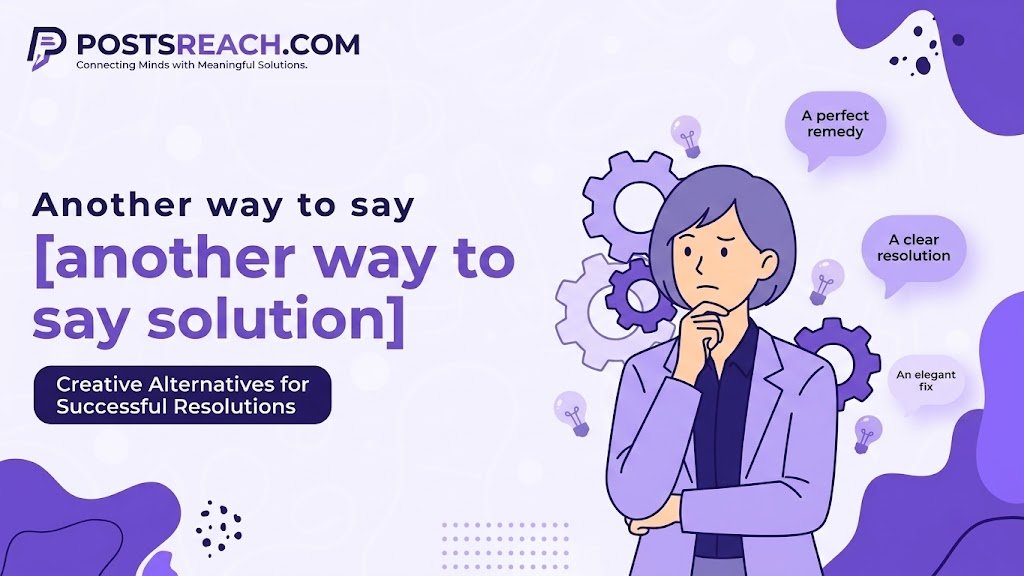
Another way to say “solution” includes “answer,” “resolution,” “remedy,” “fix,” “approach,” “strategy,” “way forward,” “course of action,” “response,” and “resolution.” The best choice depends on context. Use “answer” for questions, “fix” for practical problems, “remedy” for problems needing correction, and “strategy” for planned approaches.
Key Takeaways
- “Solution” usually means an answer or method that solves a problem.
- “Answer” works naturally for questions, problems, and general situations.
- “Resolution” emphasizes successfully resolving an issue or dispute.
- “Fix” is simple and conversational, especially for practical problems.
- “Strategy” and “course of action” work well when solving a problem requires planning.
What Does “Another Way to Say Solution” Mean?
The word “solution” generally refers to an answer, method, or action that addresses a problem or difficult situation. For example, if a company has a shipping problem, it might develop a solution that improves delivery times.
The word is common in business, education, technology, customer service, healthcare, and everyday conversation. It can describe something simple, such as a fix for a broken device, or something complex, such as a long-term strategy for a business challenge.
People often search for another way to say “solution” because the best synonym depends on the context. A formal report may need “resolution” or “course of action,” while a casual conversation may sound more natural with “fix” or “way forward.”
Why Use Other Ways to Say “Solution”?
Replacing “solution” with a more precise word can make your writing clearer and more natural. It also helps you communicate the exact type of answer or action you mean.
Using alternatives can help you:
- Avoid repeating “solution” throughout an article or report.
- Match your wording to formal or casual situations.
- Explain whether you mean an answer, fix, plan, or remedy.
- Make professional communication more precise.
- Describe problem-solving steps more naturally.
10 Best Other Ways to Say “Solution”
1. Answer
Meaning
“Answer” refers to something that responds to a question, problem, or situation. It is one of the most flexible alternatives to “solution,” especially when the issue involves finding information or determining what should be done.
Best For
Professional, Casual, Friendly, Polite
Example 1
We finally found an answer to the customer’s billing question.
Example 2
The research team is looking for an answer to the problem.
Quick Tip
Use “answer” when the situation involves a question or when you want a simple, natural alternative.
2. Resolution
Meaning
“Resolution” means the successful settlement or resolution of a problem, disagreement, or difficult situation. It often suggests that an issue has been brought to an acceptable conclusion.
Best For
Professional, Formal, Polite
Example 1
The support team worked quickly to reach a resolution with the customer.
Example 2
Both sides agreed to a resolution after several weeks of negotiations.
Quick Tip
Choose “resolution” when you want to emphasize that an issue has been settled rather than merely addressed.
3. Remedy
Meaning
“Remedy” refers to an action or measure used to correct a problem or improve an undesirable situation. It often appears in formal, legal, medical, or professional writing.
Best For
Formal, Professional
Example 1
The company introduced a new training program as a remedy for repeated errors.
Example 2
The policy provides a remedy for customers affected by incorrect charges.
Quick Tip
Use “remedy” when the main idea is correcting or improving something that has gone wrong.
4. Fix
Meaning
“Fix” is a simple and informal word for something that corrects a problem. It is especially common when discussing technical issues, repairs, everyday problems, or quick changes.
Best For
Casual, Friendly, Professional
Example 1
The developer found a quick fix for the website’s broken login button.
Example 2
We need a permanent fix for this recurring issue.
Quick Tip
“Fix” is natural in everyday speech, but “solution” or “resolution” may sound more appropriate in formal reports.
5. Approach
Meaning
“Approach” describes a particular way of dealing with or solving a problem. Unlike “solution,” it can describe the method being used even when the problem has not been completely solved.
Best For
Professional, Formal
Example 1
The team took a different approach to reducing customer wait times.
Example 2
This approach could help the company manage rising operating costs.
Quick Tip
Use “approach” when you are describing how someone plans to address a problem rather than claiming that the problem is already solved.
6. Strategy
Meaning
“Strategy” means a planned method for achieving a goal or handling a challenge. It is particularly useful when solving a problem requires several coordinated steps rather than one immediate answer.
Best For
Professional, Formal
Example 1
The marketing team developed a strategy to increase website traffic.
Example 2
Our new strategy focuses on reducing unnecessary production costs.
Quick Tip
Choose “strategy” when the solution involves planning, multiple actions, or a longer-term objective.
7. Way Forward
Meaning
“Way forward” refers to a practical path or course of action for dealing with a current problem or moving toward a desired result. It often appears when people need to decide what to do next.
Best For
Professional, Formal, Polite
Example 1
After reviewing the feedback, the team identified a clear way forward.
Example 2
We need to agree on the best way forward before making any changes.
Quick Tip
Use “way forward” when the focus is on the next practical step.
8. Course of Action
Meaning
“Course of action” means a specific set of steps someone chooses to take in response to a situation. It is useful when a problem requires a deliberate decision rather than a single technical fix.
Best For
Professional, Formal
Example 1
The manager recommended a different course of action after reviewing the data.
Example 2
We need to decide on the most effective course of action.
Quick Tip
This phrase works particularly well in reports, meetings, business writing, and decision-making discussions.
9. Response
Meaning
“Response” describes an action or reaction taken because of a problem, request, event, or situation. It does not always mean the problem has been solved, so it is broader than “solution.”
Best For
Professional, Formal, Polite
Example 1
The company issued a rapid response to the service outage.
Example 2
Her response to the customer’s concern was clear and professional.
Quick Tip
Use “response” when you want to describe how someone reacts to a situation without claiming that the response completely solves it.
10. Remedy
Meaning
“Remedy” can also describe a means of correcting a specific problem or undesirable condition. It is especially useful when the focus is on restoring a situation to an acceptable state.
Best For
Formal, Professional
Example 1
The new procedure offers a practical remedy for the reporting problem.
Example 2
Management considered several remedies before changing the system.
Quick Tip
Because “remedy” is more formal than “fix,” it works well in professional and policy-related writing.
Comparison Table
| Alternative | Best Used In | Tone |
|---|---|---|
| Answer | Questions, problems, general situations | Neutral, Friendly |
| Resolution | Disputes, issues, conflicts | Formal, Professional |
| Remedy | Correcting problems or conditions | Formal, Professional |
| Fix | Repairs, technical and everyday problems | Casual, Direct |
| Approach | Methods for addressing challenges | Professional, Analytical |
| Strategy | Long-term plans and goals | Professional, Formal |
| Way Forward | Decisions and next steps | Professional, Polite |
| Course of Action | Business decisions and planning | Formal, Professional |
| Response | Reactions to issues or events | Professional, Neutral |
| Remedy | Corrective measures and formal contexts | Formal, Professional |
Common Mistakes
1. Treating Every Synonym as an Exact Replacement
Words such as “fix,” “strategy,” and “response” have related meanings but are not interchangeable in every sentence. Always consider what you mean by “solution” before choosing a substitute.
2. Using “Fix” in Highly Formal Writing
“Fix” is perfectly natural in conversation and technical discussions, but it can sound too casual in certain reports or formal documents. Consider “remedy,” “resolution,” or “corrective measure” when appropriate.
3. Calling an Approach a Complete Solution
An “approach” describes a method for handling a problem. It does not necessarily mean the problem has been solved, so avoid using the two words as though they always have identical meanings.
4. Using “Resolution” for an Unfinished Problem
“Resolution” often suggests that an issue has been settled or brought to an acceptable conclusion. If you are still evaluating options, “approach” or “course of action” may be more accurate.
5. Ignoring the Audience
A phrase that works well in a team meeting may not fit a formal report. Consider your audience, purpose, and level of formality before replacing “solution.”
Frequently Asked Questions
What is another word for “solution” in professional writing?
Professional alternatives include “resolution,” “approach,” “strategy,” “course of action,” “remedy,” and “way forward.” The right choice depends on the context. “Resolution” works well for settled issues, while “strategy” describes a planned method. “Course of action” is useful when a decision involves specific steps.
What is a simple synonym for “solution”?
“Answer” is one of the simplest alternatives to “solution.” It works especially well when you are responding to a question or trying to explain how a problem can be addressed. “Fix” is another simple option, particularly for everyday, technical, or practical problems.
What is a formal way to say “solution”?
“Resolution,” “remedy,” “course of action,” and “way forward” can provide more formal alternatives. “Resolution” is particularly suitable when an issue has been settled. “Course of action” works when discussing decisions, while “remedy” emphasizes correcting a problem.
What is another way to say “find a solution”?
You can say “find an answer,” “develop an approach,” “identify a way forward,” “determine a course of action,” or “resolve the issue.” “Develop an approach” suggests planning, while “resolve the issue” implies that you intend to settle the problem completely.
Is “answer” the same as “solution”?
“Answer” and “solution” overlap, but they are not always identical. An answer can respond to a question without fixing a problem, while a solution generally addresses or solves a problem. For example, a math problem has an answer, while a technical problem may require a solution.
What is a professional way to say “problem and solution”?
In professional writing, you can use “issue and resolution,” “challenge and response,” or “problem and proposed approach.” The best pair depends on whether the issue has already been resolved. For a report, “problem and proposed solution” remains clear and professional when you want straightforward wording.
What is another word for “solution” in business?
Business alternatives include “strategy,” “approach,” “course of action,” “resolution,” and “way forward.” “Strategy” is useful for long-term business goals, while “course of action” focuses on decisions and steps. “Resolution” works better when a specific business issue or dispute has been settled.
Can “remedy” replace “solution”?
“Remedy” can replace “solution” when you mean an action or measure that corrects a problem. However, it has a more formal tone and often emphasizes fixing an undesirable condition. It may not work naturally when “solution” refers to a broad strategy, general answer, or creative approach.
Conclusion
There are many ways to say “solution,” but the strongest alternative depends on what you actually mean. Use “answer” for questions, “fix” for practical problems, and “resolution” when an issue has been successfully settled. Choose “remedy” when you want to emphasize correction, while “approach” describes a method for dealing with a challenge. For larger or long-term goals, “strategy” is often more precise. “Way forward” and “course of action” work well when discussing what should happen next. Remember that related words are not automatically interchangeable. A careful choice can make your writing more accurate, professional, and natural. When replacing “solution,” first identify whether you are describing an answer, corrective action, method, plan, or completed resolution. Then choose the word that communicates that meaning most clearly.

Tessa Langford is a research and features editor who focuses on turning detailed information into practical, easy-to-follow articles. Her editorial work emphasizes thorough research, useful context, readability, and content that answers the questions readers are actually asking.