10 Ways to Say Long Period of Time Naturally
Another way to say “long period of time” includes “extended period,” “lengthy period,” “for a long time,” “over an extended period,” and “a considerable amount of time.” The best choice depends on context. “Extended period” works well in professional writing, while “for a long time” sounds more natural in everyday conversation.
Key Takeaways
- “Extended period” is a strong choice for professional and formal writing.
- “For a long time” sounds natural in everyday American English.
- “Lengthy period” emphasizes that something lasted longer than expected.
- “Over the years” works well when discussing several years of time.
- Choose the phrase based on tone, duration, and context.
What Does “Another Way to Say Long Period of Time” Mean?
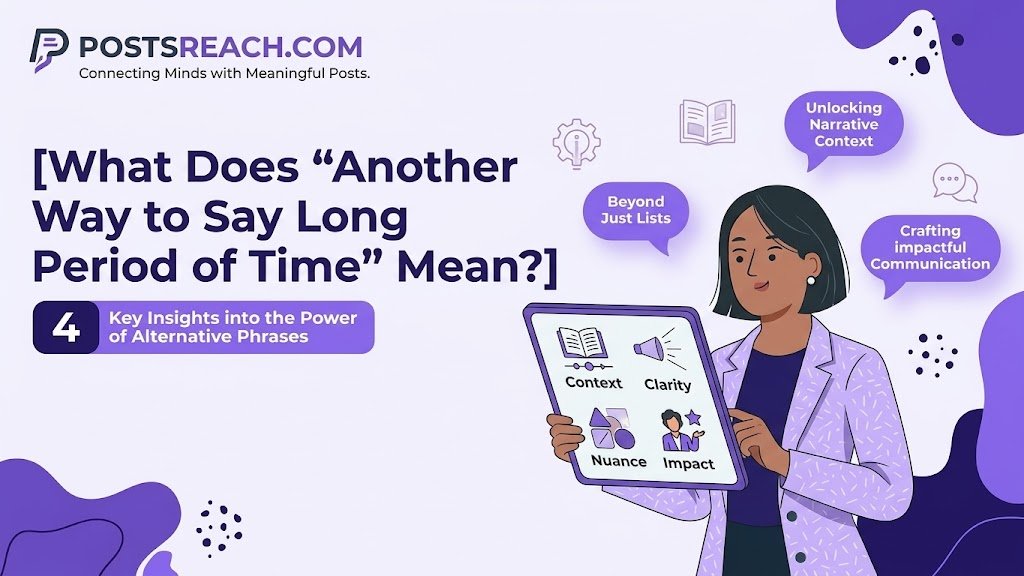
“Another way to say long period of time” means looking for different words or phrases that describe something lasting for a considerable amount of time. Writers and speakers often want alternatives to avoid repetition or choose wording that better fits a specific situation.
The phrase “long period of time” can describe days, months, years, or even longer stretches. It commonly appears in conversations, professional writing, academic work, reports, emails, and personal stories.
For example, you might say, “She lived there for a long period of time,” but a more natural version could be, “She lived there for many years.”
Why Use Other Ways to Say “Long Period of Time”?
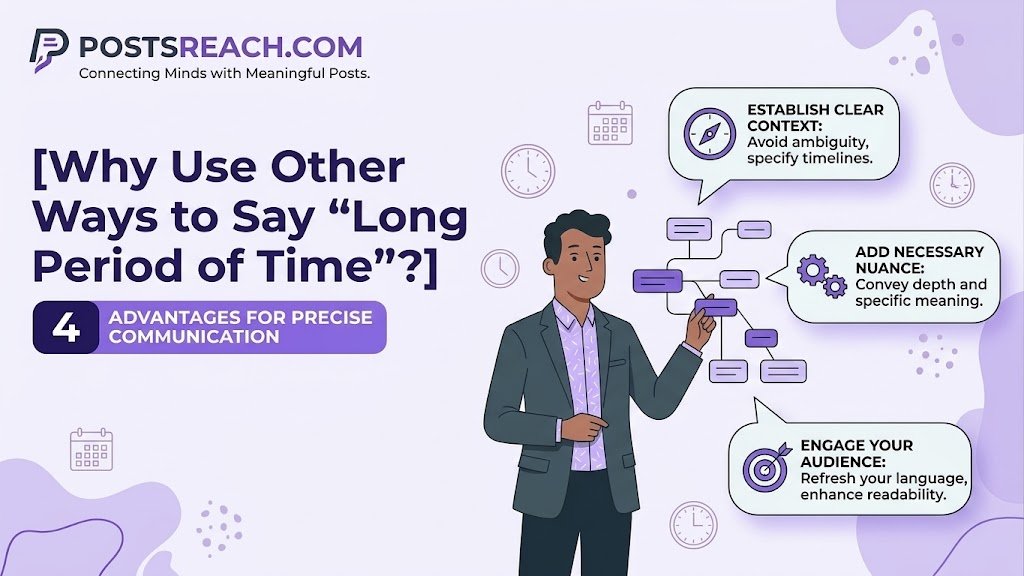
Using a suitable alternative can make your writing more precise and natural. The best phrase depends on whether you are describing an exact duration, an approximate span, or simply emphasizing that something lasted longer than expected.
Other phrases can help you:
- Avoid repeating “long period of time.”
- Make sentences sound more natural.
- Match formal and casual situations.
- Describe duration more precisely.
- Improve professional and academic writing.
10 Best Other Ways to Say “Long Period of Time”
1. Extended Period
Meaning
“Extended period” describes a stretch of time that lasts longer than usual or expected. It is one of the most useful alternatives in professional, academic, and formal writing.
Best For
Professional, Formal
Example 1
The company plans to keep the updated policy in place for an extended period.
Example 2
Regular maintenance is essential when equipment remains unused for an extended period.
Quick Tip
Use “extended period” when you want a polished alternative without specifying the exact length of time.
2. For a Long Time
Meaning
“For a long time” is a simple, natural way to describe something that continues or has continued for a considerable amount of time. It works especially well in everyday American English.
Best For
Casual, Friendly, Professional
Example 1
I have known my neighbor for a long time.
Example 2
The store has served customers in this community for a long time.
Quick Tip
Choose this phrase when clarity and natural conversation matter more than formal style.
3. Lengthy Period
Meaning
“Lengthy period” emphasizes that something lasted a significant amount of time. It often suggests that the duration was longer than normal, expected, or convenient.
Best For
Professional, Formal
Example 1
The project experienced a lengthy period of testing before its release.
Example 2
A lengthy period of preparation helped the team avoid major errors.
Quick Tip
Use “lengthy” when the duration itself is important or feels unusually long.
4. Considerable Amount of Time
Meaning
“Considerable amount of time” means a substantial amount of time. It focuses on the significance of the duration rather than giving an exact measurement.
Best For
Professional, Formal, Polite
Example 1
The researchers spent a considerable amount of time reviewing the available data.
Example 2
Learning a new language can require a considerable amount of time and practice.
Quick Tip
This phrase works well when you want to emphasize that something required substantial time or effort.
5. Over an Extended Period
Meaning
“Over an extended period” describes something that happens gradually or continuously across a long stretch of time. It is especially useful when discussing trends, observations, or processes.
Best For
Professional, Formal
Example 1
The team tracked customer feedback over an extended period.
Example 2
Small improvements can produce meaningful results when applied over an extended period.
Quick Tip
Use this phrase when an action, change, or observation occurs throughout a longer timeframe.
6. Over the Years
Meaning
“Over the years” refers to changes, experiences, or events that happen across several years. It sounds natural and often adds a sense of history or gradual development.
Best For
Casual, Friendly, Warm, Professional
Example 1
The neighborhood has changed significantly over the years.
Example 2
She has developed strong leadership skills over the years.
Quick Tip
Use “over the years” when the timeframe clearly involves multiple years rather than a few days or months.
7. For an Extended Length of Time
Meaning
“For an extended length of time” emphasizes that something continues for longer than a typical or expected duration. It is understandable but somewhat more formal and wordy than “for an extended period.”
Best For
Professional, Formal
Example 1
The medication should not be stored at room temperature for an extended length of time.
Example 2
Leaving the device unused for an extended length of time may affect its performance.
Quick Tip
In polished writing, “for an extended period” is usually more concise than this longer version.
8. A Prolonged Period
Meaning
“A prolonged period” describes something that continues for an unusually long time. The word “prolonged” often carries the idea that the duration is longer than expected or desirable.
Best For
Formal, Professional
Example 1
The region experienced a prolonged period of unusually dry weather.
Example 2
The patient required additional support after a prolonged period of recovery.
Quick Tip
Use “prolonged” when the extended duration has a noticeable effect or is longer than normal.
9. A Long Stretch of Time
Meaning
“A long stretch of time” is a conversational expression for a substantial period. It sounds more relaxed than “extended period” and can work well in storytelling and everyday speech.
Best For
Casual, Friendly, Warm
Example 1
We spent a long stretch of time working on the project together.
Example 2
He stayed away from social media for a long stretch of time.
Quick Tip
Choose this phrase when you want your writing to sound conversational rather than formal.
10. For Years on End
Meaning
“For years on end” means continuously or repeatedly for many years. It strongly emphasizes duration and often suggests that something happened for an unusually long time.
Best For
Casual, Friendly, Warm
Example 1
The old building stood empty for years on end.
Example 2
They worked toward the same goal for years on end.
Quick Tip
Use “for years on end” only when the duration involves years; it does not work for shorter periods.
Comparison Table
| Alternative | Best Used In | Tone |
|---|---|---|
| Extended Period | Professional writing, reports | Formal |
| For a Long Time | Everyday conversation, general writing | Natural |
| Lengthy Period | Professional and academic writing | Formal |
| Considerable Amount of Time | Reports, explanations | Formal |
| Over an Extended Period | Research, analysis, reports | Formal |
| Over the Years | Stories, general writing | Natural |
| For an Extended Length of Time | Technical and formal writing | Formal |
| A Prolonged Period | Reports, technical contexts | Formal |
| A Long Stretch of Time | Conversations, storytelling | Casual |
| For Years on End | Personal writing, storytelling | Casual |
Common Mistakes
1. Using a Formal Phrase in Casual Conversation
Phrases such as “over an extended period” can sound unnecessarily formal in everyday conversation. “For a long time” is usually more natural.
2. Using “For Years on End” for Short Durations
“For years on end” specifically suggests years. Avoid using it when you mean weeks, months, or an unspecified shorter duration.
3. Treating Every Alternative as an Exact Synonym
Some alternatives carry additional meaning. For example, “prolonged” can suggest that something lasted unusually long, while “over the years” specifically refers to multiple years.
4. Adding Unnecessary Words
“For an extended length of time” is understandable, but “for an extended period” is usually cleaner and more concise.
5. Ignoring the Context
The right phrase depends on your sentence. A business report may need “extended period,” while a personal conversation will usually sound better with “for a long time.”
Frequently Asked Questions
What is another way to say “long period of time”?
Common alternatives include “extended period,” “lengthy period,” “for a long time,” “considerable amount of time,” and “prolonged period.” The best choice depends on context. For everyday conversation, “for a long time” sounds natural. For professional or academic writing, “extended period” or “prolonged period” may be more appropriate.
What is a professional way to say “long period of time”?
“Extended period” is one of the most natural professional alternatives. For example, instead of saying, “The system was tested for a long period of time,” you can write, “The system was tested over an extended period.” This version is concise, polished, and suitable for reports, business documents, and professional emails.
What is a formal synonym for “long period”?
Formal alternatives include “extended period,” “prolonged period,” “lengthy period,” and “considerable amount of time.” Each has a slightly different emphasis. “Extended period” is neutral, while “prolonged period” often suggests that the duration was unusually long or longer than expected.
How can I say “for a long time” professionally?
In professional writing, you can replace “for a long time” with “for an extended period,” “over an extended period,” or “for a considerable amount of time.” Choose the phrase based on your sentence. “For an extended period” is usually the most concise option for workplace communication.
Is “extended period” better than “long period of time”?
“Extended period” is often more concise, but neither phrase is universally better. “Long period of time” is clear and perfectly acceptable, while “extended period” sounds more polished in formal writing. In casual conversation, “for a long time” may sound more natural than either option.
What is another way to say “a long time” in an essay?
For essays, you can use phrases such as “over an extended period,” “over the years,” “a considerable amount of time,” or “a prolonged period.” The appropriate choice depends on the subject. Academic writing benefits from precise wording, so specify the actual timeframe when the information is available.
What is a casual way to say “long period of time”?
“For a long time” and “a long stretch of time” are natural casual alternatives. “For years on end” also works when you specifically mean many years. These expressions fit conversations, personal stories, messages, and other situations where a relaxed tone is appropriate.
What is the difference between “prolonged” and “extended”?
Both words describe something lasting longer than usual, but they can carry different emphasis. “Extended” is generally neutral and simply indicates a longer duration. “Prolonged” often suggests that something continued for an unusually long time, sometimes longer than expected or desirable.
Conclusion
There are many natural ways to say “long period of time,” but the best choice depends on your context. “Extended period” is a strong option for professional and formal writing, while “for a long time” works well in everyday English. If you want to emphasize an unusually long duration, “prolonged period” or “lengthy period” may fit better. For situations involving several years, “over the years” and “for years on end” provide more specific meaning. You can also use “considerable amount of time” when the duration itself represents a significant investment. The key is to choose a phrase that matches both the timeframe and tone of your sentence. A precise alternative will make your writing clearer, more natural, and easier to understand.

Rowan Mercer is a senior content editor focused on producing clear, useful, and engaging digital content. Rowan specializes in researching complex topics, organizing information into reader-friendly formats, and maintaining high standards for accuracy, clarity, and editorial quality.