10 Ways to Say “Bored” Like a Native Speaker
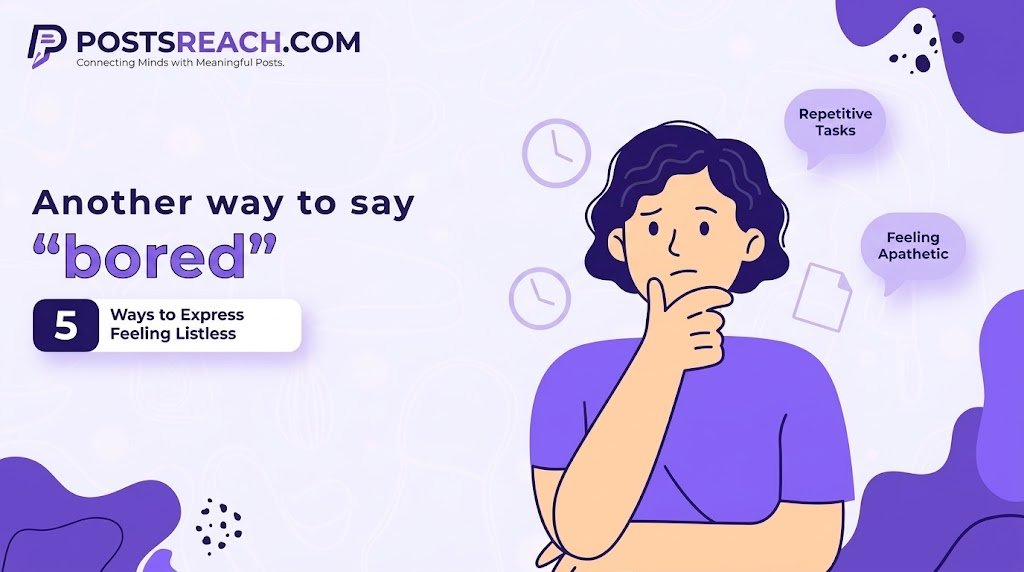
Another way to say “bored” include “uninterested,” “unengaged,” “restless,” “tired of it,” “not interested,” and “fed up.” The best choice depends on what you mean. “Uninterested” describes a lack of interest, while “restless” suggests difficulty staying still or focused. For casual conversation, “tired of it” can sound more natural.
Key Takeaways
- “Uninterested” is useful when you simply lack interest in something.
- “Unengaged” works well for school, work, and professional situations.
- “Restless” describes boredom mixed with a need for activity or change.
- “Tired of it” is natural when something has become repetitive.
- “Fed up” is stronger and can express frustration, not just boredom.
What Does “Another Way to Say Bored” Mean?
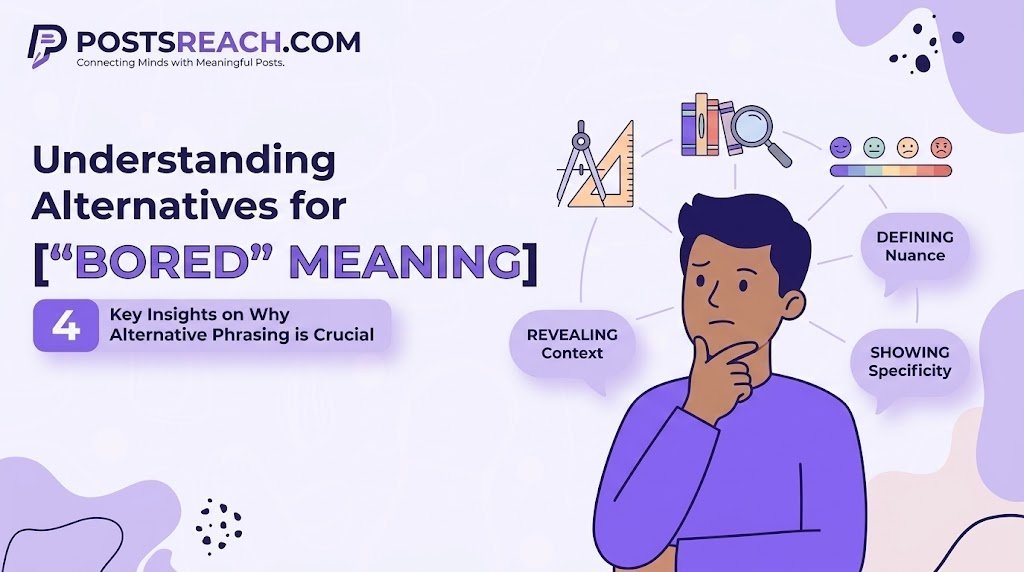
“Another way to say bored” means looking for different words or phrases that describe a lack of interest, excitement, stimulation, or engagement. The right alternative depends on why someone feels bored and how strongly they want to express it.
For example, “I’m bored” could mean that nothing interesting is happening, while “I’m restless” suggests that the person wants to do something. Similarly, “I’m uninterested” focuses on a lack of interest rather than a lack of activity.
These alternatives are useful in everyday conversations, school assignments, professional writing, emails, social posts, and creative writing.
Why Use Other Ways to Say “Bored”?
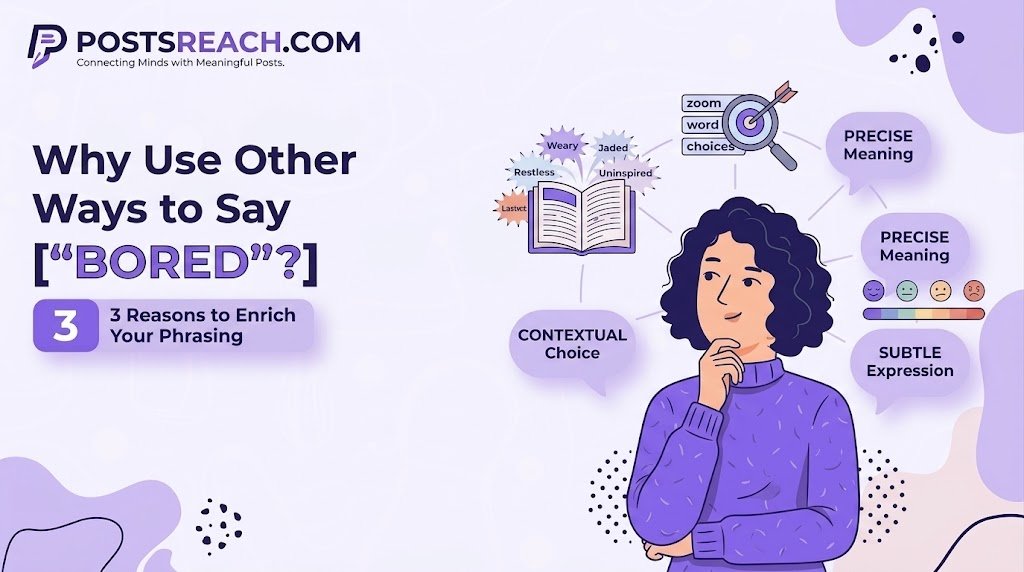
The word “bored” is simple and common, but it does not always communicate the exact feeling you want to describe. Choosing a more specific phrase can make your writing clearer and more natural.
You may want an alternative to:
- Avoid repeating the word “bored.”
- Describe the feeling more precisely.
- Sound more natural in conversation.
- Choose a phrase suitable for professional writing.
- Show whether boredom comes from repetition, inactivity, or lack of interest.
10 Best Other Ways to Say “Bored”
1. Uninterested
Meaning
“Uninterested” means lacking interest in something. It is useful when a person does not care about or feel drawn to a particular subject, activity, or conversation.
Best For
Professional, Formal, Casual
Example 1
The students seemed uninterested in the long presentation.
Example 2
She was uninterested in watching another documentary about the same topic.
Quick Tip
Use “uninterested” when the main issue is a lack of interest rather than a lack of things to do.
2. Unengaged
Meaning
“Unengaged” describes someone who is not actively involved, focused, or interested in what is happening. It is especially useful when discussing work, school, meetings, or other structured activities.
Best For
Professional, Formal
Example 1
Several employees appeared unengaged during the lengthy training session.
Example 2
The teacher noticed that some students had become unengaged during the lecture.
Quick Tip
Choose “unengaged” when boredom affects someone’s participation or attention.
3. Restless
Meaning
“Restless” describes a feeling of being unable or unwilling to remain still or focused. It can happen when someone is bored and wants something more interesting or active to do.
Best For
Casual, Friendly, Warm
Example 1
I started feeling restless after sitting at my desk all afternoon.
Example 2
The kids became restless while waiting for the event to begin.
Quick Tip
Use “restless” when boredom creates a desire for movement, activity, or change.
4. Tired of It
Meaning
“Tired of it” means that something has become repetitive, annoying, or no longer enjoyable. It often suggests that a person has experienced the same thing too many times.
Best For
Casual, Friendly
Example 1
I’m tired of watching the same show every evening.
Example 2
She was tired of doing the same task every day.
Quick Tip
Use this phrase when boredom comes from repetition or doing something for too long.
5. Fed Up
Meaning
“Fed up” means extremely tired, annoyed, or frustrated with something. It is stronger than “bored,” so it should be used when boredom has developed into irritation or dissatisfaction.
Best For
Casual, Friendly
Example 1
He was fed up with waiting for the delayed train.
Example 2
After weeks of dealing with the same problem, she was completely fed up.
Quick Tip
Do not use “fed up” as a simple synonym for boredom. It usually includes frustration or annoyance.
6. Disinterested
Meaning
“Disinterested” traditionally means impartial or unbiased, although it is also commonly used in modern English to mean lacking interest. Because of this ambiguity, it should be used carefully when you mean “bored” or “not interested.”
Best For
Formal, Professional
Example 1
The audience appeared disinterested in the discussion.
Example 2
He seemed disinterested when the conversation turned to the technical details.
Quick Tip
For maximum clarity, “uninterested” is usually better when you specifically mean “not interested.”
7. Unstimulated
Meaning
“Unstimulated” describes a lack of mental, emotional, or physical stimulation. It can be a useful choice when boredom results from an environment that does not provide enough variety or challenge.
Best For
Professional, Formal
Example 1
She felt mentally unstimulated by the repetitive nature of the assignment.
Example 2
The routine left him feeling unstimulated and ready for a new challenge.
Quick Tip
Use “unstimulated” when you want to explain the cause of boredom more precisely.
8. Dull
Meaning
“Dull” can describe something that is boring, uninteresting, or lacking excitement. Unlike many alternatives, it can describe an activity, event, conversation, or experience rather than only a person’s feelings.
Best For
Casual, Friendly, Formal
Example 1
The lecture became dull after the first hour.
Example 2
It was a dull afternoon with nothing interesting happening.
Quick Tip
Use “dull” to describe the thing causing boredom, not just the person experiencing it.
9. Not Interested
Meaning
“Not interested” is a straightforward way to say that someone does not want to engage with a particular subject or activity. It is simple, clear, and common in everyday American English.
Best For
Casual, Friendly, Polite
Example 1
I’m not interested in playing another round right now.
Example 2
She said she was not interested in joining the discussion.
Quick Tip
Use this phrase when you want simple, direct language without describing the emotional feeling of boredom.
10. Losing Interest
Meaning
“Losing interest” describes a gradual decline in attention or enthusiasm. It is useful when something was initially interesting but has become less engaging over time.
Best For
Professional, Formal, Casual
Example 1
The audience started losing interest during the final section of the presentation.
Example 2
I was excited about the project at first, but I’m slowly losing interest.
Quick Tip
Use “losing interest” when boredom develops gradually rather than appearing immediately.
Comparison Table
| Alternative | Best Used In | Tone |
|---|---|---|
| Uninterested | General and professional writing | Neutral |
| Unengaged | Work, school, meetings | Professional |
| Restless | Conversations and personal writing | Casual |
| Tired of It | Everyday conversations | Casual |
| Fed Up | Situations involving frustration | Strong |
| Disinterested | Formal or professional contexts | Formal |
| Unstimulated | Analytical and professional writing | Formal |
| Dull | Describing activities or situations | Neutral |
| Not Interested | Everyday conversations | Direct |
| Losing Interest | General, academic, and professional writing | Neutral |
Common Mistakes
1. Using “Fed Up” When You Only Mean Bored
“Fed up” usually communicates frustration or annoyance. If someone simply has nothing interesting to do, “bored” or “restless” is more accurate.
2. Confusing “Uninterested” and “Disinterested”
“Uninterested” clearly means lacking interest. “Disinterested” has a traditional meaning related to impartiality, so “uninterested” is usually the safer choice when discussing boredom.
3. Using “Restless” as an Exact Synonym
Restlessness can result from boredom, but the words do not mean exactly the same thing. Someone can feel restless because they want to move around, even when they are not technically bored.
4. Describing a Person as “Dull”
“Dull” can describe a boring person, but it can sound insulting when directed at someone. When discussing someone’s temporary feeling, “bored” or “uninterested” is usually more appropriate.
5. Ignoring the Reason for the Boredom
Different alternatives communicate different causes. “Tired of it” suggests repetition, “unengaged” suggests low participation, and “losing interest” suggests that enthusiasm has gradually declined.
Frequently Asked Questions
What is another way to say “bored”?
Common alternatives include “uninterested,” “unengaged,” “restless,” “tired of it,” “unstimulated,” and “losing interest.” The best option depends on the exact feeling. For example, “restless” works when boredom makes you want to move or do something, while “uninterested” works when you simply do not care about the subject.
What is a professional way to say “bored”?
Professional alternatives include “unengaged,” “unstimulated,” “uninterested,” and “losing interest.” “Unengaged” is particularly useful when describing someone who is not participating in a meeting, class, or workplace activity. These alternatives sound more precise than simply saying someone is bored in a formal report or professional discussion.
What is a polite way to say “I am bored”?
You can say, “I’m looking for something to do,” “I could use a change of pace,” or “I’m feeling a little restless.” These phrases communicate boredom without sounding negative or critical. In professional situations, “I could use a more engaging task” may be more appropriate.
What is a stronger word for bored?
“Fed up” can be stronger than “bored,” but it adds frustration or annoyance. “Restless” can also communicate a stronger desire for activity. However, neither word is a perfect replacement in every situation because each adds a different shade of meaning.
Is “uninterested” the same as “bored”?
Not exactly. “Bored” usually describes a lack of stimulation, excitement, or meaningful activity, while “uninterested” describes a lack of interest in a particular subject or activity. Someone can be uninterested in a topic without being bored, and someone can be bored even while interested in something.
What is a casual way to say “bored”?
Casual alternatives include “I’m tired of this,” “I’m getting restless,” “There’s nothing to do,” and “This is getting old.” The best choice depends on the situation. “I’m getting restless” suggests a need for activity, while “this is getting old” suggests frustration with repetition.
Can “dull” mean “bored”?
Yes, but “dull” most often describes something that causes boredom, such as a dull movie, dull lecture, or dull afternoon. It can also describe a person, but calling someone dull may sound insulting. For describing your own feeling, “bored” or “uninterested” is usually clearer.
What is the difference between “bored” and “restless”?
“Bored” means you lack interest or stimulation, while “restless” means you have difficulty staying still, calm, or focused. They often occur together, but they are not identical. For example, you might feel bored during a long wait and become restless because you want to do something more active.
Conclusion
There are many ways to say “bored,” but each alternative communicates a slightly different feeling. “Uninterested” works when you lack interest in a particular subject, while “unengaged” is useful for work, school, and other situations that require participation. “Restless” suggests that boredom has created a desire for activity or movement. If repetition is the problem, “tired of it” sounds natural in everyday English. “Fed up” is stronger because it adds frustration, while “unstimulated” focuses on the lack of mental or emotional stimulation. For the clearest writing, choose the alternative that explains why someone feels bored rather than simply replacing the word with a random synonym. The more precise your word choice, the more naturally your sentence communicates the intended feeling.

Rowan Mercer is a senior content editor focused on producing clear, useful, and engaging digital content. Rowan specializes in researching complex topics, organizing information into reader-friendly formats, and maintaining high standards for accuracy, clarity, and editorial quality.